














October 27, 2026

The AI Builder Brief - Issue 5
Welcome to The AI Builder Brief, your curated guide to the enterprise AI developments that matter. Every issue brings you the most important AI stories, research and reports, interpreted by Cognizant's AI leaders in plain terms.
This edition is about AI moving beyond producing output to producing understanding, whether that’s of the physical world or of how AI models work on the inside. It’s also about where that leaves human judgment.
In this issue: CERN and Mistral set out to build the first foundation model for particle physics. New research suggests large language models are far more readable from the inside than the field believed. Anthropic's own data shows what happens to people's jobs when agents do six hours of work for every human hour. And the Cognizant AI Lab shares how evolutionary AI can improve human ideas, plus highlights from our SF Tech Week panel on agent societies.
We hope you enjoy the read.
On October 15, CERN and Mistral signed a statement of intent for a long-term partnership to build foundation models for scientific discovery. The centerpiece is a Large Physics Model, the first foundation model for collider physics. It will be trained on billions of simulated proton-proton collisions from the Large Hadron Collider (LHC) and designed to handle several tasks in one model: reconstructing collisions, identifying particles, flagging unexpected signals and evaluating future detector designs. CERN already stores around one exabyte of LHC data, and collision volumes will rise tenfold when the High-Luminosity LHC starts around 2030.
EXECUTIVE'S TAKE

Deep networks, LLMs included, are far more interpretable than people thought. For years, the working assumption in interpretability was that neural networks pack unrelated concepts into the same neurons, so you have to untangle a model before you can study it. Goodfire's Nick Cammarata, who helped propose that idea, now argues it was mostly wrong.
EXECUTIVE'S TAKE

Anthropic published internal data last week on how its own workforce changed once agents took on most of the hours. By August, employee-directed agents logged six hours for every human hour. Code commits per engineer rose 5x in six months. Junior roles fell from 27% of technical hires to 9%, and hiring managers started to prioritize autonomy and judgment, relative to technical domain expertise and implementation. Meta-work (writing agent specs, reviewing agent output, monitoring pipelines) grew from 10% to 22% of employee sessions.
EXECUTIVE'S TAKE

From the Cognizant AI Lab
Two new pieces from the Lab this month. LMX Brainstorming is an app we built to help teams come up with better ideas, with evolutionary AI and a set of specialized agents working alongside the people in the room. And at SF Tech Week, we brought some of the field’s sharpest thinkers together to talk about what happens as AI gets more autonomous.
We’ve been exploring how evolutionary AI can push brainstorming further. Using principles borrowed from natural selection, specialized AI agents blend human and AI ideas, then generate, evaluate and refine them over successive rounds.
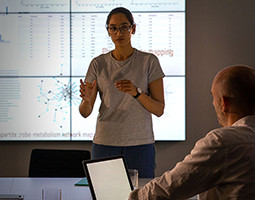
At SF Tech Week 2026, Cognizant AI Lab hosted a panel on open-ended intelligence, emerging agent societies, and how growing AI autonomy could reshape the economy, society and human decision-making. On the panel: Ken Stanley (SVP of Open-Endedness, Lila Sciences), João Moura (Founder and CEO, CrewAI), Dawn Song (Professor, UC Berkeley, and VP of AI Research, Meta), Risto Miikkulainen (VP of AI Research, Cognizant AI Lab, and Professor, UT Austin) and David Cushman (Executive Research Leader, HFS Research).
Thanks for reading the latest edition of The AI Builder Brief. Subscribe to get the latest news sent directly to your inbox.