The limits of monolithic AI systems
Large AI models perform remarkably well on short reasoning tasks. However, they often struggle when those tasks extend across thousands or even millions of dependent steps. Research across the industry increasingly highlights this challenge. Studies such as Apple’s Illusion of Thinking suggest that even advanced models can lose coherence when reasoning chains become too long or too complex.
The issue is not intelligence. The issue is reliability. To operate effectively in real-world environments, AI systems must sustain reasoning across long processes rather than deliver short bursts of brilliance.
Learning from how intelligence works in the real world
Interestingly, the world around us already offers a different model for building resilient intelligence. In nature and in human organizations, intelligence rarely emerges from a single massive system. Instead, it develops through structure, specialization and collaboration between many smaller components. Ecosystems work this way. Organizations work this way. Even the human brain relies on multiple specialized regions coordinating toward a shared outcome.
This insight is beginning to influence how researchers think about the next generation of AI architectures.
Introducing MAKER
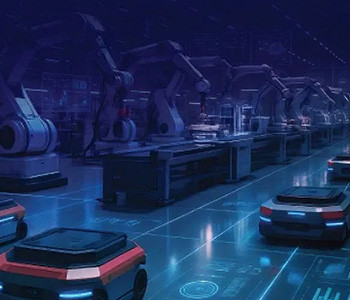
At Cognizant’s AI Lab, researchers have been exploring an alternative approach to building reliable AI systems. Instead of relying on a single large model, complex problems are broken into smaller, well-defined tasks. Each task is handled by lightweight AI agents that collaborate, validate results and support one another as the process unfolds.
The result is a distributed architecture in which intelligence emerges from coordination and structure. This system, called MAKER, represents an important step toward more reliable AI.
A million-step milestone
To test the architecture, researchers at the Cognizant AI Lab applied MAKER to an advanced version of the Towers of Hanoi puzzle requiring more than one million perfectly sequenced steps. Prior to this experiment, no single AI model had ever completed the task without error. MAKER became the first system to do so.
More than one million micro-agents worked together. They checked, validated and coordinated every step of the process. This collaborative structure allowed the system to maintain accuracy across an extremely long reasoning chain and demonstrated an important principle: structure can outperform scale.
Why multi-agent intelligence matters
Multi-agent architectures offer several advantages for enterprise AI systems. They allow AI to plan across long processes without accumulating errors. They make it possible to validate results through collaboration between agents and to adapt dynamically as conditions change. Instead of relying on a single model, intelligence emerges from how multiple components work together. This is similar to how teams operate inside complex organizations.
A new direction for the future of AI
The AI industry spent years scaling models to achieve better performance, and that strategy delivered remarkable progress. Yet the next era of artificial intelligence may look very different. Instead of monolithic systems, we may see collaborative AI ecosystems. These are networks of specialized agents that coordinate to solve complex problems and sustain reasoning across long processes.
For many researchers, this model represents a promising path toward more dependable and adaptable forms of AI. Rather than a single massive system, the future may resemble an intelligent organization of systems working together.
Looking ahead
As enterprises deploy AI across increasingly complex operations, reliability will become just as important as capability. Multi-agent intelligence offers a path toward systems that can plan long term, adapt during execution and maintain accuracy across complex decision processes. The shift has already begun. It may redefine how we build the next generation of intelligent systems.