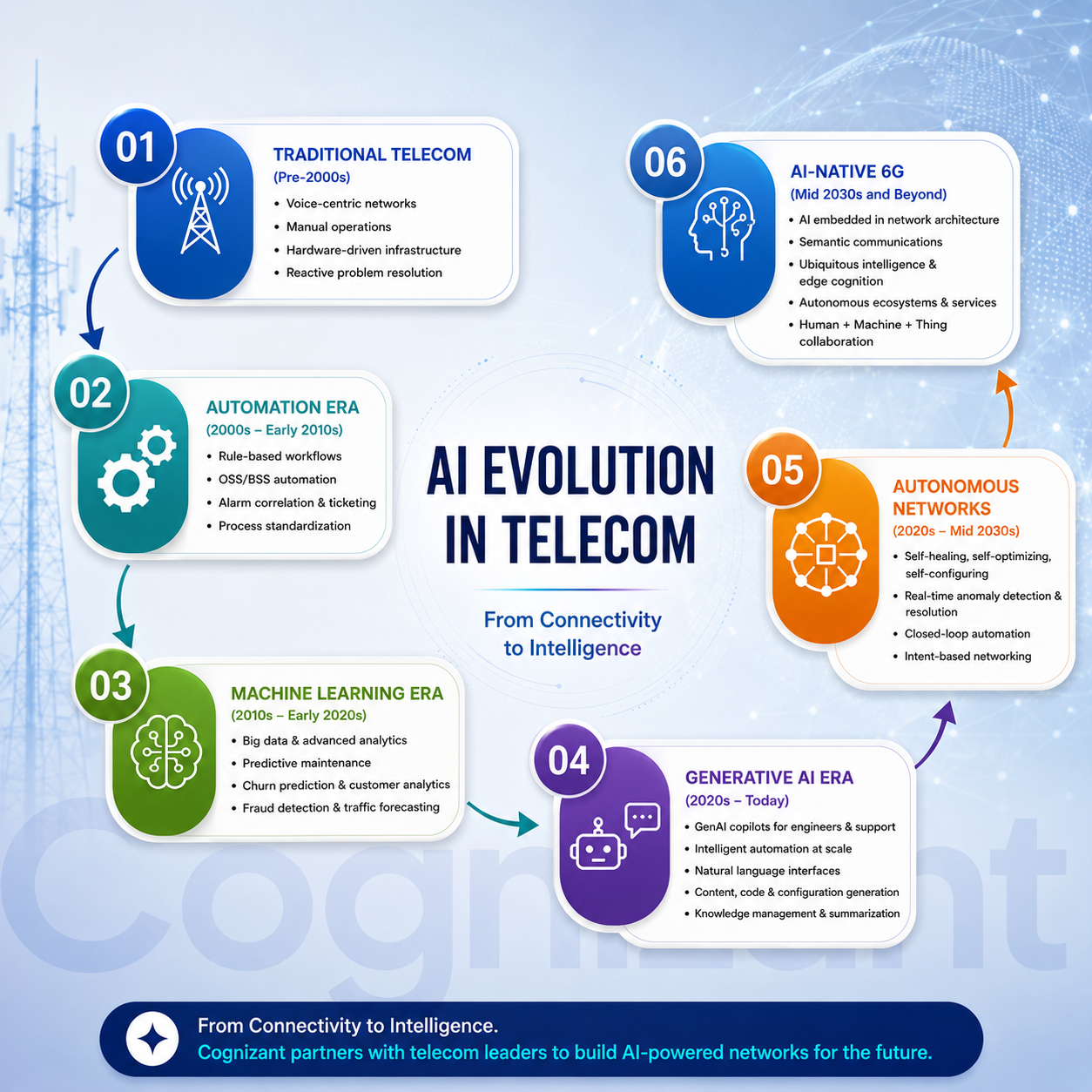
Figure 1: AI evolution in telecom: Journey toward autonomous networks
Pre AI era
The first two phases represent what I consider the Pre AI era. In the traditional telecom period, connectivity was the core mission — networks were built primarily for reliable voice communication and infrastructure expansion. In the automation era, telcos began automating repetitive operations to improve efficiency, scalability and service reliability.
Rise of data analytics and machine learning
As telecom operators began generating enormous volumes of operational and customer data, the industry shifted toward data-driven decision-making.
Machine learning introduced capabilities such as:
- Predictive maintenance
- Churn prediction
- Fraud detection
- Capacity forecasting
- Customer behavior analytics
This phase marked the transition from reactive operations to predictive intelligence.
AI-enabled analytics became critical for managing increasingly dense and distributed 4G and 5G networks.
Generative AI: A new inflection point
The emergence of generative AI and large language models (LLMs) is now redefining telecom transformation.
Unlike traditional AI systems that focus on prediction and classification, generative AI introduces reasoning, orchestration and conversational intelligence into telecom operations.
Current applications include:
- AI copilots for network engineers
- Automated incident resolution
- Intelligent customer service agents
- Dynamic service orchestration
- Automated report generation
- Knowledge management assistants
Industry leaders increasingly describe the future network as "AI-native," where intelligence is embedded into every operational layer.
Recent telecom surveys show that:
- 77% of operators expect AI-native networks before 6G deployment*
- 65% report AI driving network automation*
Generative AI adoption in telecom continues to accelerate rapidly.
Autonomous networks: The future of telecom
The telecom industry is now moving toward autonomous networks capable of:
- Self-healing
- Self-optimization
- Self-configuration
- Real-time adaptive decision-making
5G standalone architecture, edge AI, AI-RAN, distributed AI inference and agentic AI systems are accelerating this evolution.
The future network will increasingly behave like an intelligent digital organism — continuously sensing, learning, adapting and optimizing itself in real time.
AI and the path toward 6G
The transition from 5G to 6G is expected to fundamentally redefine telecom architecture. Unlike previous generations focused primarily on connectivity speed, industry leaders increasingly envision 6G as AI-native by design.
Key characteristics may include:
- Semantic communications
- Intelligent spectrum allocation
- Autonomous service orchestration
- Real-time edge intelligence
- Machine-to-machine cognition
- Network-aware AI agents
Industry experts increasingly believe that future telecom networks will support not only human communication, but also autonomous machines, robotics, industrial automation and intelligent digital ecosystems.
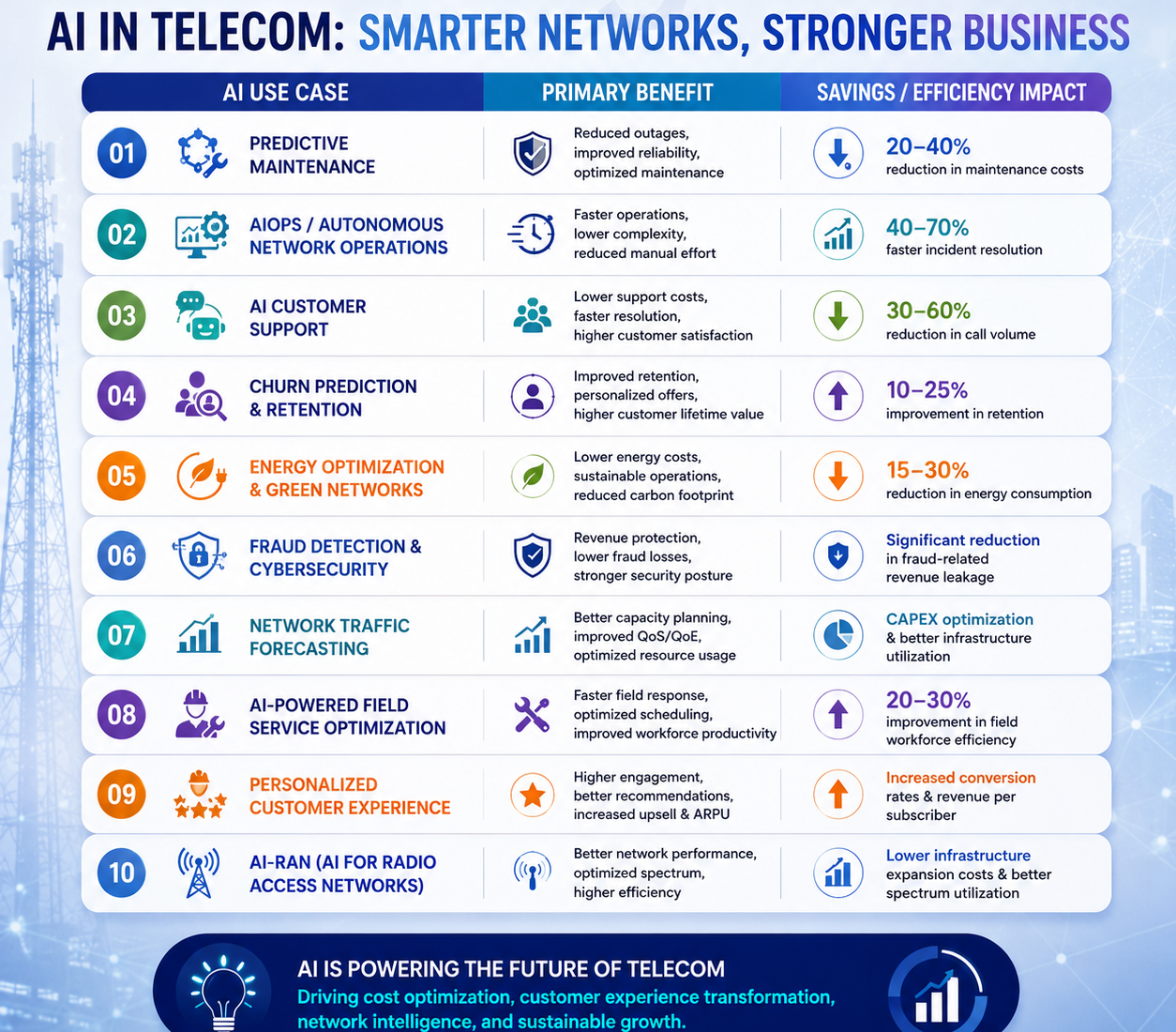
AI-powered telecom: Key use cases and business impact
Telecom providers are embracing AI across network operations, customer experience, security and automation to unlock significant cost savings and operational agility. The journey toward autonomous and AI-native telecom is redefining the future of connectivity.