
















For decades, the trade show floor has been a familiar ritual for B2B organisations. You book the stand, brief the team, collect the badge scans, and measure success in leads generated. It's a model that has served the industry well, but it is no longer enough.
The business landscape has fundamentally changed. Rising fraud, escalating regulatory pressures, geopolitical uncertainty, and increasingly complex global supply chains have transformed how organisations evaluate potential partners. Today, identifying a company that meets your operational requirements is only half the challenge. The harder question, and the more important one, is whether that company is truly safe to partner with.
In this environment, the traditional exhibition model faces a stark choice: evolve or become irrelevant.
The Stakes Have Never Been Higher
The numbers make sobering reading. In 2025, 30% of all data breaches involved a third party, nearly double the rate of the previous year. The average cost of a third-party breach now stands at $4.91 million. And a staggering 98% of organisations have discovered at least one vendor connected to a known breach.
These are not abstract statistics. They reflect a fundamental shift in where risk actually lives. The greatest threat to many organisations today lies not in what they buy or sell, but in who they choose to partner with. Yet exhibitions, one of the primary environments where those partnerships are initiated, have largely not adapted to this new reality.
That needs to change.
From Lead Generation to Partnership Qualification
The opportunity in front of the exhibition industry is significant. The global exhibition market is projected to grow from $45.1 billion in 2025 to $88.7 billion by 2035. Meanwhile, 82% of trade show visitors already hold purchasing authority, and 46% arrive at events already in the final stages of their buying journey. These are not casual browsers. They are decision-makers looking to form lasting commercial relationships.
But those same decision-makers are increasingly walking the floor with a different set of questions. It is no longer just "What does this company do?" It is "Can I trust them? Are they compliant? What does their ESG posture look like? Are there any sanctions or governance red flags I should know about?" Financial integrity, compliance readiness, cyber resilience, and sustainability maturity are now core partnership criteria, not optional extras.
This is the gap that the exhibition industry has an opportunity, and arguably a responsibility, to close.
Data Is the New Currency of Trust
Exhibitions have always been information environments. But historically, that information has been one-directional: exhibitors presenting their best selves through well-designed stands, polished brochures, and persuasive conversations. In a world where trust cannot simply be claimed, that is no longer sufficient. It must be verified.
The good news is that the infrastructure to enable this already exists. Credit reference agencies, sanctions lists, regulatory registries, ESG databases, adverse media feeds, beneficial ownership datasets, and cyber risk signals can all be ingested and activated in real time. When woven into the exhibition ecosystem, from matchmaking tools and exhibitor directories to meeting schedulers and on-floor apps, this third-party intelligence transforms a physical event into something far more powerful: a decision platform.
Exhibitions that embrace this shift become more than venues. They become trusted gateways where serious buyers and suppliers can engage with confidence, knowing that every organisation they meet has already passed through a meaningful layer of credibility screening.
Five Ways Due Diligence Transforms the Exhibition Experience
The practical implications of embedding due diligence into exhibitions are substantial, and they benefit every stakeholder in the ecosystem.
Smarter discovery. Rather than relying on booth visibility or word-of-mouth introductions, participants can identify pre-qualified partners filtered by compliance readiness, ESG alignment, financial health, and geopolitical risk. Risk-aware matchmaking replaces opportunistic networking with strategically curated engagement from the outset.
Higher-value meetings. When meeting scheduling is informed by due diligence data, including clean sanctions profiles, verified beneficial ownership, and validated sustainability practices, every conversation on the calendar becomes a strategic one. Time-wasting interactions are minimised and qualification cycles are compressed.
On-the-floor intelligence. Embedded vendor risk reports, predictive risk scores, governance assessments, and real-time monitoring mean participants can make informed decisions at the moment they matter most, not weeks later when the onboarding process begins.
Faster onboarding. Post-event bottlenecks are one of the biggest barriers to converting exhibition conversations into signed partnerships. With KYB, UBO, ESG, and cyber-risk data pre-populated during the event, organisations can initiate onboarding almost immediately, compressing timelines that would traditionally take months.
Greater confidence. Trust badges such as Verified ESG, Verified Cyber Hygiene, and Governance-Ready give participants clear, visible signals of partner credibility. These simple indicators shift exhibitions from transactional gatherings to high-trust environments where confident, scalable partnership decisions are made.
AI as the Intelligent Layer
None of this requires participants to become compliance experts. That is precisely where AI plays a transformative role.
The vision is not a static dashboard full of data that overwhelms rather than informs. It is an intelligent, conversational experience, more like a knowledgeable advisor than a risk report. A visitor asks, "Is this supplier financially stable?" and receives a precise, clear answer. If they want to go deeper, exploring governance, sanctions exposure, ESG posture, or ownership structures, the system adapts instantly, layering insight on demand.
This is AI not as a back-office automation tool, but as a trust enabler at the heart of the participant journey. It humanises due diligence, removing the friction and expertise barrier that has traditionally kept risk intelligence the preserve of compliance teams.
A Call to Action for Exhibition Organisers
For exhibition organisers, the strategic imperative is clear. Building a trust-ready data infrastructure, positioning trust as a core value proposition, forming partnerships with data providers and AI platforms, and reframing success metrics away from footfall and lead counts toward quality of verified matches and partnership conversion rates: these are the steps that will define the leading exhibitions of the next decade.
The exhibitions that move first will not only differentiate themselves in an increasingly competitive market. They will unlock new premium revenue streams, improve exhibitor ROI, and become the environments where the most consequential B2B partnerships are forged.
The exhibition floor has always been where business begins. It is time for it to also become where trust is built.
To explore the full framework, including the five transformative use cases, the role of AI-driven intelligence, and a practical roadmap for exhibition organisers, download the complete Cognizant whitepaper: Transforming Exhibitions from Lead Generation Venues into Platforms Where Long Lasting, Deep B2B Partnerships Are Forged.
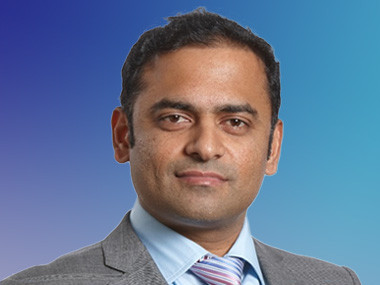
Sunil Rajan is Head of Communications, Media & Technology at Cognizant UKI, working with clients across the sector to harness data, AI, and digital transformation to build resilient, future-ready businesses.