


















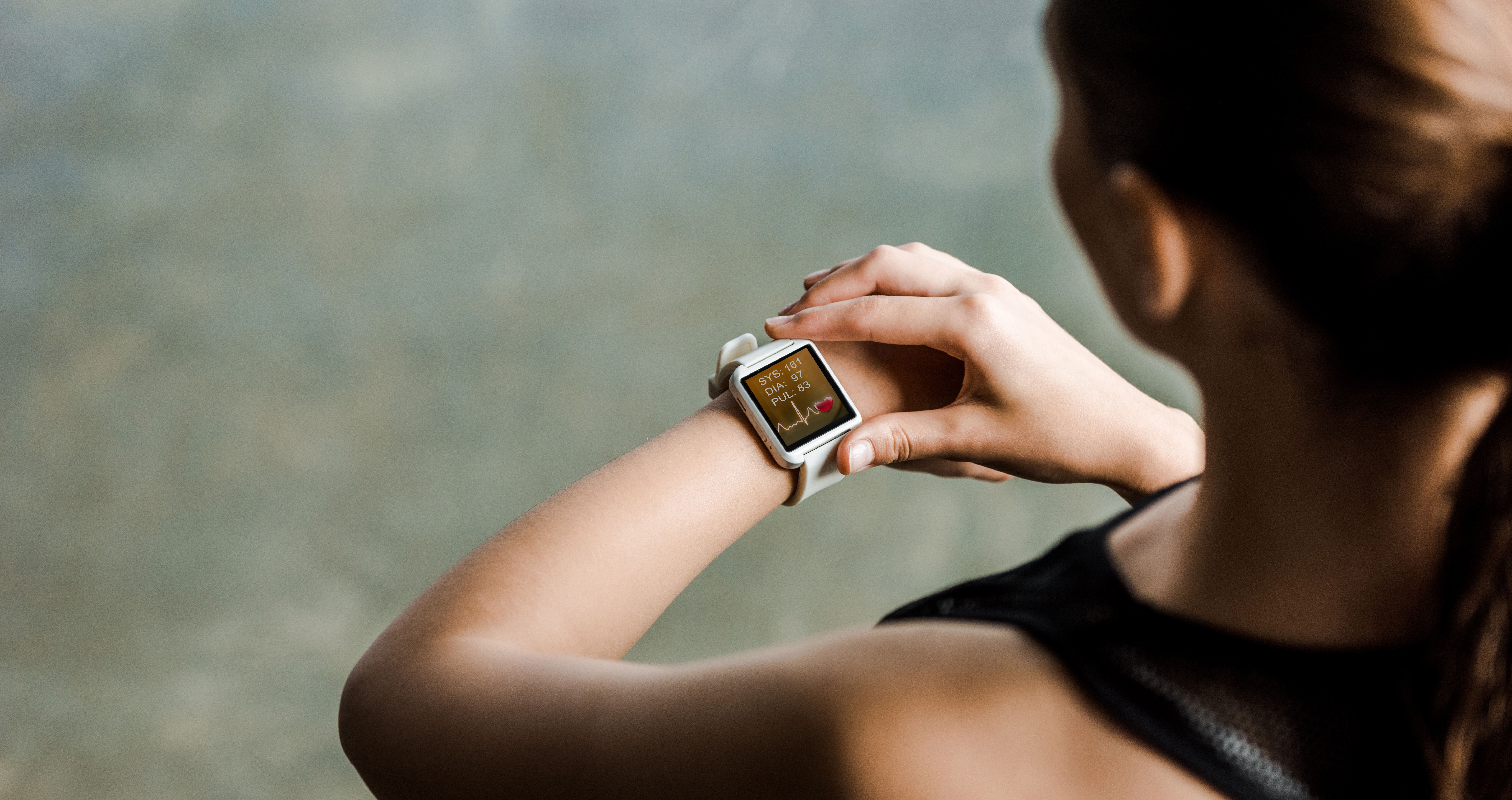
Wearables are far more than a widget or a nice app. They have raced beyond their consumer origins and are on track to become a centrepiece of the contemporary healthcare model — and the numbers bear that out.
Once, the industry was obsessed with sleep scores and fitness tracking, and that was fine at the time. But today, the market has evolved, and the new killer app is an ecosystem of connected monitoring tools that span clinical care, chronic disease management, and increasingly, elite athletic performance.
The market opportunity is enormous. The Medical Internet of Things market is projected to grow from $93bn in 2025 to about $134bn by 2029, reflecting rising demand for connected devices that can monitor patients, generate real-world data and support more personalised care. Meanwhile, the broader wearable technology market — spanning consumer, sports, and clinical segments — is forecast to exceed $380bn globally by 2028, up from roughly $95bn in 2021. The hockey-stick trajectory is real, and the investment is following it.
More use cases are emerging too. Wearables and connected devices are now being used to track glucose, monitor recovery, detect possible cardiac issues and test new approaches to conditions such as Parkinson's. But some of the most compelling real-world evidence is coming from a perhaps surprising source: professional sport.
Where wearables are already proving clinical value
As a tool, wearables offer an especially compelling USP: they can draw upon continuous monitoring to answer a complex clinical question. Their value lies in capturing information between appointments, identifying patterns that would otherwise be missed.
In elite sport, that principle is already table stakes. GPS tracking vests in football and rugby capture distance, acceleration, deceleration, and collision load in real time. Heart rate variability (HRV) monitoring, once the preserve of research labs, is now a daily readiness metric for professional athletes. The NBA has invested heavily in second-spectrum player-tracking data, while cycling teams analyse power output, cadence and lactate threshold via on-body sensors across Grand Tour stages. The lesson from sport is instructive for healthcare: continuous physiological data, intelligently contextualised, changes decision-making.
A clear example in the clinical space is glucose monitoring for patients living with diabetes and other associated conditions. It has shown how wearable or near-wearable technologies can support more responsive disease management, helping patients and clinicians understand fluctuations in real time rather than relying only on sporadic checks. A 2023 meta-analysis published in The Lancet Digital Health found that continuous glucose monitoring reduced HbA1c levels significantly versus intermittent self-monitoring, particularly in type 2 patients — a straightforward demonstration of what constant data can do that episodic measurement cannot.
Recovery and rehabilitation also provide compelling use cases. Connected devices can help monitor activity, adherence, mobility and physiological markers after surgery or during rehabilitation, giving clinicians a more detailed view of patient progress outside the hospital. Sports medicine has already pioneered many of these protocols — monitoring load management and return-to-play timelines using objective wearable data rather than clinician intuition alone.
In each case, we are seeing a movement from an episodic snapshot — a photograph of a person's health — to a continuous live feed, helping healthcare providers to understand in greater detail how patients are recovering, deteriorating or responding to treatment.
Where the evidence is still thin
However, the evidence base remains uneven across use cases. Some categories have a clear clinical rationale, while others still face questions around accuracy, validation, population diversity and real-world usefulness. A wearable that performs well in a controlled study may not deliver the same level of insight across different age groups, ethnicities, disease profiles or home environments.
There's also a risk of data abundance without clinical confidence. Wearables can produce constant streams of information, but clinicians do not need more raw data. They need reliable signals, relevant context and clear thresholds for action. Even in sport, where data science resources are generous, organisations are grappling with the same problem: a Premier League club generating 200 data points per player per session still needs analysts and clinicians to decide which signals actually predict injury.
False positives and poorly contextualised alerts create new problems. If wearable data is not properly triaged, it may increase anxiety for patients and workload for clinicians rather than improving care. A 2022 study in JAMA Cardiology found that consumer-grade wearable ECG notifications led to significant downstream testing — much of it inconclusive — highlighting the cost of low-specificity alerts at population scale.
This connects directly to one of the wider challenges facing medtech: fragmented data environments. Many healthcare systems and medtech companies still lack the architecture needed to integrate wearable data into clinical workflows, electronic health records, post-market surveillance systems or reimbursement models. For wearables to fulfil their potential, the sector needs stronger evidence, clearer use cases and better infrastructure around the data they produce.
The regulatory boundary problem
Wearables create a difficult regulatory question: where does wellness end and medical technology begin?
A device that provides general lifestyle information sits in a very different category from one that influences diagnosis, treatment or clinical decision-making. Once a wearable moves into medical-device territory, it faces higher expectations around validation, risk classification, product claims, user information, post-market monitoring and cybersecurity.
The boundary is becoming harder to draw as devices become more intelligent. AI-enabled wearables may begin by tracking health indicators, but they can quickly move into prediction, triage or decision support. At that point, they are no longer simply helping users understand their bodies, but potentially influencing clinical action. The parallel in sport is telling: when a wearable flags that an athlete's HRV has dropped 30% below their rolling baseline, that output is already close to a clinical recommendation.
The EU and UK regulatory context is therefore critical. The EU AI Act reinforces requirements around risk mitigation, data quality, user information and human oversight, while the MHRA is clarifying expectations for Software and AI as a Medical Device. Wearable companies that want to play a meaningful role in healthcare need to think less like consumer technology firms and more like regulated medtech businesses.
Data ownership, interoperability and trust
The biggest strategic question around wearables is not only what they measure, but who can use the data and under what conditions.
Patients, clinicians, payers, health systems and manufacturers may all have legitimate interests in wearable data, but those interests are not always aligned. The same dynamic plays out in professional sport: athletes, clubs, federations and commercial sponsors all claim a stake in biometric data, and the governance frameworks are still catching up. In healthcare, the stakes are higher, and the legal and ethical obligations more stringent.
Patients need to understand how their data is collected, stored, shared and reused, especially when that data may inform clinical decisions or product development. Interoperability will determine whether wearable data can influence care models. If the data remains trapped inside proprietary apps or disconnected dashboards, it will not meaningfully support clinicians or health systems.
This is where data architecture becomes decisive. Wearable data becomes more valuable when it can be connected securely with electronic health records, quality systems, post-market surveillance, population health platforms and AI-enabled triage tools. In sport, the most advanced organisations are already building unified data lakes that combine wearable outputs with injury records, training loads and performance analytics. Healthcare systems will need similar infrastructure.
Wearables will only support new healthcare models if their data is secure, interoperable, consented, clinically meaningful and trusted by the people expected to act on it.
Final words
The growth of the wearable market is meteoric, but we must not forget that every great technological innovation needs a strong regulatory and evidential framework to underpin it.
Sport has shown what's possible when continuous physiological data is collected rigorously, acted upon intelligently and embedded within an organisation's decision-making culture. Healthcare is on the same journey, but at a larger scale, with higher stakes and harder regulatory terrain.
In this brave new world, the most successful companies will build a strong and supportive ecosystem around their devices. In practice, that might look a lot like investing in evidence, regulation, interoperability, consent, cybersecurity, reimbursement and clinician trust.
Wearables will not transform healthcare simply because they collect more data. They will transform healthcare only when that continuous data stream is supported by a framework that provides reassurance to both the clinician and the end-patient — and when the lessons already learned on the training pitch are applied with equal rigour in the clinic.