
















While others fear AI replacement, forward-thinking insurers are creating something extraordinary: professionals with capabilities that seemed like science fiction a few years ago. Star Trek's Enterprise bridge isn't fantasy, it's a blueprint for insurance's future.
The insurance industry faces its most significant transformation since computing arrived, yet most leaders fundamentally misunderstand what's happening. This transformation creates unprecedented opportunities to enhance human capabilities rather than diminish them.
The future belongs to insurance professionals who combine computational power with human insight to deliver capabilities that neither could achieve independently.
As outlined in Cognizant's Supercharged humans white paper, our research indicates that while 90% of jobs will experience AI disruption, most will evolve into higher-value forms combining human creativity and judgment with AI-powered capabilities.
In the report, Colville Wood, Cognizant Insurance's UK&I Chief Technology Officer, illustrates this vision using Star Trek's Enterprise bridge. "Picture the flight deck: advanced computers flying spaceships, providing incredible analysis, yet humans still command the bridge," he says. The direction of travel remains determined by human curiosity, emotion, and relationships."
The transformation rewards organisations that invest in human potential rather than simply replacing it. When machines handle routine tasks, humans can focus on activities requiring empathy, creativity, and complex problem-solving. This represents a profound upgrade in professional capability and job satisfaction.
Traditional insurance operations measure success by transaction volume and processing speed. AI enables measuring success by relationship quality, problem-solving effectiveness, and customer value creation. The shift transforms insurance from administrative processing to advisory consultation.
Revolutionary interaction models emerge
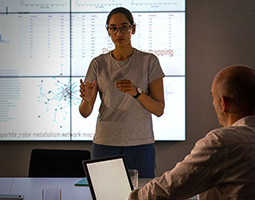
Consider how customer relationships could evolve when AI handles administrative burdens. Picture a meeting, in the near future, where sophisticated AI systems work quietly in parallel, the insurer's AI understanding risks and pricing while the customer's AI evaluating recommendations. In the background, these systems communicate to ensure optimal outcomes for both parties.
The human conversation focuses on what matters: understanding life changes, explaining complex coverage decisions, and providing reassurance during uncertain times. When a customer mentions health concerns, the advisor's AI instantly analyses multiple protection scenarios, but the human provides emotional support.
This dual-AI model creates transparency that enhances rather than diminishes trust. Both parties know their systems work collaboratively in the background while human professionals focus on understanding needs and building genuine relationships. The result combines computational efficiency with human empathy.
The brilliance lies in appropriate task allocation. AI handles data processing, comparison analysis, and routine transactions. Humans focus on understanding emotions, creating solutions for unique situations, and providing the creativity that complex problems require. This partnership unlocks capabilities that neither could achieve alone.
Customer interactions become voluntary consultations rather than necessary administrative tasks. People choose to engage with human professionals when they need guidance, support, or creative problem-solving. This transforms the relationship dynamic from obligation to collaboration.
The organisational implications extend beyond individual role enhancement. A comprehensive AI-enabled insurer could operate with small teams managing entire operations while achieving superior performance. Consider relationship managers focusing on complex client needs, risk specialists handling unusual scenarios, and claims experts addressing intricate investigations—all supported by AI systems handling routine work.
Organisational transformation unleashes potential
Major insurers currently employ thousands performing data manipulation, routine processing, and administrative coordination. AI automation of these functions enables redeploying human talent across numerous specialised operations, each focused on specific markets or customer segments while maintaining startup agility.
This model creates extraordinary competitive advantages. Small teams move rapidly, developing innovative products and responding quickly to market opportunities. Each operation benefits from AI efficiency while maintaining human creativity and relationship-building capabilities that larger organisations often sacrifice for scale.
The multiplication effect becomes significant when considering resource allocation. Traditional structures require substantial overheads for coordination and management. AI-enabled micro-operations eliminate much of this overhead while improving performance through intelligent automation and human expertise concentration.
Creating augmented insurance workforces requires strategic development across multiple phases. Initial assessment identifies current capabilities and early adopters who can champion transformation. Organisation-wide implementation introduces accessible AI tools that demonstrate immediate value while building user confidence.
Further, these models become organisational knowledge repositories, capturing hundreds of years of collective experience in accessible formats. Human professionals gain instant access to this accumulated wisdom while contributing their creativity and judgment to complex decision-making.
Indeed, leadership commitment will be essential throughout this transformation. AI adoption succeeds when executives model expected behaviours and celebrate collaboration wins. Cultural evolution requires transparent communication about capability enhancement rather than job displacement.
The most successful implementations will combine technological sophistication with human-centred design, recognising that AI systems work best when they enhance rather than replace human capabilities. This creates new possibilities for creativity, relationship-building, and complex problem-solving.
Competitive advantage through enhanced capabilities
Organisations embracing human-AI partnerships gain sustainable competitive advantages that extend beyond operational efficiency. They compete on relationship quality, problem-solving effectiveness, and value creation rather than transaction processing speed.
When routine tasks disappear, human interactions become precious and purposeful. Insurance professionals can focus on advisory relationships that insurance originally represented: helping people understand and manage risks rather than processing paperwork. The efficiency gains create resources for meaningful customer engagement.
AI assistants evaluate multiple factors when recommending services: quality, reputation, expertise, and genuine value creation. This creates opportunities for organisations with superior human capabilities to differentiate themselves beyond price competition.
Insurers who understand that technology amplifies human potential rather than replaces it have the real competitive advantage. These organisations focus on developing human expertise while leveraging AI efficiency, creating capabilities that purely automated or traditional operations cannot match.
Supercharged humans represent the future of insurance professional development, yet the window for building these capabilities is narrowing as competitors implement AI-enhanced operations.
The combination of human creativity with AI efficiency creates possibilities that seemed like science fiction just years ago. The organisations that invest in this combination earliest will define industry standards for customer service and professional capability.
Understanding how to create supercharged human-AI partnerships will determine your competitive advantages for the next decade. Download our comprehensive analysis of human enhancement through AI collaboration and discover how leading insurers are building extraordinary professional capabilities.