
















Supply Chains at a Crossroads
Supply chains are entering a moment of historic transition. Warehouses are no longer static storage units - they are evolving into intelligent ecosystems. Labour shortages, sustainability mandates, geopolitical shocks, and volatile consumer demand are straining legacy systems. Traditional automation, once a solution, is now reaching its limits.
According to Statista, the global agentic AI market is projected to grow from $5.1 billion in 2024 to $47 billion by 2030, a nearly tenfold increase that signals a structural shift in how enterprises design operations. [1]
Unlike generative AI, which is primarily a content engine, agentic AI is built to act. It reasons, adapts, and executes tasks in real time, collaborating with humans to solve complex challenges. This isn’t just about doing things faster, it’s about doing them differently. For supply chain leaders, adopting agentic AI is no longer optional - it’s the key to staying competitive in a rapidly evolving landscape.
What Is Agentic AI?
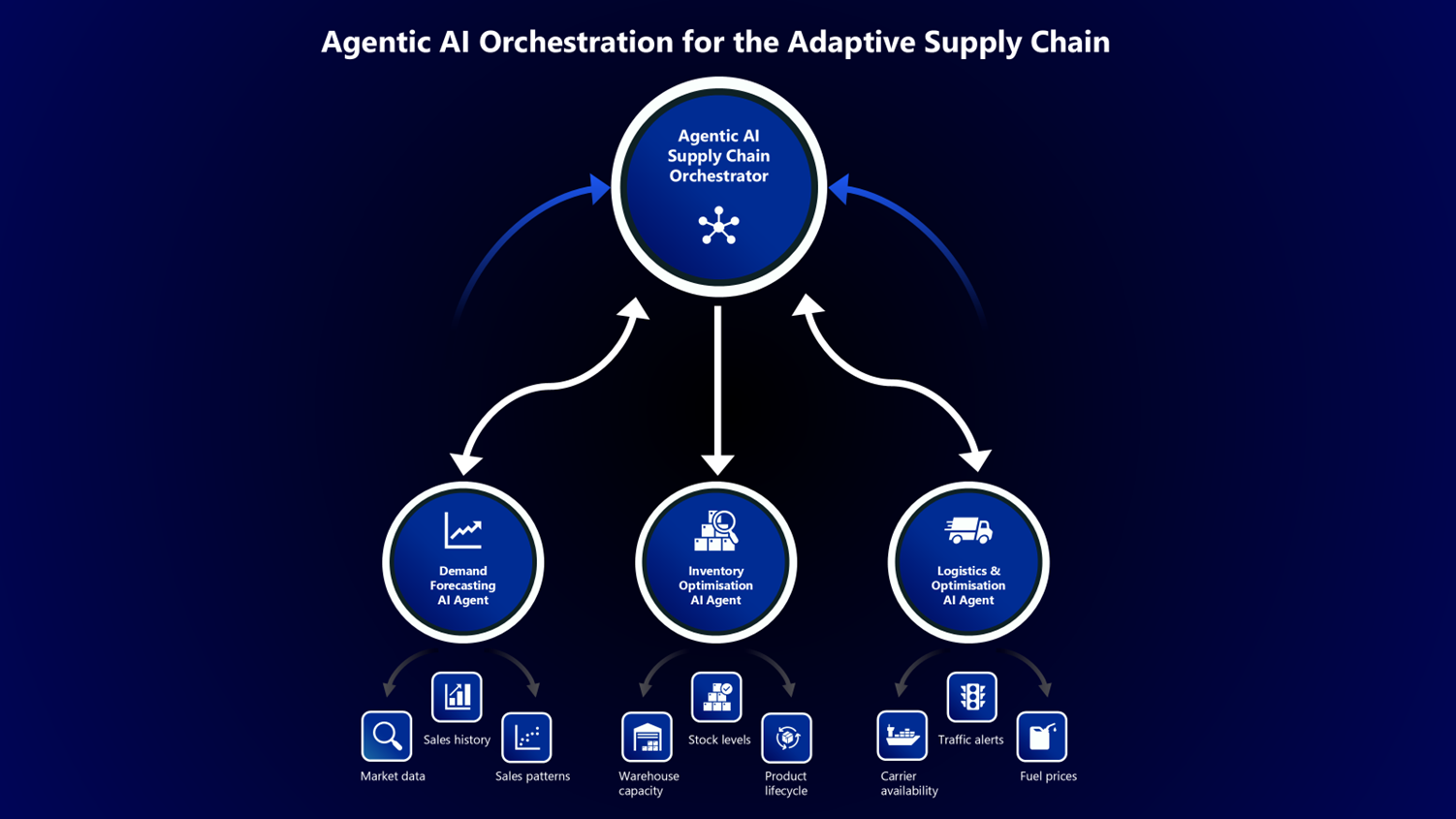
Agentic AI refers to sophisticated autonomous software agents capable of independently executing tasks, making informed decisions, and learning from interactions with minimal human intervention. These systems go beyond traditional automation by incorporating chaining mechanisms - breaking down complex goals into subtasks, retrieving relevant data, reasoning through context, and dynamically orchestrating execution.
Gartner frames this evolution as a shift from “reactive tools to proactive collaborators,” underpinned by memory, sensing, and orchestration capabilities. [2] UiPath echoes this, defining agentic automation as the fusion of AI, automation, and orchestration to manage end-to-end workflows that adapt dynamically to context. [3]
These agents are already transforming operations across sectors: guiding incident resolution in telecom; accelerating claims processing in insurance and enhancing therapy development in life sciences. They enable multichannel, context-rich interactions and support high-value tasks that require flexibility, judgment, and collaboration.
In short: traditional automation follows rules - agentic AI sets them.
The State of Manufacturing and Warehousing
Global supply chains are straining under persistent labour shortages, compressed delivery timelines from e-commerce growth, and rising demand volatility. Sustainability requirements further complicate decision-making, as firms must optimise not only for speed and cost but also for carbon impact.
Yet, despite these pressures, many warehouses still operate on rigid automation and heavy human oversight, systems that struggle to adapt to dynamic conditions. This mismatch between complexity and capability is widening.
According to ISG’s 2025 Agentic AI Market Report, manufacturing is among the top three industries actively piloting agentic AI, particularly in predictive maintenance, supply chain optimisation, and quality control. [4] The sector’s complexity makes it fertile ground for agents that can orchestrate multi-variable trade-offs in real time - such as balancing throughput, energy usage, and delivery constraints.
In effect, agentic AI is becoming the bridge between operational complexity and technological capability.
Agentic AI in Action: Supply Chain Use Cases
To illustrate the shift, imagine a smart warehouse where agents don’t just move goods - they decide how best to move them.
· Predictive Reordering: Inventory levels drop, and agents autonomously trigger reorders - not just based on historical demand, but factoring in sales velocity, social media buzz, weather patterns, and upstream supply constraints.
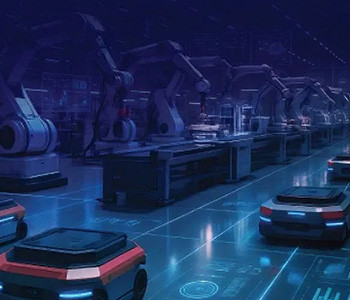
· Multi-Agent Orchestration: Fleets of warehouse robots dynamically reroute themselves to avoid congestion, maximising throughput in real time.
· Human-AI Collaboration: Workers are guided by agents recommending optimal picking strategies and resolving incidents, while humans remain focused on oversight and exception handling.
In manufacturing, agents already monitor equipment for predictive maintenance, analyse product quality via computer vision, and adjust production schedules dynamically to minimise downtime. Gartner describes this as a “sense and respond” capability - where the system autonomously detects disruptions, triages their impact, and orchestrates a coordinated response. [2]
The result is not just automation, but continuous orchestration: an ecosystem that learns, adapts, and improves without constant human instruction.