
















A Cognizant point of view on the digitalisation of the water sector and the European Commission’s forthcoming EU Action Plan on water digitalisation under the European Water Resilience Strategy (2026).
The European Commission is proposing a new EU Action Plan on the digitalization of the water sector as part of the European Water Resilience Strategy, which is expected to be published in late 2026. EU’s position on this is clear: they seek to modernize water management by unlocking data, a challenging task by itself, due to sector-specific fragmentation. What can we expect now?
The challenge of the past years – and the limits they create
Improvements in management of the water sector have been typically held back due to three main challenges: fragmentation, legacy and interoperability, proprietary data and weak governance. Fragmentation is noticed throughout the water cycle with data being divided from abstraction to wastewater emission and within different sectors through municipal, national and EU level management. Legacy infrastructures are unable to connect to modern IoT, with devices being invisible to each other. Finally, the use of proprietary data, with information trapped in closed formats generate questions of ownership, quality and trust.
When the data is locked up, predictive analysis becomes impossible. Without standards, utilities cannot benchmark and regulators are unable to identify a single source of truth. Combined, these impede authorities of responding quickly to transboundary droughts, floods and pollution. According to the Commission, global water technology market is currently worth EUR 111.7 billion, which is significantly underperforming due to these limitations.
We faced these challenges on the ground – in River Deep Mountain AI
Cognizant recently faced these challenges head-on while implementing our program River Deep Mountain AI. The Ofwat-Funded project, led by Northumbrian Water aimed to transform how river and waterbody health was measured across the UK. A goal that seemed to touch every one of the challenges mentions by the EU commission.
On the ground, fragmented and inaccessible data has real consequences. With scattered and hard to reach data, pollution events go on for longer, unnoticed. With untargeted monitoring, sampling efforts are misplaced and occur at inappropriate times. Finally, if continuous water quality data cannot contribute to generate real time insights, most of the outputs expected with be driven by reports of damage, instead of prevention.
What we deployed – what it delivered
RDMAI focused on tackling the issues mentioned by developing 8 open-source models based on AI/ML and remote sensing to improve catchment monitoring. From this experience, there are three main correlations to be highlighted with the EU’s agenda.
First, Open models can serve as an alternative to expensive tools, without compromising on insight quality. For example, flow monitoring can cost up to EUR 350.000 year in a couple of sites, a cost that can be prevented by deploying our flow model and optimizing sampling points. Similarly, our E.coli model requires near 0.04% of the financial investment to run a laboratory test, ensuring reliable “safe to swim” alert in optimal timing. The use of open source (free and accessible) data relate directly to the reduced cost and proprietary lock-in that the Commission names as core obstacles. In fact, we do understand from our experience that a wider dataset freely available would promote gains that surpass that would drive the sector into a more resilient operational model.
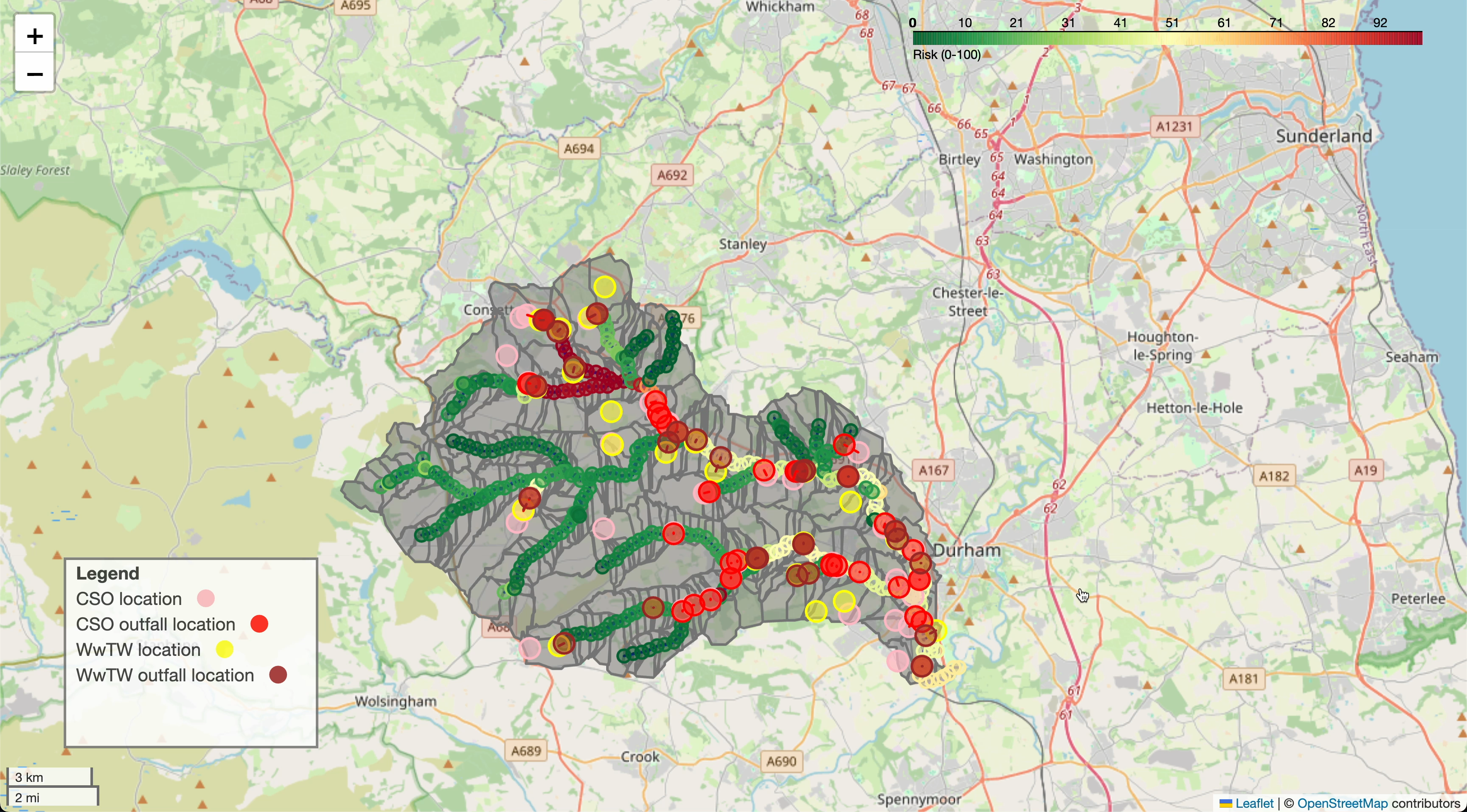
Second, AI and remote sensing enable wider monitoring reach and a more holistic management approach. Our remote sensing models focused on bare croplands, slurry tank detection and poached land categorization allowed for on the ground team to optimize their monitoring routes, reducing the time and expenditure on manual walkover. The integration with AI on these models also allow for a rapid analysis that saves time and generates prompt insights. Our Open Risk Map creates reliable output with runs of near 30 minutes on a ordinary laptop, allowing for non-specialists to generate catchment-risk analysis and support Drinking Water Safety Plans. The accessibility of our models address the skills gap that is mentioned by the Commission as a limitation for widespread implementation of new tech in the sector.