

December 10, 2025
Inside the AI Lab – December 2025 Edition

Inside the AI Lab – December 2025 Edition
The latest research updates and AI advancements from the AI Lab
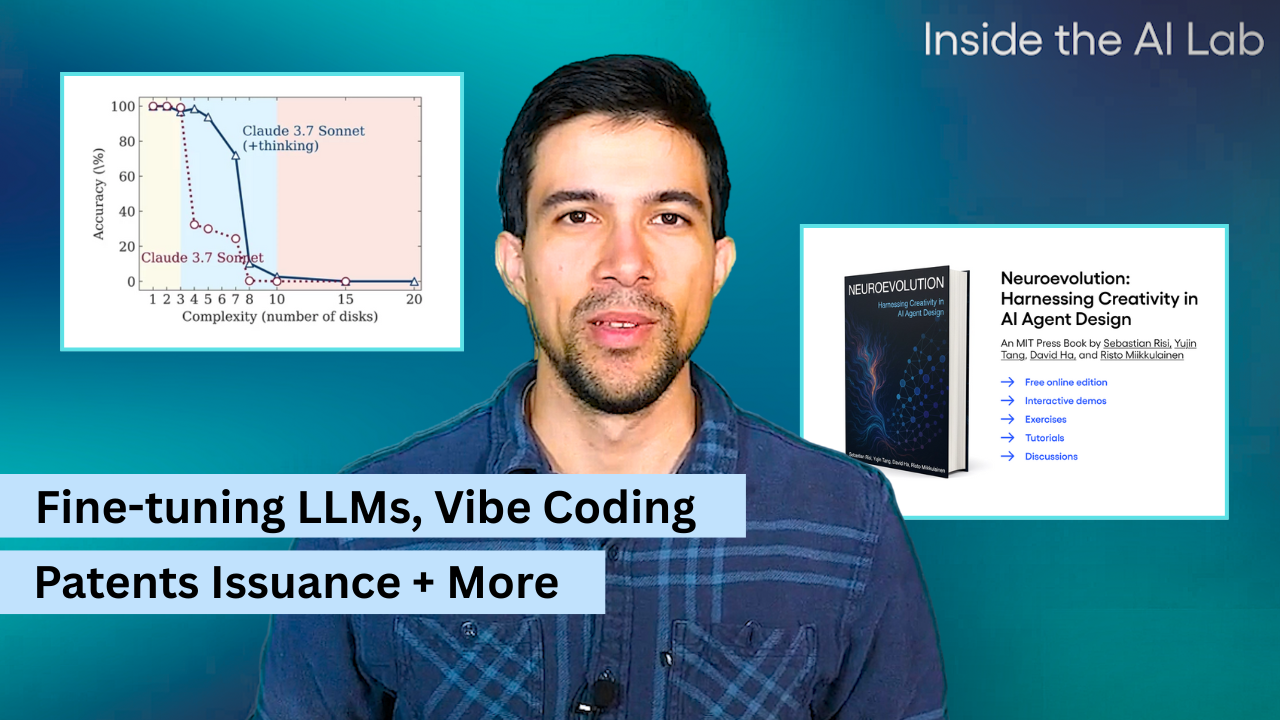
In this edition of Inside the AI Lab, we’re excited to share several groundbreaking advances – from record-setting multi-agent reasoning systems to new breakthroughs in large-scale LLM fine-tuning. You’ll also find updates on newly issued patents, thought leadership highlights, and a behind-the-scenes look at how Cognizant set a Guinness World Record in generative AI innovation.
We invite you to explore, share, and stay connected as we continue advancing responsible, decision-focused AI.
Regards,
Risto Miikkulainen
VP of AI Research & Professor of Computer Science, UT Austin
Publications Updates:
Meyerson, E., Paolo, G., Dailey, R., Shahrzad, H., Francon, O., Hayes, C. F., Qiu, X., Hodjat, B., and Miikkulainen, R. (2025) Solving a Million-Step LLM Task with Zero Errors: Large language models show major advances in reasoning and planning but still fail on long chains of dependent steps where small errors compound. Apple’s Illusion of Thinking study showed even top models like Claude 3.7 Thinking and DeepSeek-R1 collapse on the Towers of Hanoi problem beyond eight disks. In response, we built MAKER and by splitting the million-step, 20-disk Hanoi challenge into atomic subproblems solved by microagents and locally validated, MAKER became the first system to complete a million-step reasoning task with zero errors.
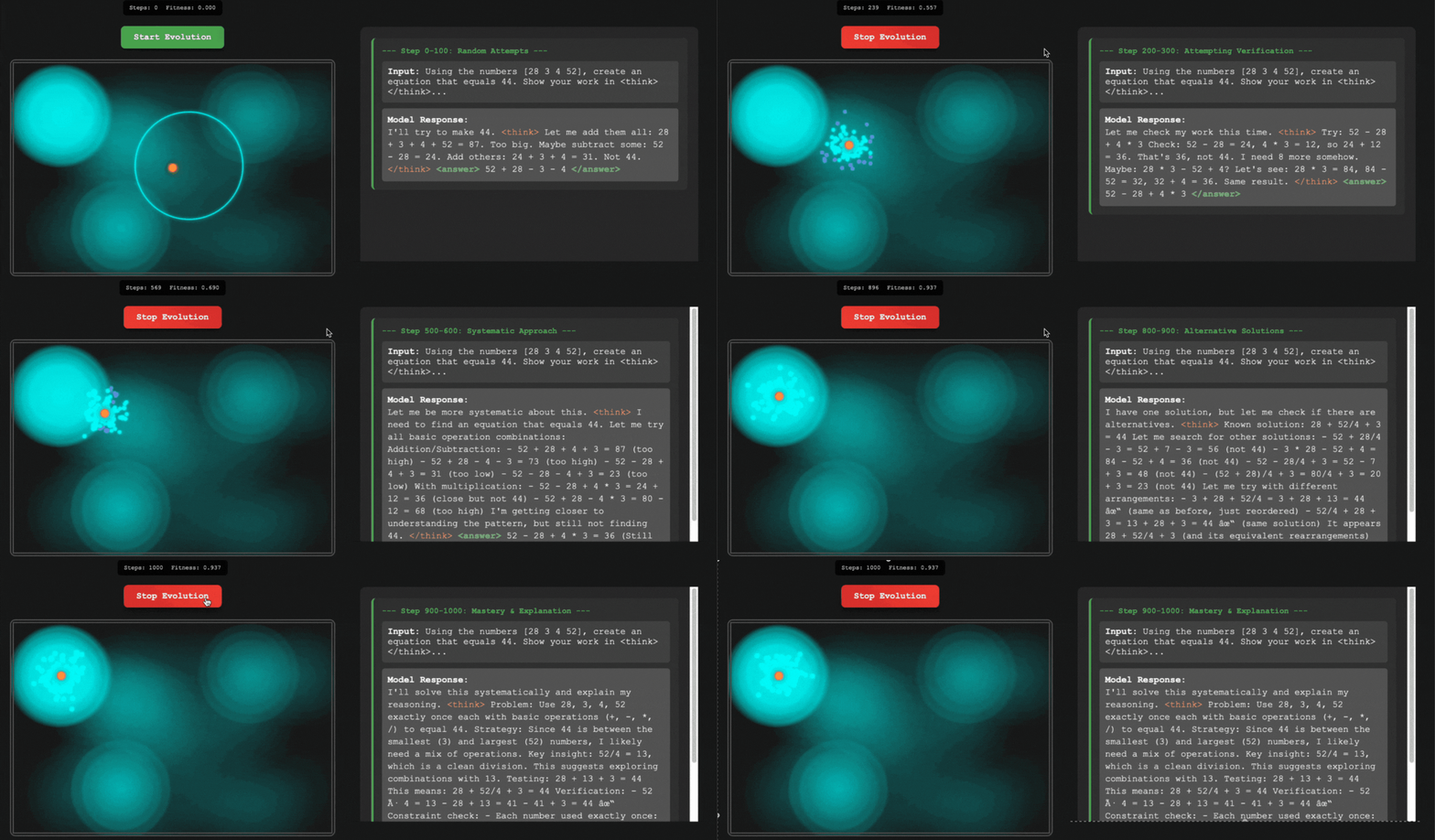
Qiu, X., Gan, Y., Hayes, C. F., Liang, Q., Meyerson, E., Hodjat, B., and Miikkulainen, R.(2025) Evolution Strategies at Scale: LLM Fine-Tuning Beyond Reinforcement Learning: Cognizant’s AI Lab introduces the first successful use of evolution strategies (ES) to fine-tune LLMs with billions of parameters, marking a transformative new approach beyond traditional reinforcement learning (RL) methods. The approach reduces training data needs and costs while achieving greater scalability, stability, and efficiency. In addition, optimizations to the ES codebase delivered 10x speed-up using faster vLLM inference engines.
Neuroevolution Book:
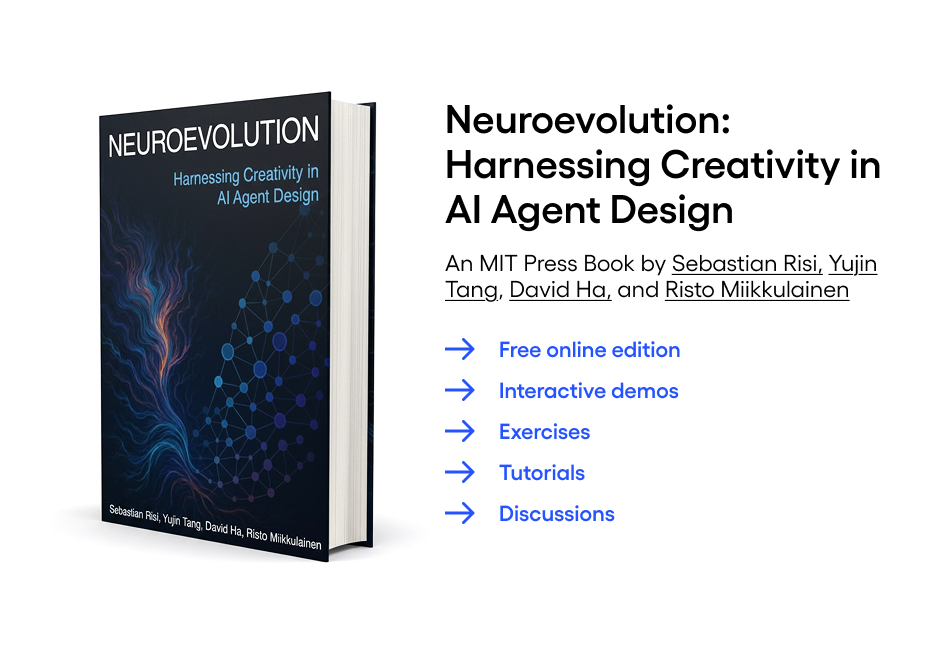
We’re excited to spotlight a new MIT Press book titled Neuroevolution: Harnessing Creativity in AI Agent Design written by long-time contributors to the field, Sebastian Risi, Yujin Tang, David Ha, and Risto Miikkulainen. The book brings together several decades of research that have transformed evolutionary computation from an academic pursuit into a foundation for building adaptive and creative AI. The book’s website also comes complete with demos, tutorials, exercises, and teaching resources to allow you to get hands-on with neuroevolution and creative agent design.
Check out the website, including an online open-access version of the book here.
Patents Issued:
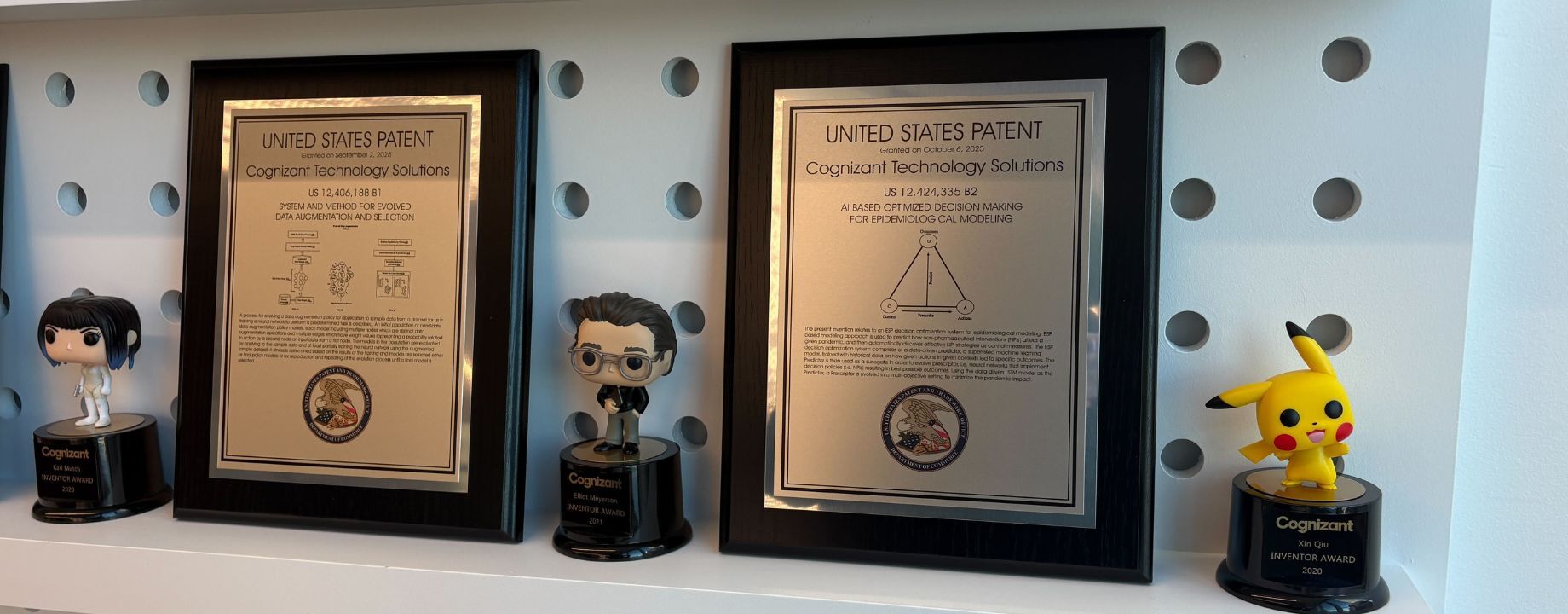
With two new U.S. patents being granted, our U.S. total is now 61. The two latest patents highlight key innovations from Cognizant’s AI research:
U.S. Patent No. 12,424,335 (issued September 23rd, 2025) covers systems and methods for AI-based optimized decision making for epidemiological modeling and describes the use of neural networks to predict epidemiological trends.
U.S. Patent No. 12,406,188 (issued on September 2nd, 2025) describes systems and methods for evolved data augmentation and selection, utilizing population-based search to automatically discover and select optimal data augmentation operations.
These innovations, developed by Cognizant’s researchers, Dr. Jason Liang, Dr. Elliot Meyerson, Olivier Francon, Dr. Xin Qiu and Professor Risto Miikkulainen, reinforce Cognizant’s leadership in pushing the boundaries of AI and machine learning.
What Our Researchers are Reading:
Curious what’s been sparking ideas in our lab lately? Our researcher, Roberto Dailey, has been exploring a range of thought-provoking new publications and below is a curated selection of the papers that recently caught his eye:
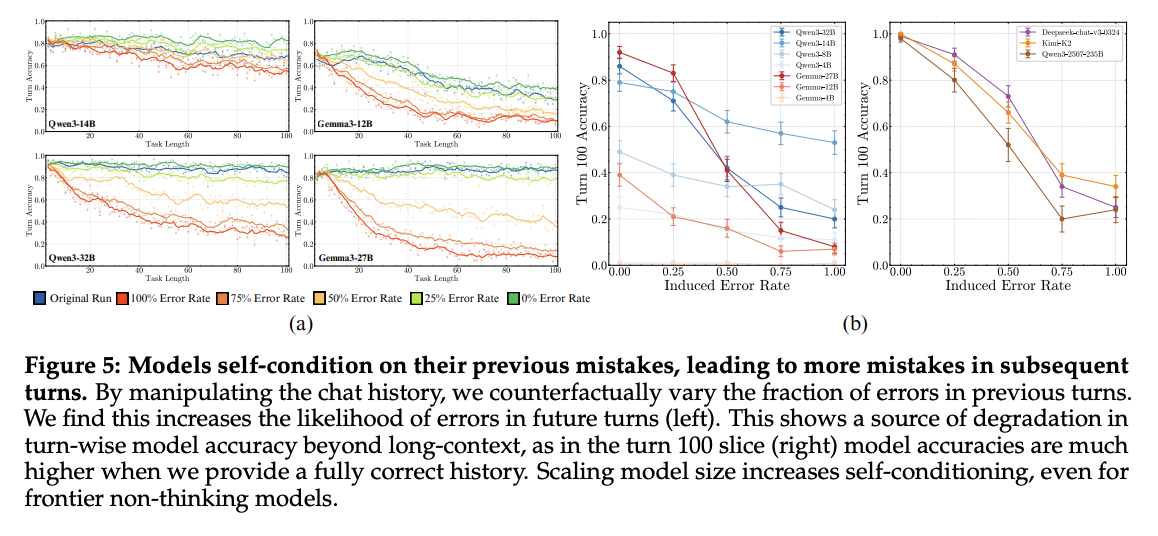
1. Sinha, A., Arun, A., Goel, S., Staab, S., and Geiping, J. (2025) The Illusion of Diminishing Returns: Measuring Long Horizon Execution in LLMs: Apple’s “The Illusion of Thinking” study showed that models collapse on massive multi-step tasks like large versions of Towers of Hanoi. This follow-up work finds that once a model makes an error, it “self-conditions,” and compounds mistakes across later steps, but that explicit reasoning can help backtrack and correct these errors. Thus, reducing per-step errors can dramatically extend the length of tasks LLMs can reliably complete.
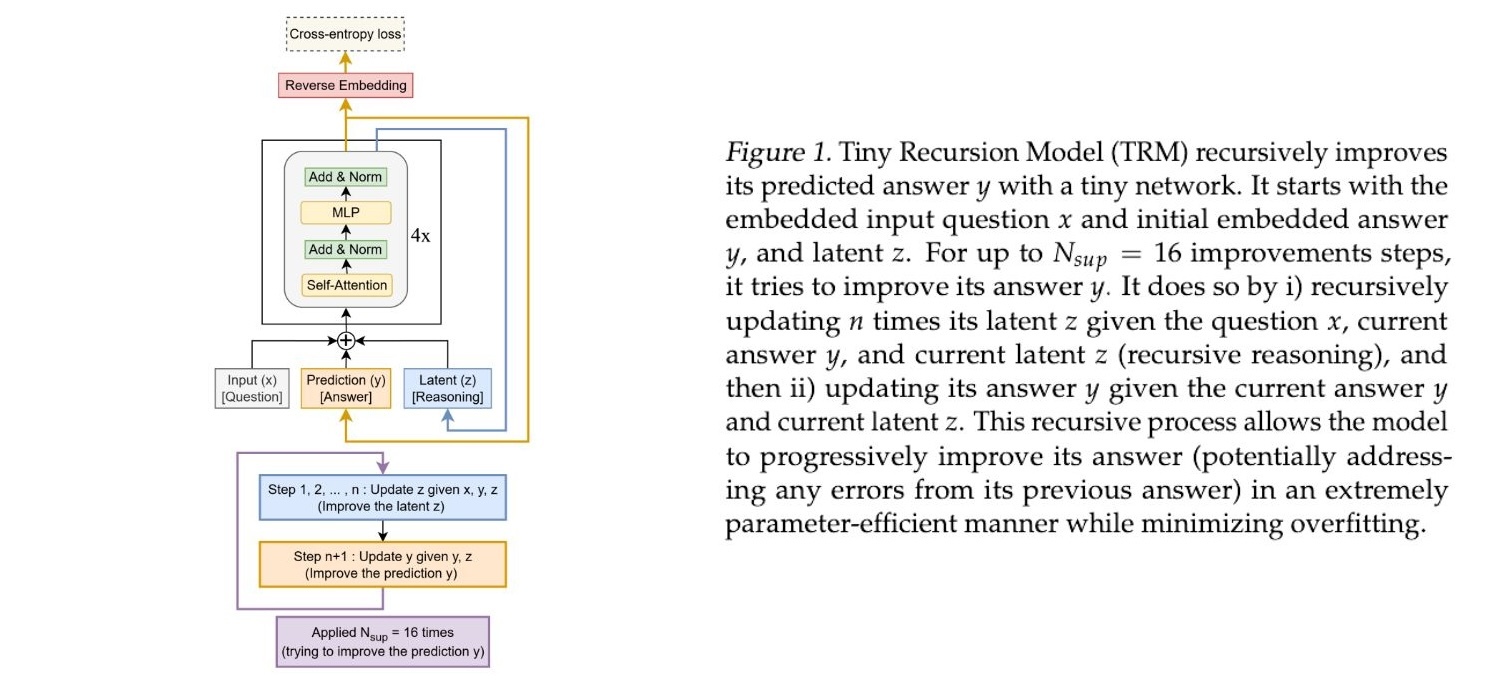
2. Jolicoeur-Martineau, A. (2025) Less is More: Recursive Reasoning with Tiny Networks: Like many others, we were excited by the Tiny Recursive Nodel (TRM) for its simultaneous simplicity and generalizability in solving difficult tasks such as sudoku extreme and ARC-AGI. TRM provides a framework to massively scale recursion and test-time compute, allowing individual tiny models to hold their weight against larger players simply by scaling compute.
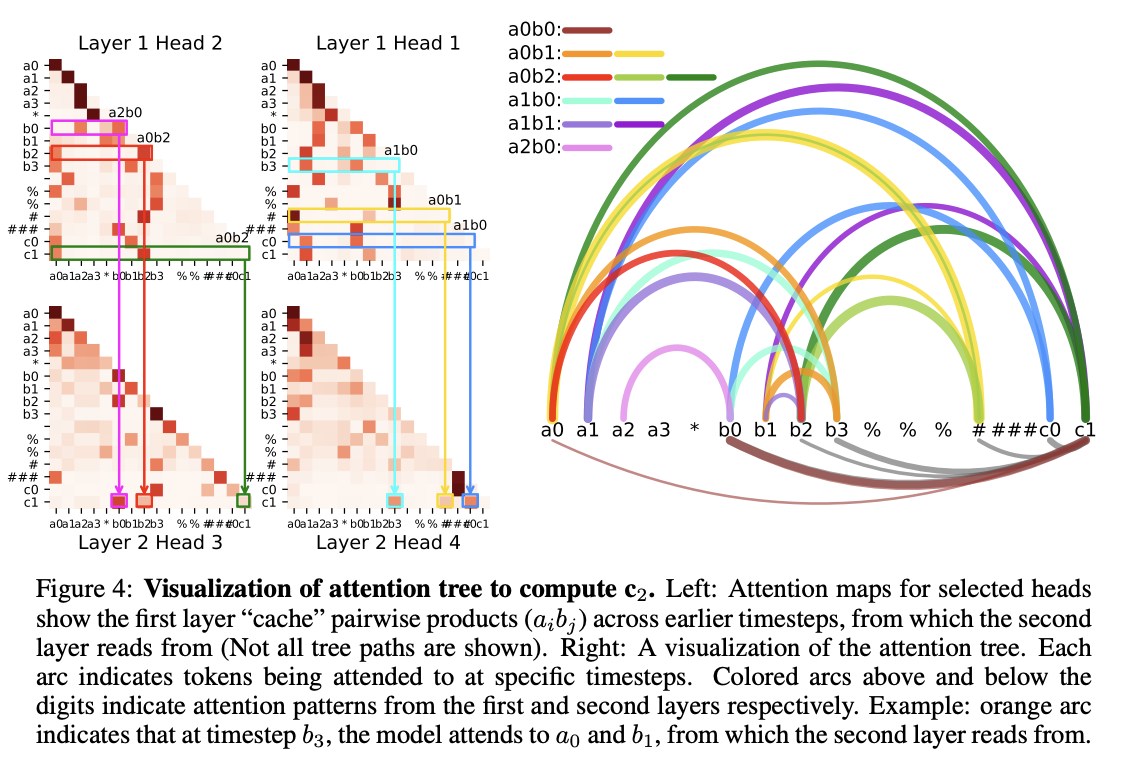
3. Bai, X., Pres, I., Deng, Y., Tan, C., Shieber, S., Viégas, F., Wattenberg, M., and Lee, A. (2025) Why Can’t Transformers Learn Multiplication? Reverse-Engineering Reveals Long-Range Dependency Pitfalls: LLMs show a long-standing contradiction: they can answer PhD-level questions yet struggle with simple arithmetic. This work trains a model on multiplication with chain-of-thought, then gradually removes it, showing that transformers can learn multi-digit multiplication, but only when training data is structured to teach the right long-range dependencies.
Record Breaking Vibe Coding Event:

Vibe Coding at Cognizant-How We Broke the Guinness World Record: In August 2025, Cognizant set a Guinness World Record for the largest online generative AI hackathon. While record-breaking — with 53,000+ associates submitting over 30,000 ideas and prototypes, each with its own codebase, documentation, and video pitch — it also posed a challenge: how could we judge them fairly and efficiently? The answer lay in Cognizant’s Neuro AI Multi-Agent Accelerator.
Thought Leadership:
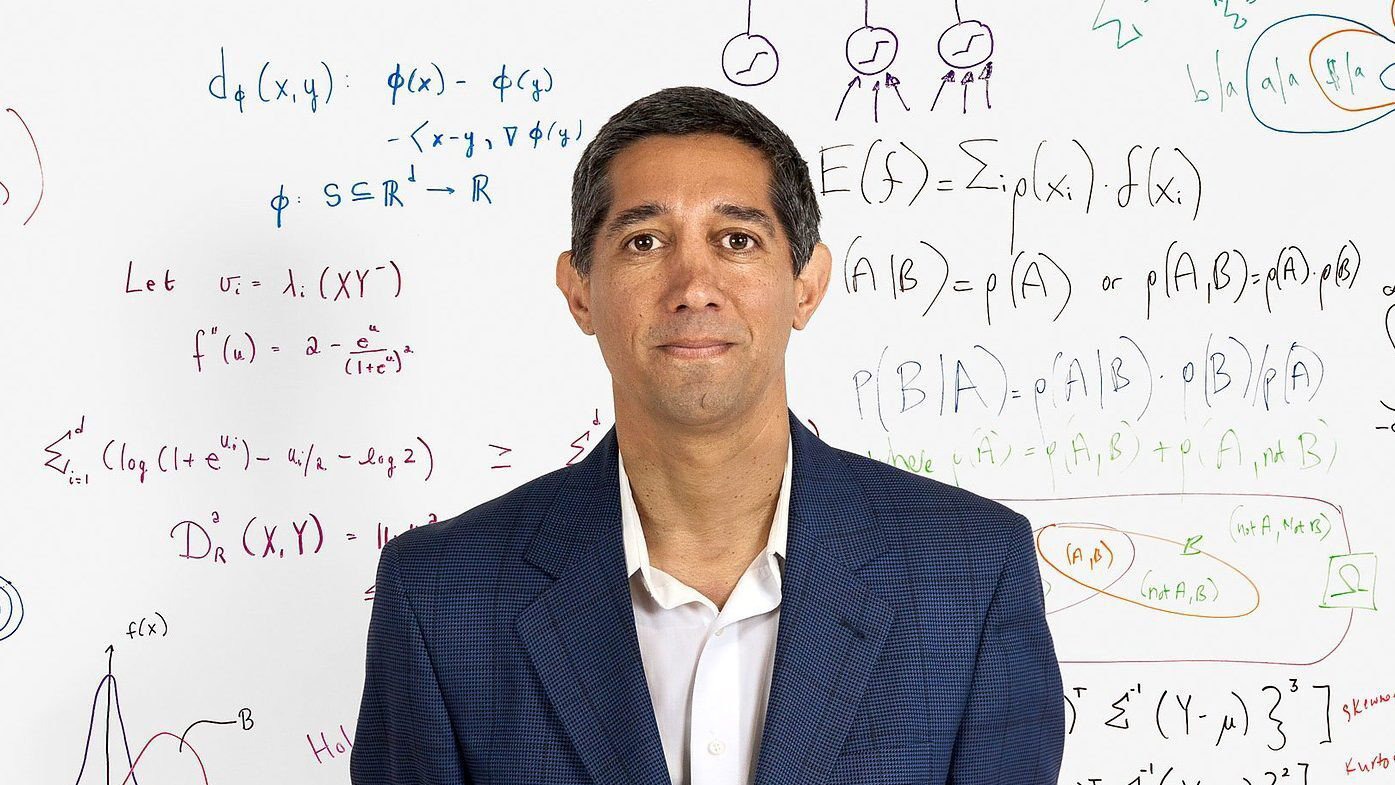
AI 100 UK List 2025: Babak Hodjat, Chief AI Officer at Cognizant has been named on the Digital Leaders AI 100 UK List 2025, a recognition of the leaders shaping the future of responsible, ethical, and impactful AI across the UK.
BBC News Feature: As some tech leaders prepare for bunkers and ‘doomsday scenarios,’ BBC explores the growing divide between fear and optimism in the age of AI. Amid the hype, Babak Hodjat offers a grounded perspective. AI isn’t defined by a single breakthrough, but rather by a journey of many transformative moments. True intelligence, he reminds us, requires context, consciousness, and continuous learning, guiding us to innovate responsibly, with human purpose at the core.

Web Summit Lisbon: Our Chief AI Officer Babak Hodjat was center stage at Web Summit Lisbon Day 2 with BBC News' Social News Editor and Presenter Ciara Riordan, discussing how to build intelligent products and how the true power of agentic AI is unleashed with intelligent design. On Day 3 of Web Summit in the closing keynote, Babak traced AI’s evolution from early monolithic systems to today’s powerful multi-agent architectures driven by LLMs and introduced Cognizant’s new research, “Solving a Million-Step LLM Task with Zero Errors.”
A Million Agents is All You Need-Microsoft Ignite Talk: Risto Miikkulainen, our VP of AI Research, recently spoke at Microsoft Ignite, highlighting the shift from traditional AI to advanced multi-agent systems capable of real-world decision-making and collaboration. He also showcased innovations like the Neuro SAN platform, new trust-measurement techniques, and evolutionary fine-tuning methods that improve reasoning and reliability.
For more research updates, be sure to subscribe to our newsletter.

Risto Miikkulainen is VP of AI Research at Cognizant AI Lab and a Professor of Computer Science at the University of Texas at Austin.