

November 26, 2025
Beyond the Algorithm – Charting a New Course for AI with a Human Compass

Beyond the Algorithm – Charting a New Course for AI with a Human Compass
Exploring how AI becomes truly transformative when guided by ethics, empathy, and shared human goals
In the relentless hum of our digital world, it’s easy to view Artificial Intelligence through a narrow lens—as a tool for optimization, a driver of efficiency, a new frontier for commercial enterprise. The headlines are dominated by a race for bigger models and smarter assistants. But to see only this is to miss the point entirely. It’s like staring at a map without seeing the world it represents.
Beyond the code and the computation lies the true, breathtaking potential of AI: its capacity to serve as a powerful catalyst for human progress, a tool to help us solve the very challenges that have defined generations. This is the heart of the "AI for Good" movement—not as a niche interest or a corporate tagline, but as a moral and strategic imperative for our time.
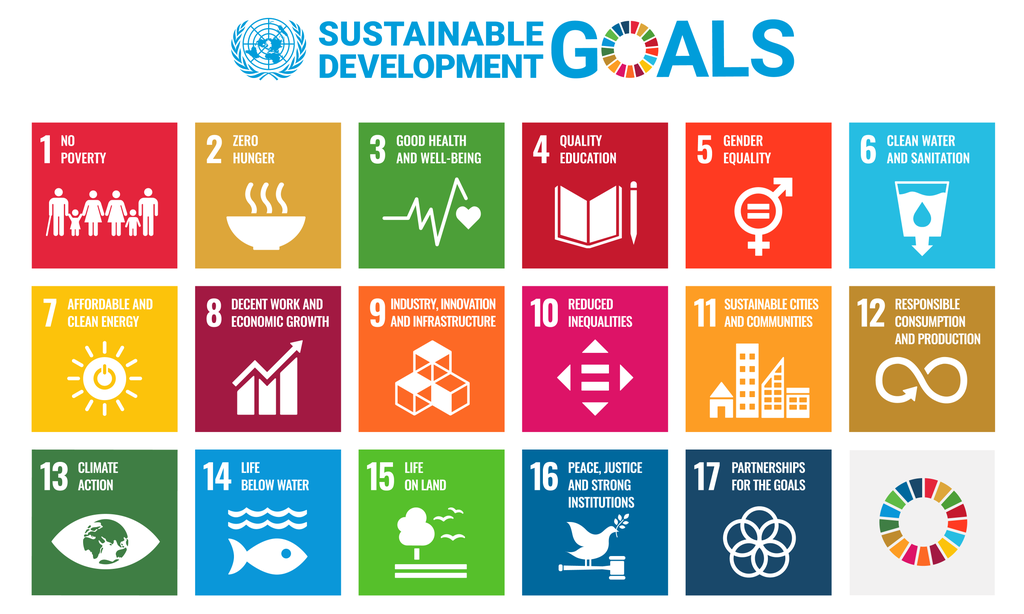
Humanity's Exam Paper: The 17 Sustainable Development Goals
The United Nations has given us the exam paper for our collective future: the 17 Sustainable Development Goals (SDGs). This is our shared roadmap for creating a more equitable, sustainable, and prosperous world by 2030. It’s an ambitious list, tackling everything from ending poverty (Goal 1) and ensuring good health (Goal 3) to protecting our oceans (Goal 14) and combating climate change (Goal 13).
For decades, we’ve tackled these challenges with policy, with funding, with the tireless work of human hands and hearts. Today, we have a new ally. AI gives us the ability to see patterns in complexity, to simulate futures, and to augment human decision-making at a scale we’ve never had before. It is, perhaps, the most powerful study aid humanity has ever invented for its most important test.
From Code to Impact: Where AI is Already Making a Difference
This isn't science fiction; it's happening now. Across the globe, AI is moving from the lab to the field, creating tangible, positive change.
- In the fight for Good Health and Well-being (SDG 3), AI algorithms are helping doctors detect diseases like cancer from medical images with greater speed and accuracy, democratizing access to high-quality diagnostics.
- To promote Climate Action (SDG 13), AI models are analyzing vast streams of satellite data to provide real-time alerts for illegal deforestation and to help firefighters predict the path of wildfires.
- To protect Life Below Water (SDG 14), AI is being used to analyze underwater audio recordings to monitor the health and diversity of marine populations, a task impossible for humans at a global scale.
At Cognizant, we’ve been proud to contribute to this story. Our work with AI Commons and the XPRIZE Pandemic Response Challenge showed us the incredible power of collaborative intelligence. We brought together teams from around the world to build models that didn’t just predict the spread of a virus, but prescribed optimal policy interventions to balance public health with economic stability. This experience was a blueprint for the future: a demonstration of how a community, armed with the right platform and a shared goal, can tackle a global crisis.
That same spirit powered our prototype project on emissions from land-use change, a complex problem at the heart of the climate crisis. These efforts are not isolated projects; they are proof points of a deeper philosophy. They are guided by a commitment to Responsible Decision-Making with AI (RDMAI), ensuring that everything we build is grounded in ethics, fairness, and transparency. Because "for good" must be "good" for all.
The Path Forward: It’s Not About the Tech, It’s About the Trust
The greatest promise of AI is not in its autonomy, but in its ability to augment our own humanity. The most powerful algorithm is useless without the domain expertise of the farmer, the empathy of the doctor, and the wisdom of the community leader.
The greatest barrier to scaling "AI for Good" is not a lack of technology or ideas. It is a lack of the connective tissue—the trust, the collaborative platforms, and the shared missions—that allow these brilliant but isolated efforts to join forces and become a global movement.
Our task, then, is not just to build better algorithms. It is to build bigger tables. It is to convene the brightest minds from every field—the data scientist and the social worker, the engineer and the ethicist—and give them a common place to work and a common direction to head.
The question that should drive us every morning is not "What can AI do?" but rather, "What should AI do?" And the answer must always be rooted in our shared hope for a better, more humane future. The journey is just beginning, and it’s a journey we must all take together.

Stig Martin Fiskå is the Global Head of AI for Good at Cognizant, leveraging cutting-edge technologies and innovative solutions to drive sustainability, efficiency, and growth.