

September 15, 2026
Introducing Agent Academy: Learn Agentic AI from the People Building It

Introducing Agent Academy: Learn Agentic AI from the People Building It
Cognizant AI Lab launches Agent Academy, a free learning hub designed to take learners from the foundations of AI agents to building production-ready multi-agent systems, with structured courses, hands-on learning, and official certifications.
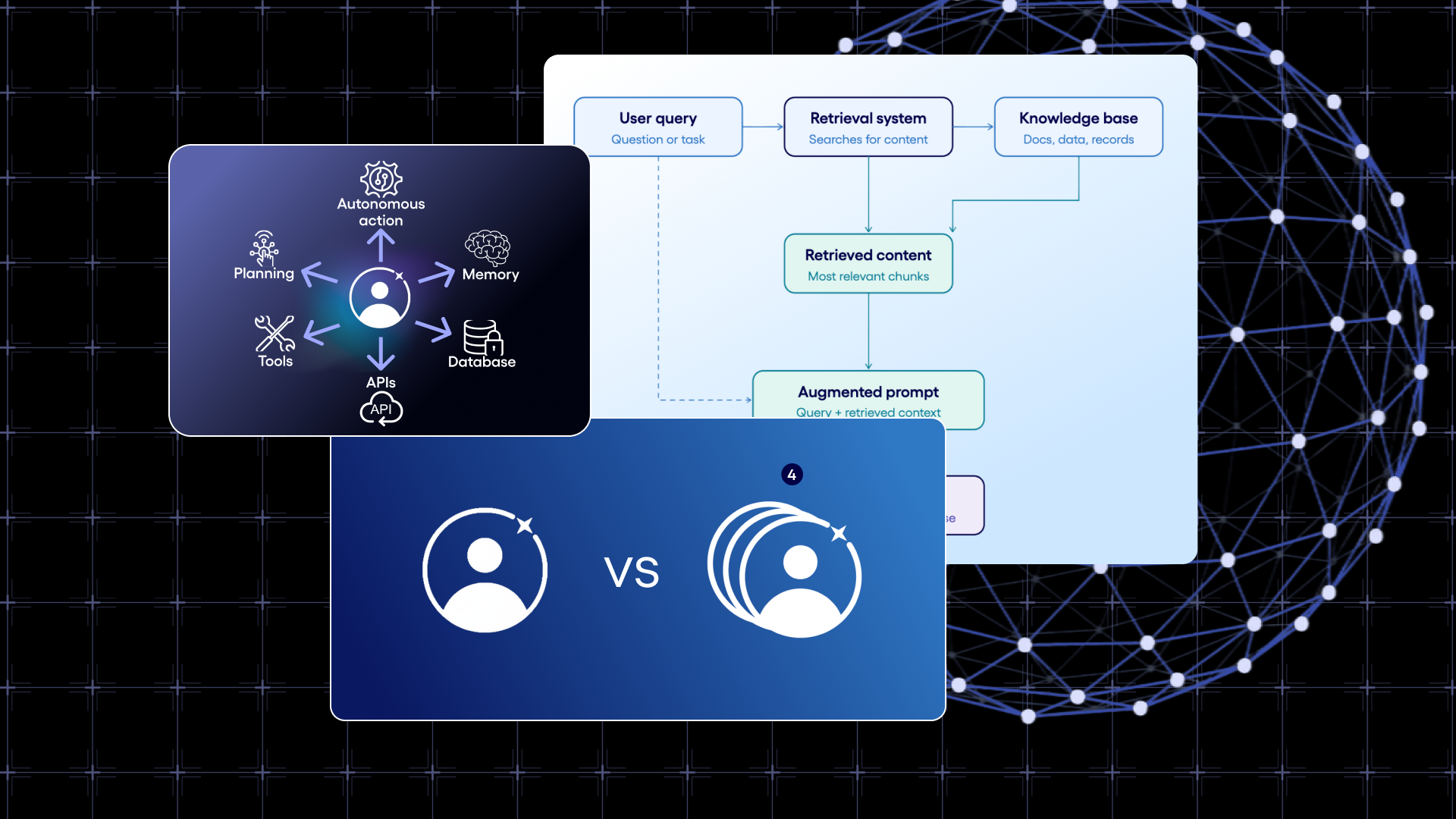
Almost every organization we talk to is building agents right now, and almost every one of them is learning the same lessons the expensive way. Teams build a demo that works beautifully in a notebook, then watch it behave unpredictably the moment it encounters real data, real tools, and other agents it was never tested alongside.
The problem usually is not the code. It is that the conceptual groundwork was never laid. What is an agent actually supposed to do? When is a single agent the right answer, and when is it not? How does coordination work once several agents are involved? And what needs to be true before any of it is safe to put in front of a customer?
Learning those fundamentals is harder than it should be. Agentic AI is evolving quickly, with new frameworks, terminology, and approaches appearing constantly. Much of the material available today either stays at a high level or jumps directly into building with a particular tool. That leaves a lot of ground uncovered between understanding what an AI agent is and knowing how agents reason, use tools, work together, interact with data, and eventually operate reliably in real-world environments.
This led us to create a more accessible way to learn those fundamentals. Agent Academy is a free learning hub from Cognizant AI Lab designed to take learners from the foundations of AI agents to building production-ready multi-agent systems.
Introducing Cognizant Agent Academy
Agent Academy provides a structured learning path, starting with the principles behind AI agents and multi-agent systems and progressing into agent design, hands-on development with Cognizant Neuro® San, our open-source framework for building multi-agent systems, and the practical considerations involved in taking agentic systems into production.
The first course, Agent Foundations, is available now. The free, self-paced course introduces the core concepts behind AI agents and multi-agent systems and gives learners the opportunity to earn an official Cognizant AI Lab certification.
Why Learn Agentic AI?
Learning these fundamentals is becoming more important as the role of AI itself changes. Generative AI gave millions of people a new way to interact with AI through prompts and responses. Agentic systems go further by giving AI the ability to work toward goals, reason about what to do next, use tools, retrieve information, take actions, evaluate results, and coordinate with other agents.
That changes both what AI can do and what people need to understand about it. As agents become part of software, research, customer experiences, and enterprise workflows, knowing how to prompt an LLM is only one piece of the picture. Teams need to understand when a problem actually calls for an agent, how responsibilities should be divided when several agents are involved, how those agents interact with tools and data, and how to make sure the resulting system remains observable, secure, and aligned with its intended purpose.
These questions are not limited to the engineers writing the code. Product teams are deciding where agentic approaches belong in their products. Architects and developers are making decisions about how agents should interact and coordinate. Business and technology leaders are evaluating where these systems can create value and what new risks they introduce. As agentic AI becomes more widely used, a working understanding of how these systems operate will increasingly matter across all of these roles.
That makes the foundations a natural place to start.
Agent Academy Courses: From AI Agent Foundations to Production
Agent Foundations is only the beginning. Agent Academy is organized as a progressive learning path that takes learners from understanding agentic AI to designing, building, and preparing multi-agent systems for real-world use.
Agent Academy includes four progressive courses:
Agent Foundations –Learn the core concepts behind AI agents and multi-agent systems.
Agent Design – Learn how to design reliable, secure, scalable agentic systems.
Quickstart: Build Your First Multi-Agent System – Build a working multi-agent system using Neuro San.
Production-Ready Agentic Systems – Explore integrations, testing, observability, debugging, orchestration, security, and scaling.
Across the four courses and more than 35 lessons, the curriculum moves from foundational concepts into increasingly practical and technical material. After Agent Foundations, Agent Design goes deeper into how agentic systems should be structured, including the principles behind designing systems that are reliable, secure, scalable, and suited to the problems they are intended to solve.
Quickstart: Build Your First Multi-Agent System then moves from design into hands-on development. Learners use Neuro San to build a working multi-agent system and apply the concepts introduced earlier in the Academy.
The final course, Production-Ready Agentic Systems, focuses on what changes when an agentic system needs to move beyond a prototype. Learners go deeper into the practical challenges involved in integrations, testing, observability, debugging, orchestration, security, and scaling with Neuro San.
The progression is intentional. Rather than jumping straight into building, Agent Academy first establishes how these systems work and how to think about their design. Learners can then put those concepts into practice and progressively tackle the challenges that emerge as agentic systems become more complex and move closer to production.
What You'll Learn in the Agent Foundations Course
Agent Foundations, the first available course in Agent Academy, is designed to give learners that starting point. The course is free, beginner-friendly, and self-paced – no prior experience building agents is required.
Across five modules, learners develop an understanding of the concepts that sit underneath agentic systems. The course begins with what makes an AI agent different from a chatbot or traditional automation, including the roles of reasoning, memory, and tools. It then introduces multi-agent systems and explores how specialized agents can divide responsibilities, coordinate their work, and pursue shared goals.
From there, learners explore agentic AI more broadly, including how capabilities such as perception, planning, action, and evaluation come together within an agentic system. The course also introduces retrieval-augmented generation and agentic RAG, exploring how agents can make retrieval more dynamic by determining what information is needed and how it should be used.
The final module focuses on what it takes to build these systems responsibly. Learners are introduced to concepts related to security, privacy, observability, testing, and responsible AI, along with the safeguards that become more important as agents gain access to tools, data, and real-world workflows.
By the end of Agent Foundations, learners should have the conceptual grounding to understand not only what agents are, but how the pieces of an agentic system fit together and what questions they should be asking before they begin building. Learners can then take a certification exam to earn an official Cognizant AI Lab Agent Foundations certification that can be downloaded and shared, including on LinkedIn.
Learn Agentic AI From Cognizant AI Lab Researchers and Engineers
In a field moving this quickly, who you learn from matters. The Agent Academy curriculum comes from two places: the research and development side of advancing agentic AI, and the rooms where these systems are actually being designed and deployed.
On the research side, Agent Academy is built by researchers and engineers who are actively working on many of the same problems the courses are designed to teach. Our work spans multi-agent systems, autonomous research, evolutionary AI, agent coordination, responsible AI, and emergent agent behavior. Across the Lab, that work has contributed to more than 90 peer-reviewed publications, 65 U.S.-issued AI patents, and more than 20 open-source AI tools.
That work also includes Neuro San, our open-source framework for building and orchestrating multi-agent systems. Neuro San gives developers a way to create networks of specialized agents that can collaborate on complex tasks, and it reflects many of the ideas learners encounter throughout Agent Academy in a working framework. As learners progress through the Academy, they can use Neuro San to put those concepts into practice, moving from understanding how multi-agent systems work to building them themselves.
At the same time, our teams are in conversations with enterprises that are designing, deploying, and sometimes struggling with agentic systems across industries including financial services, healthcare, manufacturing, retail, and the public sector. We see where promising prototypes run into real-world complexity, the questions teams repeatedly encounter, and the gaps in understanding that can make those problems harder to solve.
Those two perspectives shape Agent Academy. The curriculum combines the principles emerging from our research and engineering with the lessons we are seeing as organizations put agents to work. The goal is not simply to teach people how to use a particular framework, but to give them the foundation to understand why agentic systems work, where they break down, and how to make better decisions as they design and build them.
Agentic AI Isn't Just For AI Engineers
Agent Academy is designed for more than just the developers writing agent code. As agents become part of more products, workflows, and business processes, people across technical and nontechnical roles will need enough understanding of these systems to make better decisions about how they are designed and used.
For developers and engineers, Agent Academy provides a path from the core concepts of agentic AI into hands-on multi-agent development.
Product managers and strategists can build the technical grounding needed to identify meaningful use cases, understand what agentic architectures make possible, and work more effectively with engineering teams.
Business and technology leaders can develop the fluency needed to evaluate agentic opportunities, understand the tradeoffs involved, and ask better questions as these systems enter the enterprise.
Researchers, students, and others interested in the field can connect foundational concepts with the architectures and practical challenges shaping how agentic systems are being built today.
Because the curriculum progresses from foundational concepts into more technical material, learners can begin without prior agent development experience and build their understanding as they progress.
Start Learning Agentic AI With Agent Academy
The teams building agents today are helping define how this technology will be used tomorrow. But moving from a compelling prototype to an agentic system that works reliably in the real world requires more than knowing how to connect a model to a few tools. It requires understanding the principles underneath the system, the decisions involved in designing it, and the new challenges that emerge as agents become more capable and interconnected.
Agent Academy brings what we are learning through Cognizant AI Lab's research, engineering, and open-source development into a free learning path that anyone can access. Agent Foundations is available now, with additional courses coming soon that will take learners deeper into agent design, hands-on development with Neuro San, and production-ready multi-agent systems.
Start Agent Academy today and earn your first Cognizant AI Lab certification.

Marketing expert with 5+ years of experience in brand strategy, content creation, and campaign execution.