Skip to main content Skip to footer

Module Overview:

Welcome to the second module in the Agent Foundations series, where we’ll be diving into the concept of multi-agent systems.

Single-agent systems already move beyond traditional chatbots, unlocking capabilities that were previously not possible. But what happens when multiple agents begin coordinating with one another? Multi-agent systems take this a step further by distributing intelligence across many cooperating agents, rather than relying on a single model to solve everything.

In this module, you’ll learn:

  • What defines a multi-agent system 

  • Core capabilities of multi-agent systems

  • The key differences between single-agent and multi-agent systems

  • How agent roles and responsibilities are defined in multi-agent systems

  • The basics of coordination in multi-agent systems

By the end of this module, you should have a clear understanding of what multi-agent systems are, how they differ from single-agent systems, and the new capabilities they unlock.

Estimated time length: 30 minutes
Lesson 1: Definition of A Multi-Agent System

Learning objectives

By the end of this lesson you will be able to:

  • Define what a multi-agent system is and explain how it differs from a single agent
  • Describe the five core capabilities that allow agents to work together effectively
  • Explain why distributing intelligence across agents changes what a system can do

At a high level, what makes an agent different comes down to three core capabilities:

  • The ability to perceive its environment by taking in information from users, systems, or data sources
  • The ability to make decisions by reasoning through options and determining next steps
  • The ability to take action, including calling APIs, retrieving or updating data, triggering workflows, or interacting with other systems

Because of this, agents do not operate as one-time interactions. They work through tasks over time. A typical agent gathers information, determines the next step, takes action, and then repeats the process until the goal is reached. This allows agents to handle multi-step tasks that would normally require ongoing human involvement.

This is what makes agents different from traditional AI systems. A model might answer a question or generate content, but an agent is responsible for completing a task. That shift from generating outputs to executing actions is what defines agentic AI.

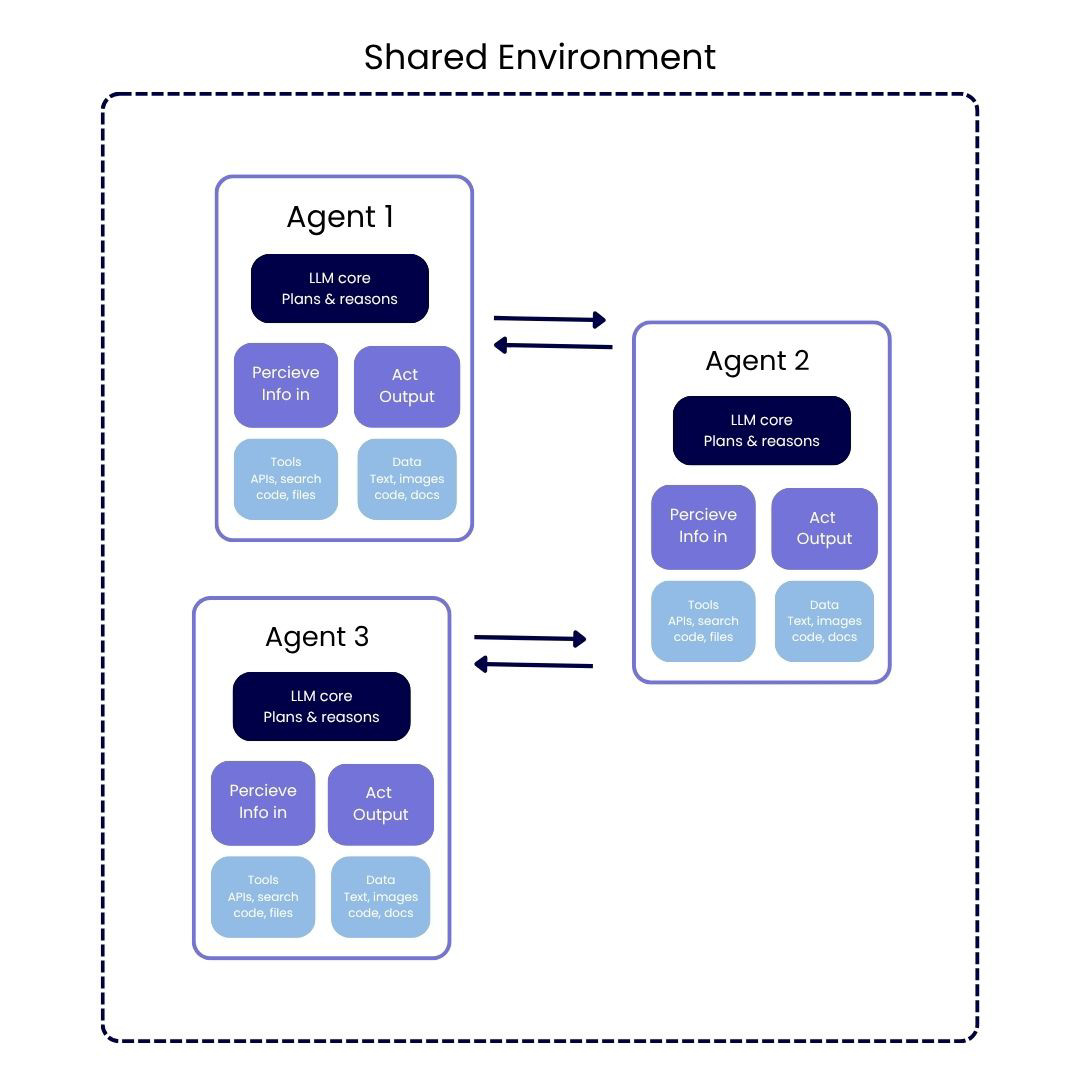
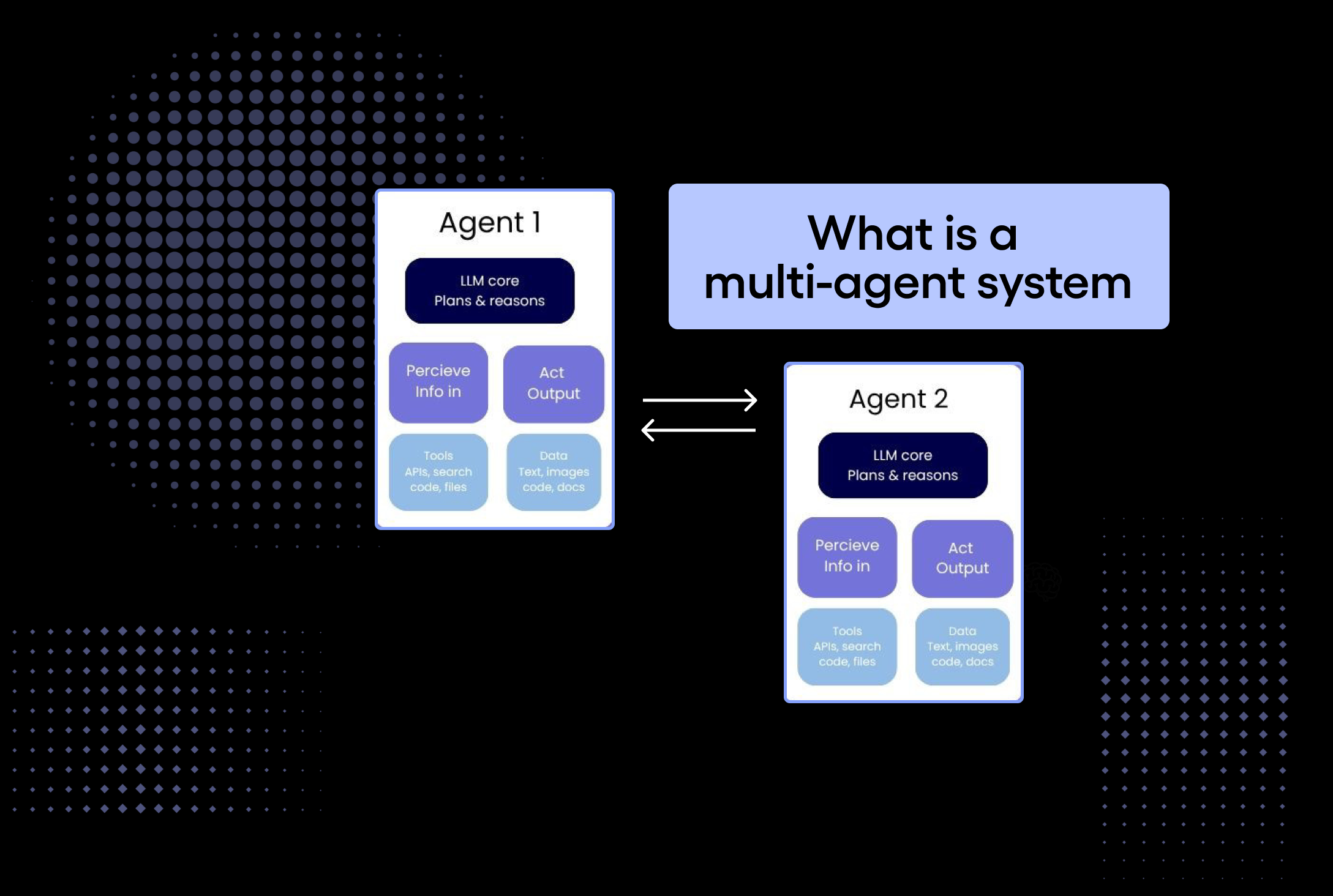
Agent diagram

A multi-agent system is a coordinated network of these autonomous agents, each with a defined role, working together toward a shared goal. The agents are not simply running in parallel with no relationship to each other. They communicate, divide work, and adapt based on what the others are doing. The system behaves as an organized whole rather than a collection of independent processes.

This matters because a single agent, no matter how capable, is still constrained by what one model can process, hold in context, and handle sequentially. A multi-agent system breaks those limits. Complex workflows that would overwhelm a single agent become manageable when the problem is divided across multiple specialized agents working in coordination.

Core capabilities

Multi-agent systems rely on five foundational capabilities that allow independent agents to function as an organized whole.

Autonomy

Each agent can perceive its environment, make decisions, and act without waiting for instructions from a central controller. This independence allows agents to respond quickly to changing conditions and to scale: new agents can contribute immediately without restructuring the entire workflow.

Decentralization

Decision-making is distributed across many agents rather than concentrated in one place. This reduces bottlenecks, improves resilience, and allows the system to keep operating even when information is incomplete. In environments that evolve quickly, local decisions are often faster and more accurate than centrally managed ones.

Coordination

Agents need to work toward a shared outcome without getting in each other's way. Coordination usually comes from giving agents clear roles, goals, and boundaries so each one understands how its behavior fits into the broader process. Without it, you have a collection of independent agents. With it, you have a system.

Communication

Agents share information they cannot gather on their own. This may involve direct messaging, structured data exchange, or updates to a shared context. Agents typically communicate only with the agents that hold relevant knowledge, which keeps the system efficient and prevents information overload.

Adaptability

Agents adjust to new information and changing conditions as they arise. When many adaptive agents interact, the system can exhibit emergent behavior that improves performance in ways that were not explicitly programmed. This makes multi-agent systems well-suited for dynamic environments where priorities shift frequently.

Key insight

The strength of a multi-agent system is not in any single agent. It is in the structure. Distribution, specialization, and coordination are what allow the system to handle problems that would overwhelm a single model.

Up next: Now that you have a solid foundation for what a multi-agent system is, the next lesson will dive into how multi-agent systems compare to single-agent systems, and when each approach is the right choice.

Lesson 2: Single vs Multi-Agent Systems

Learning objectives

By the end of this lesson you will be able to:

  • Explain the key differences between single-agent and multi-agent approaches
  • Describe how multi-agent systems improve on scalability, robustness, and parallel execution
  • Identify the types of tasks each approach is best suited for

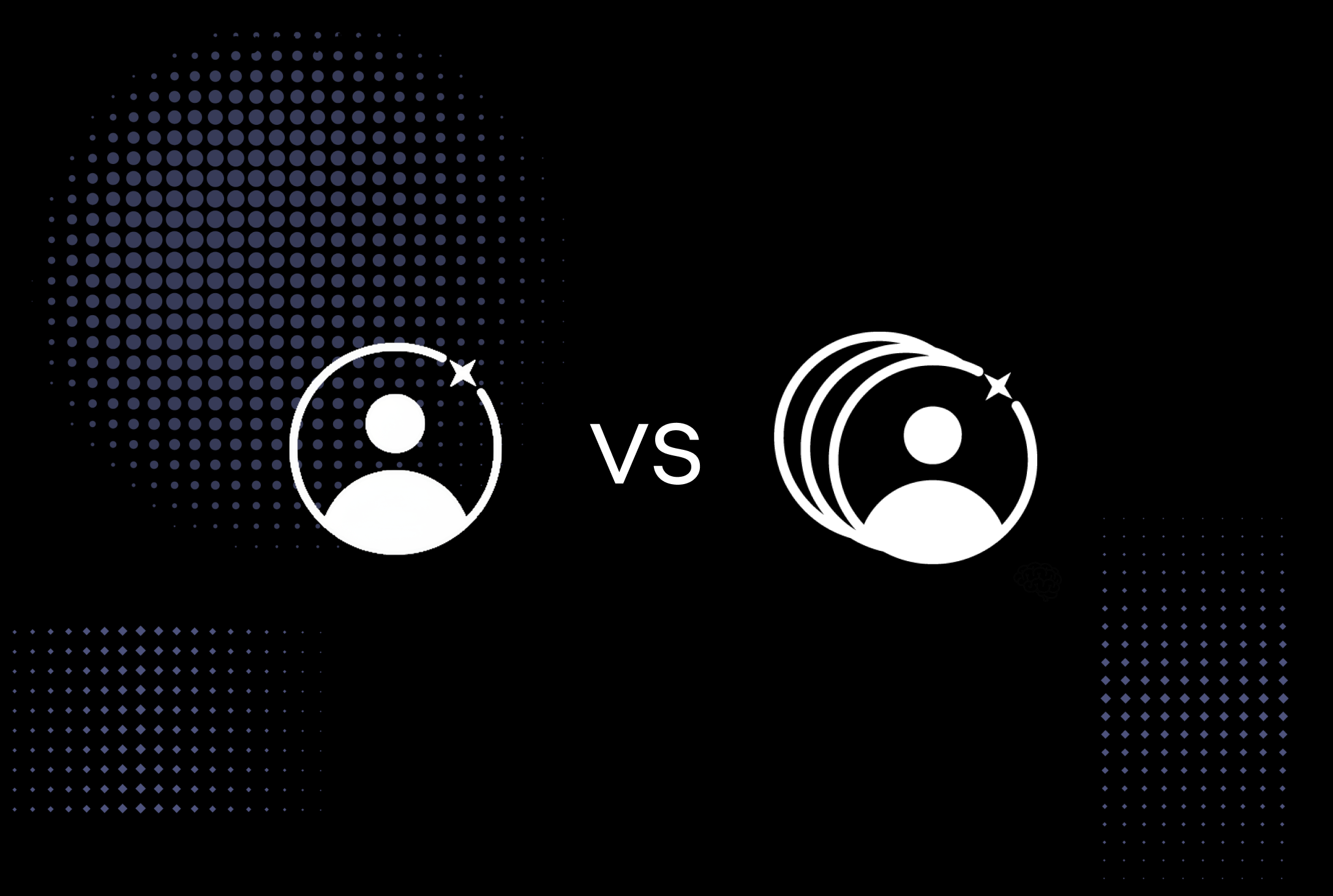
Single-agent systems and multi-agent systems are not competing philosophies. They are different tools for different situations. Understanding the tradeoffs clearly helps you make the right architectural choice for a given problem.

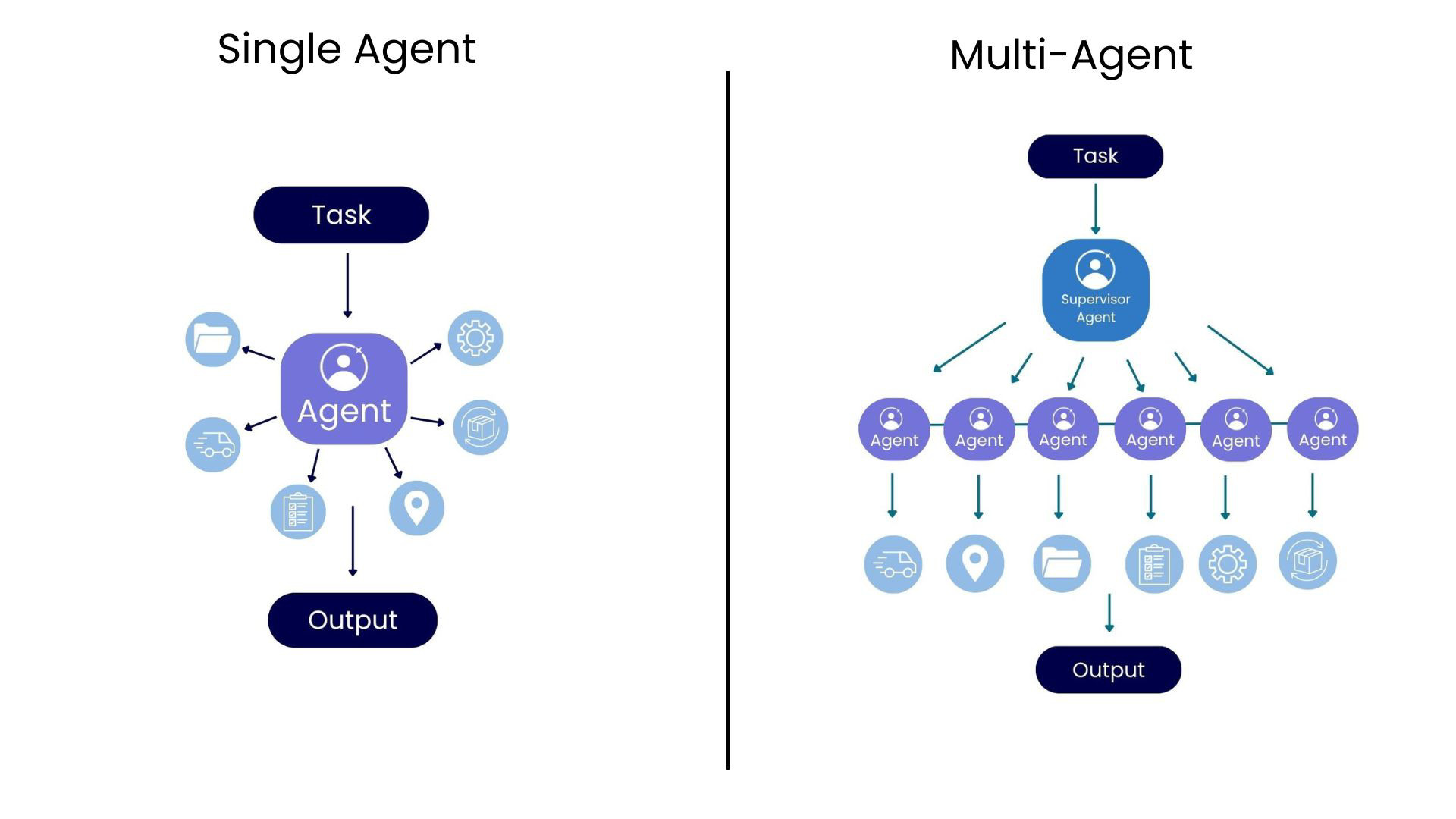
A single-agent system routes all perception, reasoning, and action through one model. That centralized approach works well for tasks that are focused and bounded. It is simpler to build, easier to debug, and perfectly adequate for a large class of problems. Where it struggles is at scale: as tasks grow in size, complexity, or breadth, the single agent becomes a bottleneck.

Multi-agent systems address that by distributing the work. Each agent handles a defined portion of the problem, and together they can take on workflows that would overwhelm a single model.

Single vs multi

Where the differences show up

Scalability

Single-agent systems often struggle as tasks grow in size, complexity, or span multiple domains, since all processing is handled by one entity. In contrast, multi-agent systems scale more naturally by distributing work across multiple agents, each responsible for a smaller, manageable component. This modular approach allows organizations to add more agents as demand increases without needing to redesign the entire system architecture.

Robustness

In single-agent systems, failure of the central agent can halt the entire operation, creating a critical single point of failure. Multi-agent systems, however, are inherently more resilient. Even if one or more agents fail, others can continue functioning or compensate as they work in parallel, ensuring continuity. This distributed resilience makes multi-agent systems better suited for mission-critical and dynamic environments.

Parallel Task Execution

Single-agent systems typically process tasks sequentially, which can limit speed and throughput, especially under heavy workloads. Multi-agent systems enable parallelism, where multiple agents work simultaneously on different parts of a task or across multiple tasks. This significantly improves efficiency, reduces latency, and is particularly valuable in domains like logistics, real-time scheduling, and event-driven systems.

Lower Reliance on Global Knowledge

Single-agent systems often depend on complete, centralized knowledge to make accurate decisions, which can increase computational overhead and slow response times. Multi-agent systems operate using localized or partial information, with each agent making decisions based on its individual context while contributing to a shared objective. This reduces the need for constant global synchronization, enabling faster, more adaptive responses in complex environments.

Aspect

Single-Agent Systems

Multi-Agent Systems

Approach

Centralized; one agent handles all tasks

Distributed; multiple agents share responsibilities

Scalability

Limited; struggles as tasks grow in size and complexity

High; scales easily by adding more agents

Robustness

Low; single point of failure can halt the system

High; continues functioning even if some agents fail

Task Execution

Sequential processing; slower under heavy workloads

Parallel processing; faster and more efficient

Reliance on Knowledge

Depends on centralized/global knowledge

Uses localized or partial knowledge

Flexibility

Less flexible; harder to adapt to complex workflows

More flexible; adapts well to dynamic environments

Efficiency

Can become bottlenecked

More efficient due to distribution and parallelism

Use Cases

Best for simple, smaller-scale tasks

Ideal for complex, large-scale systems


Quick check in: See if you distinguish between single agents and multi-agent systems

Up next: In the next lesson, let's look at how agents take on specialized roles within a multi-agent system, and why that specialization matters.

Lesson 3: Agent Roles and Specialization

Learning objectives

By the end of this lesson you will be able to:

  • Explain why specialization improves performance in multi-agent systems
  • Describe the common agent roles and what each one is responsible for
  • Understand how these roles combine in a typical multi-agent workflow

In a well-designed multi-agent system, agents do not all try to do everything. They specialize. Each agent focuses on a specific type of work, develops deeper capability within that domain, and hands off to other agents when the work moves outside its scope.

This division of labor is one of the primary reasons multi-agent systems outperform single agents on complex tasks. Instead of one model context-switching between data retrieval, planning, reasoning, and validation, each of those responsibilities can sit with an agent that is purpose-built for it.

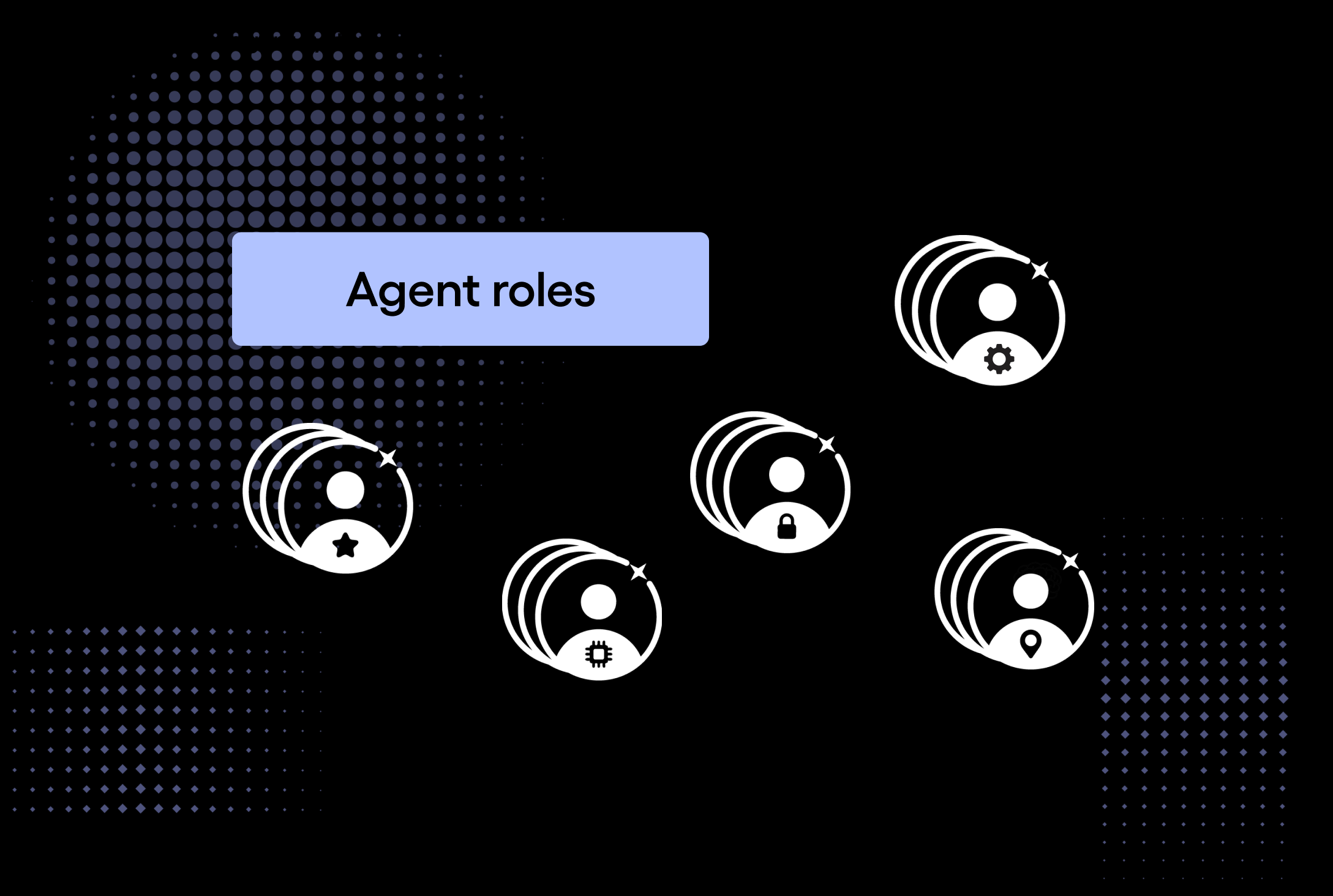
Common agent roles

While the specific roles in any given system depend on the use case, certain archetypes appear frequently across multi-agent architectures.

Orchestrator agents, sometimes referred to as "frontman agents," coordinate the overall workflow. They receive a high-level goal, break it into tasks, assign those tasks to the right agents, manage dependencies, and track progress toward the outcome. In centralized architectures, the orchestrator is the most powerful agent in the system. In distributed architectures, lightweight orchestrators may still exist to align overall goals without dominating every decision.

Planner agents focus specifically on decomposing complex objectives into structured steps. Where an orchestrator manages the workflow, a planner reasons about the sequence: what needs to happen first, what depends on what, and how to adjust the plan when new information arrives. In sophisticated systems, planning and orchestration are often handled by the same agent, but separating them can improve both.

Task-specific agents execute defined work within their domain. These might be agents that retrieve data, run analyses, interact with external systems, generate content, or process inputs. Their value comes from depth, not breadth: they perform their specific function efficiently and reliably.

Evaluator agents assess the quality of outputs before they move forward. They validate decisions, check outputs against defined criteria, and flag issues that would otherwise propagate through the system. Think of them as a quality control layer built into the architecture itself.

User-facing agents handle direct interaction with people. They gather input, interpret intent, translate user requests into structured tasks, and communicate results back in a form that makes sense to a human. They sit at the boundary between the system and the people it serves.

Agents rarely operate in isolation. A typical workflow might involve:

  • A user-facing agent receiving a request
  • A planner agent breaking it into steps
  • Worker agents executing those steps
  • An evaluator agent validating the results
  • An orchestrator coordinating the entire process

This structured collaboration enables the system to handle multi-step, complex tasks while maintaining clarity and control.

Key insight

Specialization is what lets a multi-agent system handle complexity at scale. When each agent does one thing well and hands off cleanly to the next, the system can tackle problems that would overwhelm any single model trying to manage all of it at once.

In more advanced systems, roles are not fixed. Agents can adapt or switch roles depending on context, workload, or system needs. For example, an agent might act as a worker in one scenario and a planner in another. This flexibility increases system resilience and allows better resource utilization.

Agent roles and specialization are foundational to how multi-agent systems function. By clearly defining responsibilities and enabling structured collaboration, these systems can solve complex problems more efficiently, scale more easily, and remain robust in dynamic environments.

Up next: Learn how agents coordinate and communicate to stay aligned across a shared workflow

Lesson 4: How a Multi-Agent System Works

Learning objectives

By the end of this lesson you will be able to:

  • Trace how a request moves through a multi-agent system from start to finish
  • Explain the role of the frontman agent and why it matters
  • Describe how orchestration, parallel execution, and evaluation work together
  • Understand why the system loops and what triggers another pass

You now know what multi-agent systems are and what roles agents play within them. What is still missing is a clear picture of how it all actually works when a task comes in. How does a request move through the system? Who handles what and in what order? How do agents that never directly interact with each other end up producing a coherent result?

This lesson walks through the full flow of a multi-agent system from the moment a request arrives to the moment a result is returned, and explains what is happening at each stage.

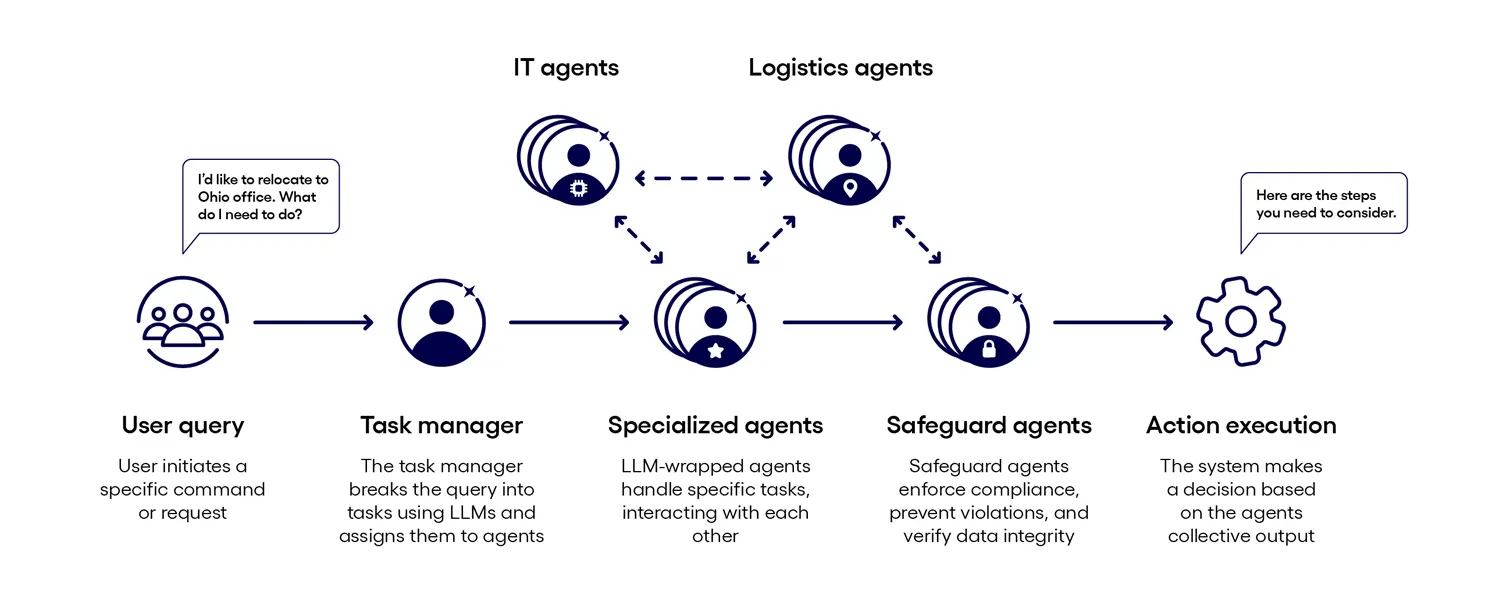
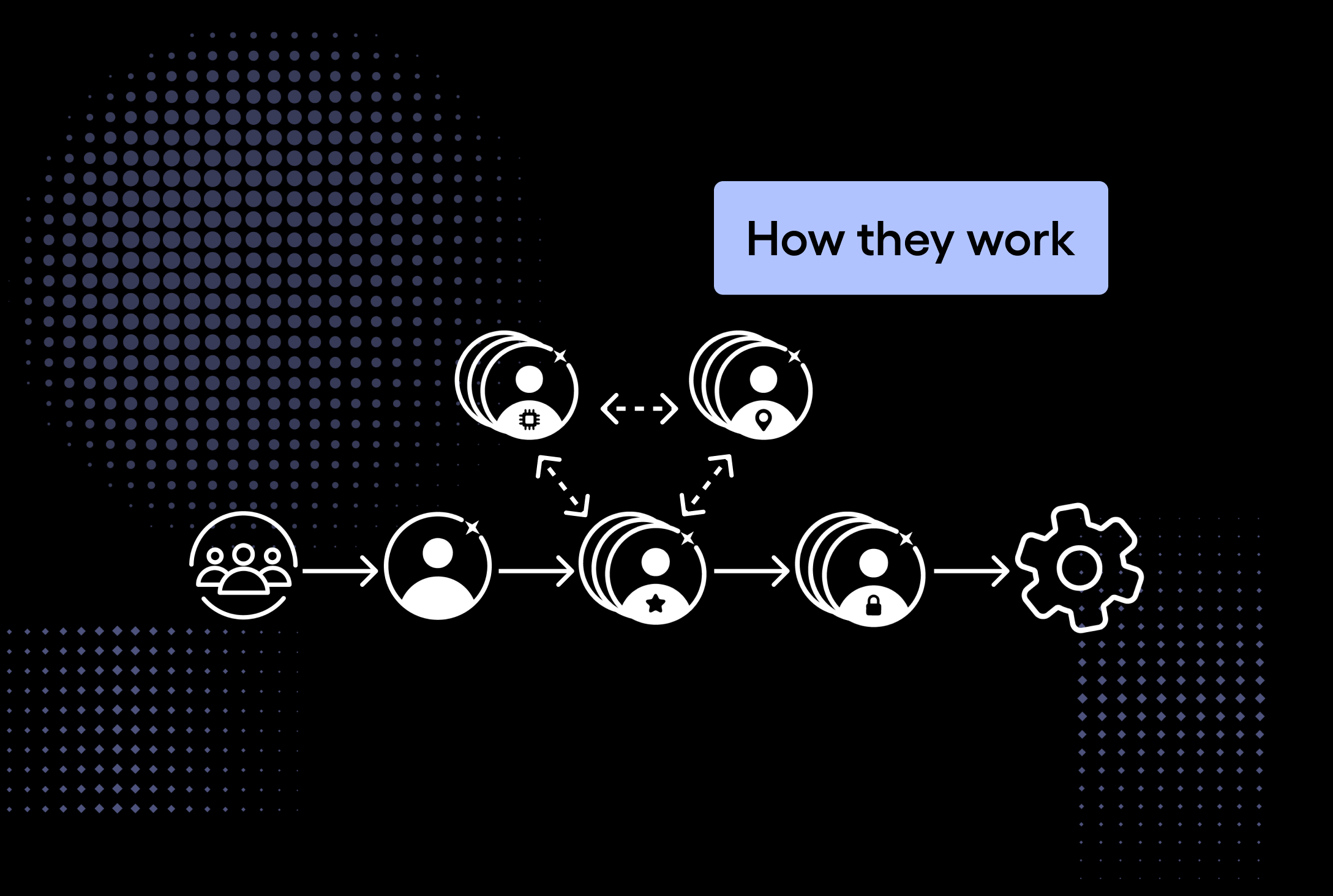
    MAS workflow

    1. The 'frontman' agent – or orchestrator agent– receives the request

    Every multi-agent system needs an entry point. The agent that plays this role is often called the frontman, the user-facing agent, or the orchestrator depending on the system. Whatever the name, the function is the same: it receives the incoming request, interprets what is actually being asked, and structures that into something the rest of the system can act on.

    This step matters more than it might seem. The frontman is doing perception work on behalf of the whole system. A raw request from a user is usually underspecified. The frontman agent resolves ambiguity, identifies what information is present and what is missing, and produces a structured representation of the goal that downstream agents can work with. If this stage goes wrong, everything that follows is working from a flawed foundation.

    2. The frontman agent decomposes the task and assigns work

    Once the frontman agent understands the goal, it breaks it into subtasks and assigns each one to the right subagent. This decomposition step is where the design of the system starts to matter. The frontman agent needs to know which agents are available, what each one is capable of, and how to describe each task clearly enough that the subagent can execute it without needing further guidance mid-task.

    That last point is critical in practice. Without clear task descriptions, subagents duplicate work, leave gaps, or go off in the wrong direction. Each subagent needs a clear objective, an expected output format, guidance on which tools and data sources to use, and defined boundaries around its scope. The more precisely the lead agent can articulate what it needs, the more useful the results that come back.

    Importantly, the subtasks the frontman agent creates do not need to be sequential. In well-designed systems, multiple subagents can be spawned at the same time to work on different parts of the problem simultaneously. This is one of the primary reasons multi-agent systems outperform single agents on complex tasks: work that would take one agent a long time to complete sequentially gets distributed across many agents running in parallel.

    3. Subagents work in parallel and return results

    With tasks assigned, specialized subagents get to work. Each one operates within its defined scope, using the tools and data sources relevant to its area of expertise. Because each subagent is specialized, it is not trying to handle everything. It handles what it was built for, and nothing else.

    This specialization is what makes the system efficient. In a research workflow, for example, one subagent might be searching technical documentation while another analyzes financial data while a third synthesizes recent news. All three work simultaneously, each going deep within its own domain rather than broad across all of them.

    It is also worth noting that not every subagent gets involved in every task. When a request comes in that falls outside a subagent's area of responsibility, it might go "this has nothing to do with me" and effectively passes. The work flows only to the agents whose specialization is relevant to the task at hand. This keeps the system clean and prevents agents from doing work they are not equipped to do well.

    When subagents finish, they return their outputs to the lead agent, which then determines what to do with everything that came back.

    4. The frontman agent synthesizes and decides what comes next

    Once the subagents have completed their work, the lead agent brings everything together. It reviews what came back, checks whether the outputs are consistent and sufficient, and synthesizes them into a single coherent result that addresses the original request. This is where the distributed work of many specialized agents becomes one unified answer that gets returned to the user.

    The lead agent does not just pass along a pile of subagent outputs. It compiles and organizes the results into a finished response, the same way a project lead would take work from their team and turn it into something ready to deliver.

    If the outputs are incomplete or inconsistent, the lead agent can route work back through the appropriate agents for another pass, reassign a task with more precise instructions, or determine that a human needs to step in. This iterative quality check is what allows multi-agent systems to handle genuinely complex problems. A single pass is not always enough, and a well-designed system accounts for that rather than treating every first attempt as final.

    In quality-sensitive workflows, some systems add a dedicated evaluation step before final synthesis, where a separate agent reviews subagent outputs against defined criteria before anything gets combined. This pattern is well-established in production multi-agent systems. It is not universal, but for workflows where an error in one subagent's output could quietly corrupt the final result, it is the right call.

    Up next: Now that you have a better understanding of how a multi-agent system works, let's take a closer look at where to multi-agent systems

    Lesson 5: When to Use a Multi-Agent System

    Learning objectives

    By the end of this lesson you will be able to:

    • Identify the characteristics that make a problem well-suited for a multi-agent approach
    • Recognize when a single agent is the better choice
    • Connect multi-agent architecture to real-world use cases across industries

    You now understand how multi-agent systems work. The next question is when to actually use one. More agents does not automatically mean better results. Multi-agent systems introduce real complexity: more moving parts, more coordination overhead, and more places for things to go wrong. They are the right choice for a specific class of problems, and understanding what that class looks like is one of the more practical skills in agentic system design.

    When a multi-agent system is the right call

    Multi-agent systems earn their complexity when a problem has certain characteristics. The more of these that apply, the stronger the case for distributing the work.

    The task is too large or complex for one agent to handle reliably: Every agent has limits: a context window, a set of tools, and a finite ability to hold a complex problem in memory across many steps. When a task consistently pushes against those limits, distributing it across multiple agents is not just helpful, it is necessary. Problems that require exploring many independent threads simultaneously are a particularly strong fit.

    • The work requires genuinely different types of expertise: If a workflow involves retrieving structured data, reasoning over unstructured text, running calculations, and drafting a response, those are different jobs. An agent specialized for each one will do each job better than a generalist agent trying to handle all of them. Specialization only pays off when the domains are distinct enough to warrant it.
    • Steps can run in parallel: If parts of a task are independent of each other, there is no reason to run them sequentially. A multi-agent system lets those parts happen at the same time, which reduces latency and improves throughput significantly for time-sensitive workflows.
    • Reliability matters and failure of one part should not halt the whole: In single-agent systems, a failure stops everything. In multi-agent systems, other agents can continue working while the problem is addressed. For production workflows where continuity is important, that resilience is a meaningful advantage.
    • The workflow involves multiple systems or data sources: When a task requires pulling from a CRM, a database, an external API, and an internal knowledge base, coordinating that across specialized agents is often cleaner and more maintainable than building one agent that tries to connect to everything.

    When a single agent is enough

    Not every problem needs multiple agents, and it is worth being honest about that. If the task is well-defined and bounded, a single agent will handle it more simply, more cheaply, and with less to debug when something goes wrong.

    A single agent is usually the right choice when the task fits comfortably within one context window, when the steps are sequential and dependent on each other in ways that make parallelism impractical, or when the workflow is straightforward enough that coordination overhead would outweigh the benefit of distribution. Start with the simplest architecture that solves the problem. Add agents when you have a clear reason to. 

    Use cases for multi-agent systems

    The use cases that benefit most from multi-agent architecture tend to share a common shape: they are high-volume, multi-step, and involve information or actions spread across different systems. A few examples across industries.

    Fraud detection systems need to monitor transaction patterns, cross-reference account history, apply risk models, and trigger alerts, all at the same time. Distributing that work across specialized agents makes the system faster and more accurate than any single agent trying to handle all of it sequentially at scale.

    In clinical research workflows, one agent retrieves relevant studies, another extracts key findings, a third cross-references patient data, and a fourth synthesizes everything into a summary for a clinician. Each step requires a different type of expertise and access to different data, which is exactly the kind of work multi-agent systems are designed for.

    Procurement and supply chain workflows often require agents to monitor inventory levels, track supplier status, calculate reorder points, and coordinate approvals simultaneously, across systems that do not natively communicate with each other. A single agent handling all of that would be slow and brittle. A set of specialized agents working in parallel is not.

    Complex support cases often require pulling account history, checking order status, looking up relevant policies, and drafting a response. With a multi-agent system, those steps can happen at the same time rather than one after another, which means the customer gets a complete, accurate answer in far less time.

    Any workflow that requires gathering information from multiple independent sources, synthesizing it, and returning a coherent answer benefits from a multi-agent approach. The more sources involved and the more complex the synthesis, the more a distributed system outperforms a single agent working through everything sequentially.

    Key insight

    The signal that a problem needs a multi-agent system is usually one of three things: the task is too big for one context window, the work requires types of expertise that are genuinely different, or speed matters and parts of the task can run in parallel. If none of those apply, a single agent is probably the cleaner solution.

    Up next: Before moving to the next module, test your understanding with a quick quiz.

    Module wrap-up

    That's a wrap on Module 2: Multi-Agent Systems

    You started with a clear definition of what a multi-agent system is and the five core capabilities, autonomy, decentralization, coordination, communication, and adaptability, that let independent agents function as one system. From there you saw how multi-agent systems compare to single-agent approaches on scalability, robustness, and parallel execution, the common roles agents take on (orchestrator, planner, task-specific, evaluator, and user-facing agents), and how a request actually moves through the system from the frontman agent's first read of it to the final synthesized response. You closed out by learning when a multi-agent approach is actually worth its added complexity, and when a single agent is the simpler, better choice.

    At this point, you should be able to:

    • Define what a multi-agent system is and explain how it differs from a single-agent approach
    • Describe the five core capabilities that let agents function as a coordinated whole
    • Identify common agent roles and how they combine in a typical workflow
    • Trace how a request flows through a multi-agent system from intake to final result
    • Recognize the characteristics that make a problem well-suited to a multi-agent approach, and when it is not

    Put it to the test

    Take the short quiz below to check your understanding before moving on.

    Want to see agents in action?

    Everything you just learned comes to life in Neuro San, Cognizant AI Lab's open source framework for building and deploying multi-agent systems. If you want to explore how real agent networks are structured before diving into the next module, the repo is a great place to start.

    Next up:

    Now that you understand how multiple agents can work together, the next module introduces agentic AI, exploring how autonomous systems use reasoning, planning, and collaboration to achieve goals with minimal human intervention.