

July 29, 2026
Turning Ideas into Agentic Systems: Inside the Cognizant Neuro AI Multi-Agent Accelerator Hackathon

Turning Ideas into Agentic Systems: Inside the Cognizant Neuro AI Multi-Agent Accelerator Hackathon
How more than 1,650 associates spent a week turning agentic AI concepts into working, grounded multi-agent applications.
Learning about agentic AI is one thing. Building reliable multi-agent systems is another.
That was the goal of the Cognizant Neuro® AI Multi-Agent Accelerator Hackathon, organized by Cognizant AI Lab in partnership with the Bengaluru Center. Over the course of one week, associates moved beyond presentations and tutorials to design, build and demonstrateworking AI applications using Cognizant Neuro® San, the open-source framework for building and orchestrating networks of specialized AI agents.
The hackathon attracted more than 1,650 registrations, with over 900 associates participating in live training sessions before hundreds went on to build agentic AI applications of their own.
The journey began with hands-on training on July 6–7, followed by four days of development from July 8–11, before concluding with a live finale in Bengaluru on July 13.
Two Tracks, One Mission
To give participants experience with different approaches to agentic AI development, the hackathon was organized into two complementary tracks.
Live Agentic Vibe Coding
The first, Live Agentic Vibe Coding, was led by Babak Hodjat, Chief AI Officer. Participants built applications using MAUI (Multi-Agent Accelerator User Interface), the browser-based interface for Neuro San. MAUI provides an intuitive, visual environment for interacting with multi-agent networks, allowing developers to build applications quickly while observing specialized agents collaborate in real time as they exchange messages and complete tasks.
Vibe Coding + Grounding
The second track, Vibe Coding + Grounding, introduced participants to Neuro San. Participants designed specialized agent networks, connected enterprise tools and knowledge sources, and built grounded AI applications capable of producing reliable responses based on trusted information.
Although each track emphasized different development workflows, they shared the same objective: helping associates move from learning about agentic AI to confidently building with it.
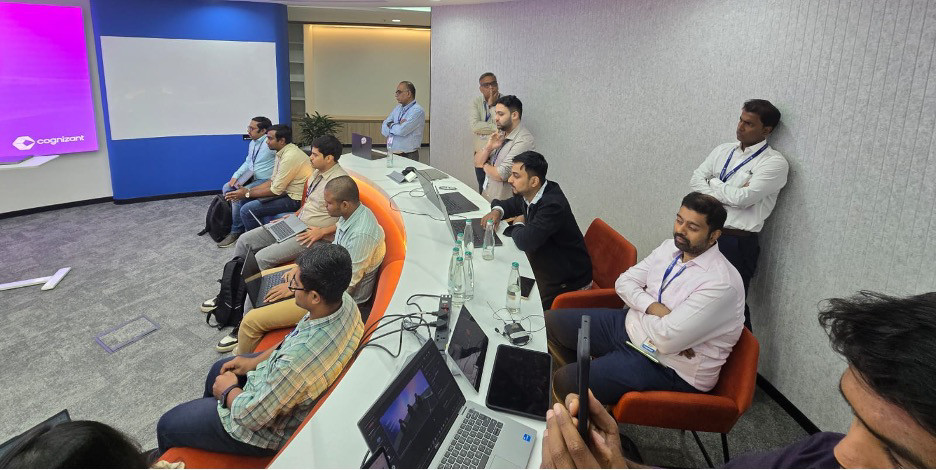
Infrastructure That Stayed Out of the Way
Behind the scenes, the organizing team built an environment that allowed participants to focus on solving problems rather than configuring infrastructure.
Isolated Kubernetes-based development environments were provisioned on Microsoft Azure, giving every participant a consistent workspace from day one. Whether using MAUI for rapid experimentation or Neuro San Studio for structured multi-agent development, participants had immediate access to the tools they needed to build, test and iterate on their ideas.
By reducing setup friction, the hackathon allowed participants to spend more time developing working solutions and less time managing infrastructure.
Evaluating Grounded Projects with Neuro San
As projects accumulated throughout the week, evaluating every submission became a challenge of its own.
More than 150 associates participated in the Vibe Coding + Grounding track, working individually and in teams to develop grounded multi-agent applications. Together, they produced a substantial number of projects requiring consistent technical evaluation.
To help scale the review process, the organizing team built a Neuro San evaluator network that combined deterministic static analysis with specialized AI judges. The evaluator assessed submissions across multiple dimensions, including innovation, business value, multi-agent architecture, grounding strategy, tool integration, code quality and documentation.
Human reviewers remained responsible for the final judging, using the evaluator's structured analysis alongside project context and live demonstrations.
Neuro San didn't just power participant projects – it also helped operate the hackathon itself.
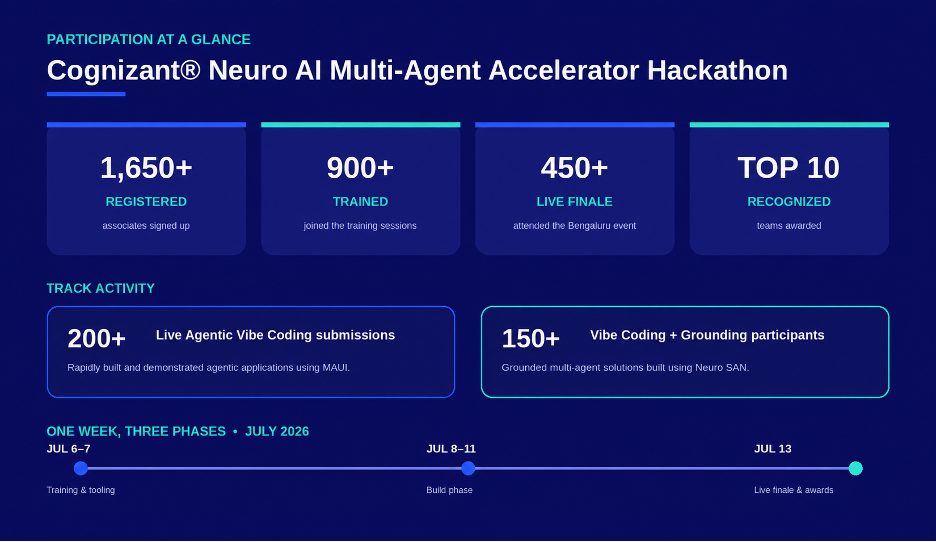
Figure 1. Participation and activity across the week. Second track’s 150+ figure refers to participants, not submissions; some entries were team-based.
The Hackathon Finale in Bengaluru
The week concluded on July 13 at Cognizant AI Lab in Bengaluru with live project demonstrations, a fireside chat and an awards ceremony celebrating the participants' work.
Babak Hodjat opened the finale with a live agentic vibe-coding session, demonstrating how quickly an idea can evolve into a working AI application using modern multi-agent development tools.
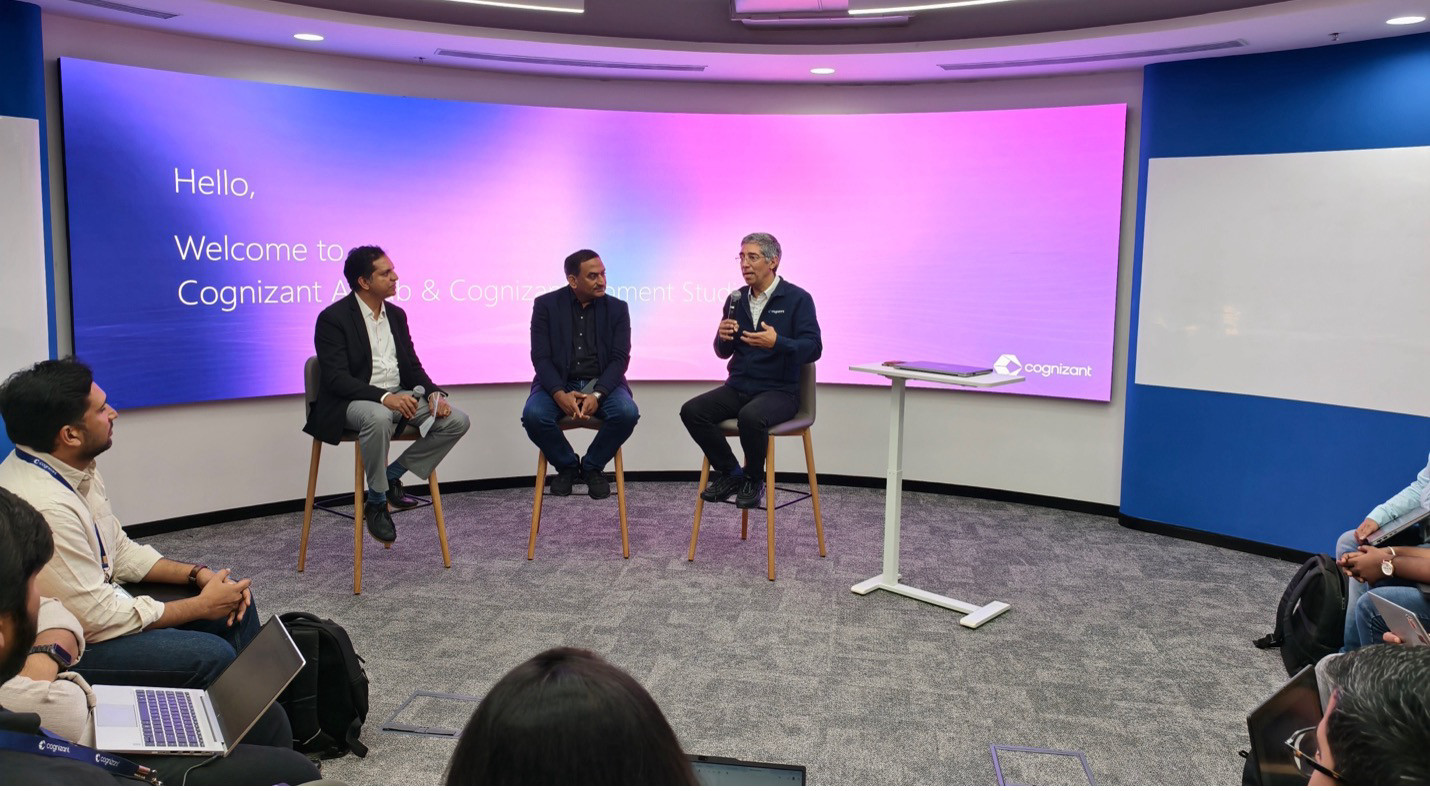
The fireside chat featured Babak Hodjat and Thirumala Arohi, Chief Learning Officer, and was moderated by Shiva Hiremath, SBU Head – QE&A and Center Head – Bengaluru and Mangalore.
The discussion explored how agentic AI represents more than a technological shift. As organizations increasingly adopt autonomous systems, success depends not only on new tools but also on new ways of framing problems, collaborating across teams, validating outcomesand continuously building new skills.
Recognizing the Top 10 teams
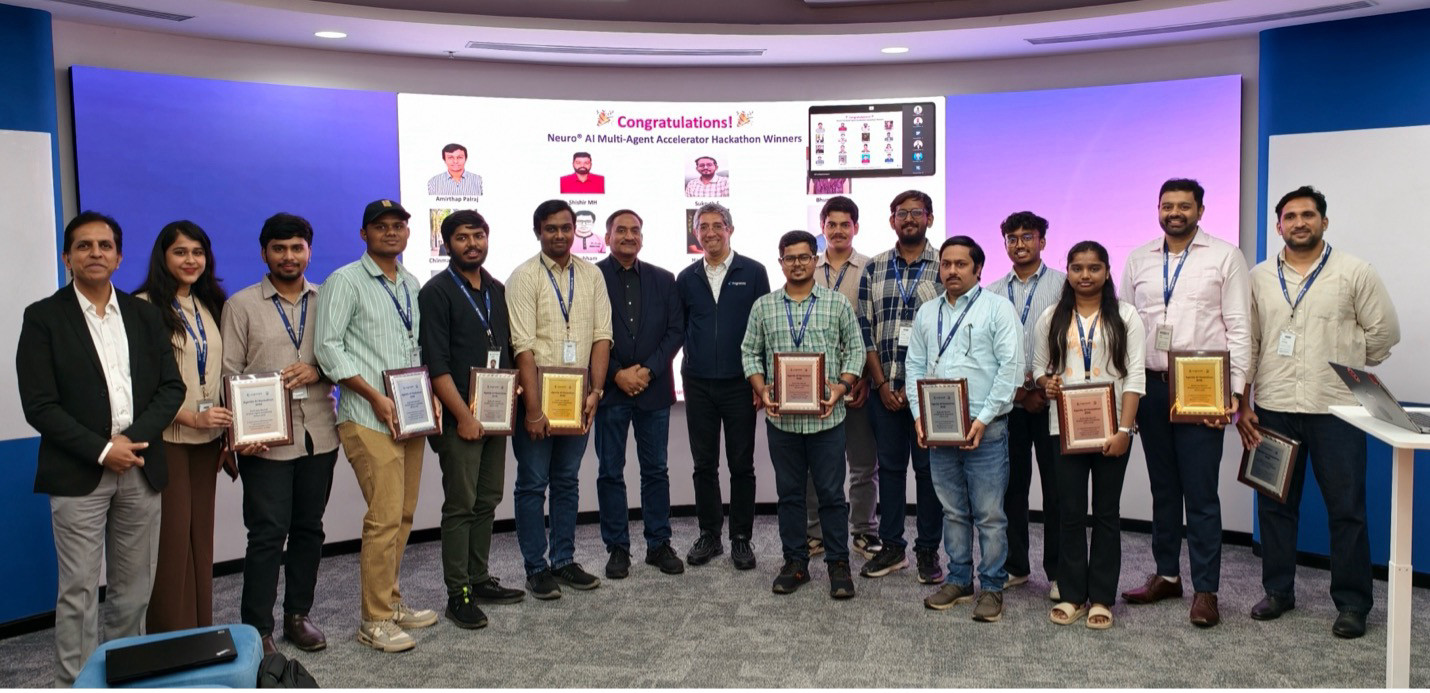
The Top 10 teams were recognized for strong problem framing, technical execution, practical business value and effective use of Neuro San.
The strongest submissions went well beyond simply calling an LLM. They demonstrated clear agent responsibilities, thoughtful orchestration between specialized agents, meaningful grounding with trusted knowledge sources and well-designed solutions to real businesschallenges.
Congratulations to this year's top 10 winning participants:
- Amirtha P. Palraj
- Shishir M H
- Sukruth S, Bhumika N, Chinmay R Kulkarni
- Shubham Singh
- Harshit Anand
- Arjun M, Ajay Kumar, Jeya Prakash Thanigaivel
- Alok Anand
- Aditi Kolaki, Jeswanth Kota Reddy
- Raju Tambe
- Dharmaraj J, Vishnu K
Winning Prototypes in Action
The winning projects showcased how grounded multi-agent systems can solve focused, real-world business challenges.
One team developed a client-specific standards concierge that helped developers quickly identify the appropriate engineering guidance for their engagement. Another built release-readiness and code-review agents that integrated security, testing and quality validation into software delivery workflows. An AI COO solution coordinated specialist agents to analyze business performance, diagnose issues and recommend actions.
Other standout projects included an early-stage drug discovery assistant for identifying and ranking promising molecules, as well as a telecommunications support assistant that unified customer accounts, billing, service orders and troubleshooting into a single conversational experience.
Over the coming weeks, we'll spotlight several of the top-winning teams in dedicated blog posts, taking a deeper look at the problems they tackled, how they designed their agent networks and the lessons they learned while building with Neuro San.
More Than a Competition
The hackathon's most important outcome wasn't the projects themselves – it was the capabilities participants developed along the way.
Over the course of a single week, associates progressed from exploring agentic AI concepts to designing, grounding and deploying working multi-agent systems. They collaborated across teams, experimented with new development patterns and gained firsthand experience building AI applications designed for enterprise use.
A special thank you to Babak Hodjat for leading the live vibe-coding session and recognizing the winning teams, and to the Cognizant AI Lab team, Bengaluru Center leadership, trainers, infrastructure teams, evaluators, reviewers, volunteers and organizers whose work made the event possible.
Most importantly, congratulations to every participant who learned, experimented and built throughout the week. While the hackathon has concluded, the skills, ideas and momentum developed during those seven days are only the beginning.
Associates interested in building their own grounded multi-agent applications can continue exploring Neuro San on GitHub. Start with a focused business problem, define clear agent roles, connect trusted tools and enterprise knowledge sources, ground responses with reliable information and validate workflows against real-world scenarios. The same development principles used throughout the hackathon are available to continue learning and building long after the competition has ended.

Praveen Tanguturi turns complex data into simple, impactful outcomes and drives Data and AI strategy with a strong focus on business growth.