

June 2, 2026
How Cognizant Turned a Fragmented Intranet into a Multi-Agent System Serving 350,000 Employees

How Cognizant Turned a Fragmented Intranet into a Multi-Agent System Serving 350,000 Employees
A conversation on The Agent Effect on how Cognizant built one of the largest enterprise multi-agent systems in production, serving 350,000 employees with 50% fewer support tickets.


Productivity in most enterprises is quietly undermined not by a lack of AI, but by too much of it in too many places. Employees toggle between disconnected portals, search across siloed systems, and raise support tickets for tasks that should take seconds. When organizations introduce new AI agents on top of that complexity, the experience often gets worse before it gets better, because now employees have to figure out which agent to use for which task on top of everything else.
That was the challenge Cognizant faced internally. Teams across the company were adopting tools and building agents independently, and while the innovation was real, so was the fragmentation. Governance risk was growing, support burden was increasing, and the employee experience was suffering for it.
In the latest episode of The Agent Effect, Paul Jarratt speaks with Venkatesh Balaji, AVP of Enterprise Architecture, and Dan Fink, AVP of Platform Engineering, about how they chose to solve that problem by building something different entirely. Rather than managing the sprawl, they collapsed it, transforming OneCognizant into a unified multi-agent system that routes employee queries across 200-plus specialized agents through a single conversational interface, with neuro-san acting as the orchestration layer holding it all together.
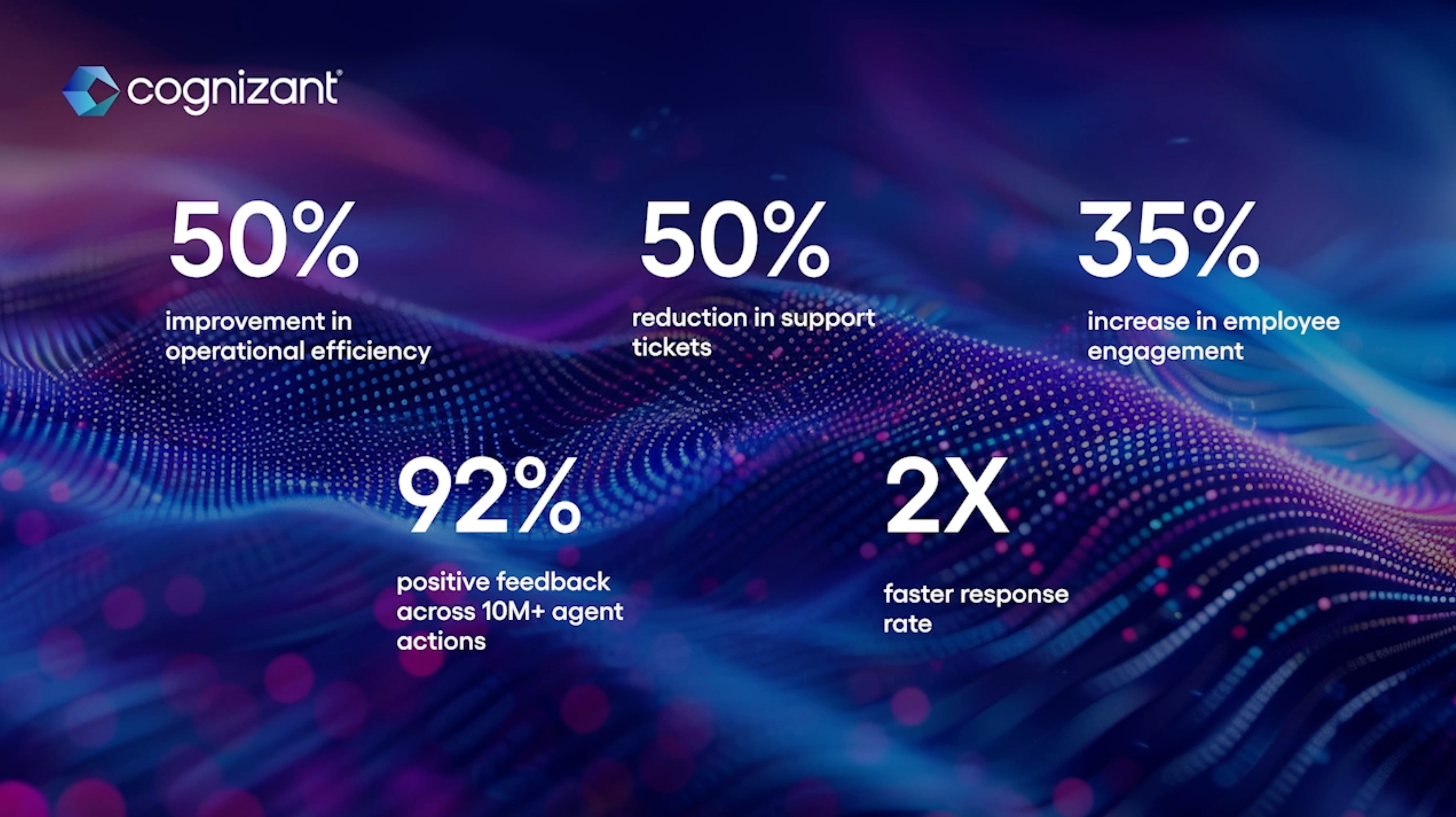
Within five months of rollout, support tickets dropped by 50%, employee engagement on the platform rose 35%, and the system delivered over 10 million agent interactions with a 92% positive feedback rate.
What It Actually Takes to Orchestrate at Scale
The conversation goes deeper than the headline numbers, getting into the architectural decisions and hard-won lessons behind a system of this size. Venky and Dan walk through how neuro-san maintains session context across an entire interaction, routes intelligently across agent layers, and was designed with a configuration-driven approach that allowed the team to expand from a handful of agents at launch to over 200 without the engineering overhead and approval cycles that typically bring enterprise deployments to a halt.
They also get into something that rarely makes it into polished case studies: the parts that were harder than expected. When you move to a multi-agent architecture at this scale, integration complexity multiplies quickly, and governance cannot be treated as a final step. Defining the right guardrails and maintaining accountability across a distributed system is the foundation everything else depends on, and the teams that skip it are the ones whose pilots never make it to production.
Tune in: The Agent Effect
If you are a CIO, CTO, or enterprise AI leader thinking seriously about what it takes to move from pilots to production, this episode offers one of the most honest and concrete accounts available. Listen to the full conversation with Venkatesh Balaji and Dan Fink on The Agent Effect.