Neuro San: Open-Source Multi-Agent Framework for AI Orchestration
The open-source library behind Neuro® AI Multi-Agent Accelerator for building multi-agent systems
The open-source library behind Neuro® AI Multi-Agent Accelerator for building multi-agent systems
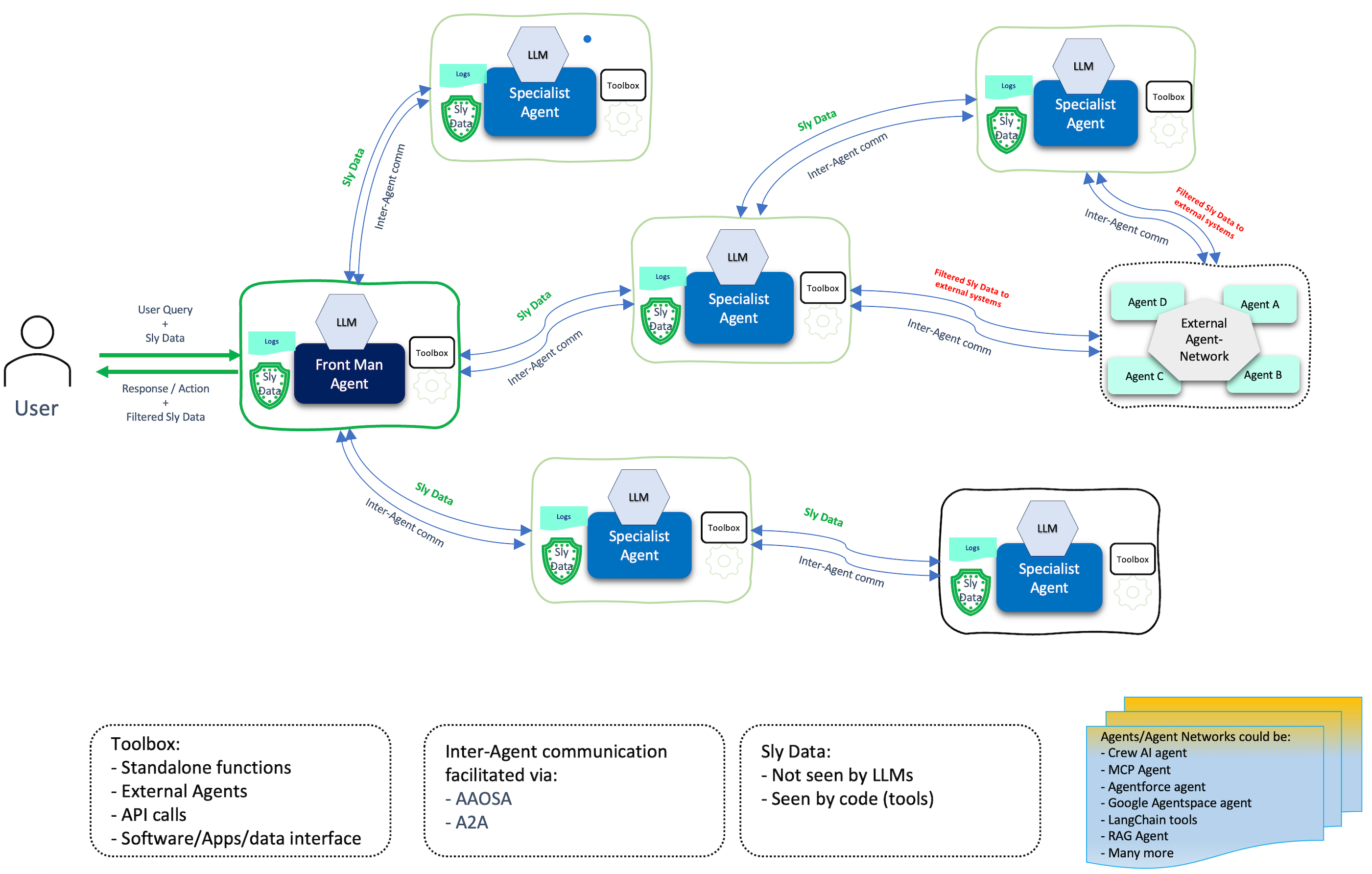
Neuro San powers intelligent agent networks by routing user queries through a configurable "frontman" agent that delegates tasks across specialized agents. Each agent can reason independently, communicate via natural language, call external tools or APIs, and collaborate with each other using the AAOSA protocol.
This architecture supports flexible topologies, with agents that can even embed entire sub-networks. Sensitive data and shared state are passed securely via sly_data, laying the groundwork for configurable, data-defined agent systems.
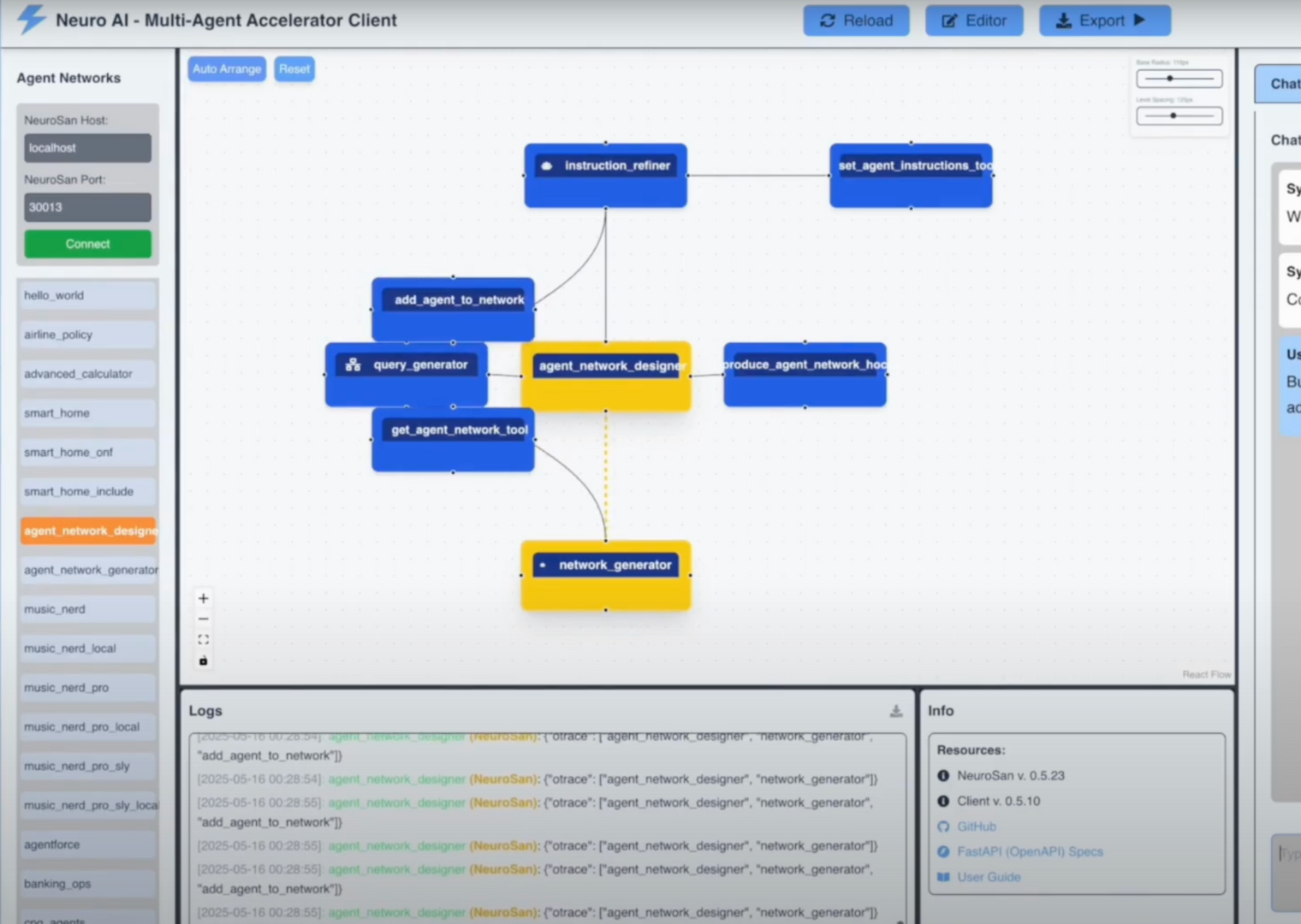
Provide a company name or use case, and the Agent Network Designer will automatically create specialized agents, define their responsibilities, establish communication paths, and connect to existing agent networks when relevant.
Using our testing framework, evaluate network performance to ensure reliable behavior before grounding agents in real tools and data. This allows you to execute the full system in a simulated environment and evaluate behavior across repeated runs.
Set up agents that pass messages, delegate tasks, and route requests across a graph. Networks can be linear, hierarchical, or DAG-based.
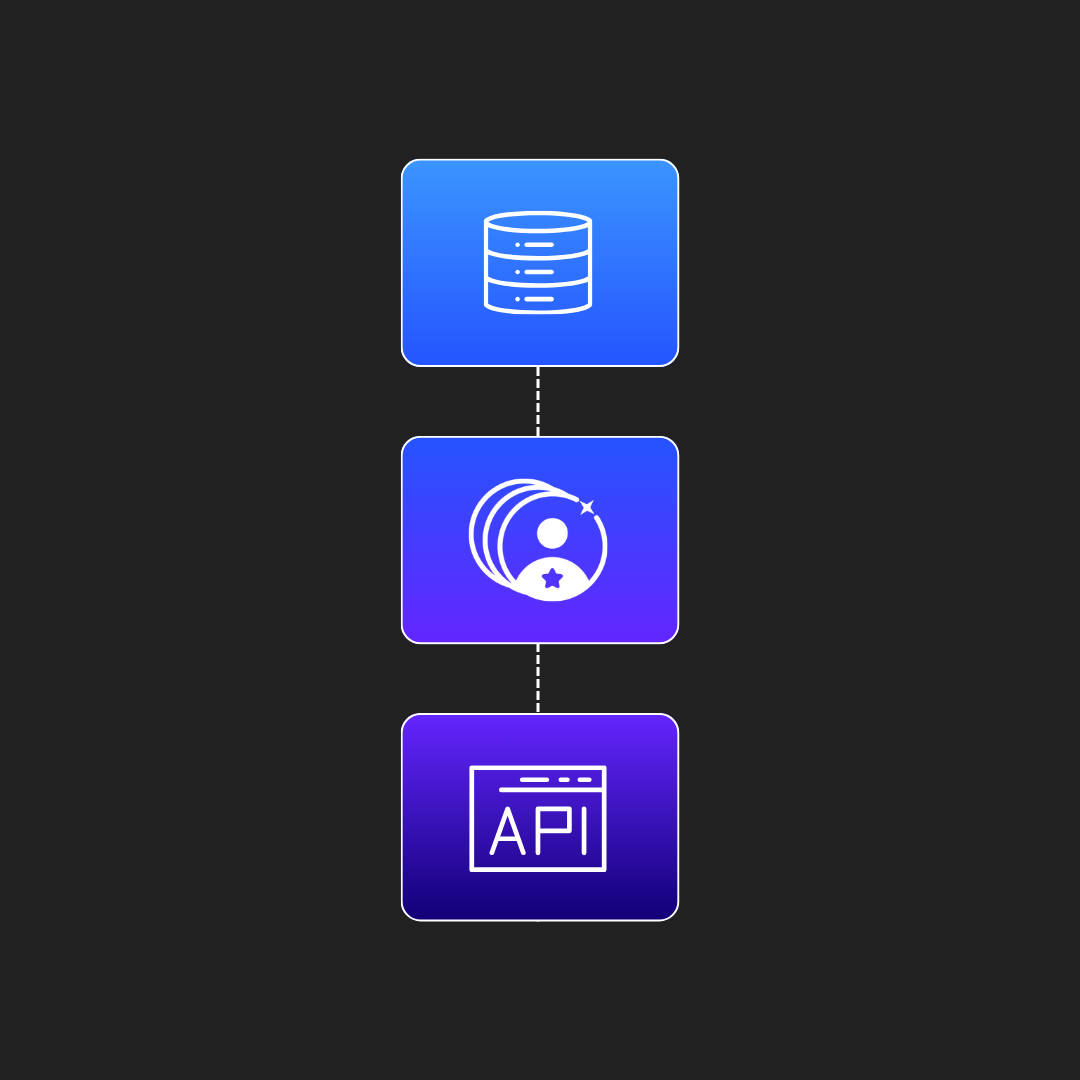
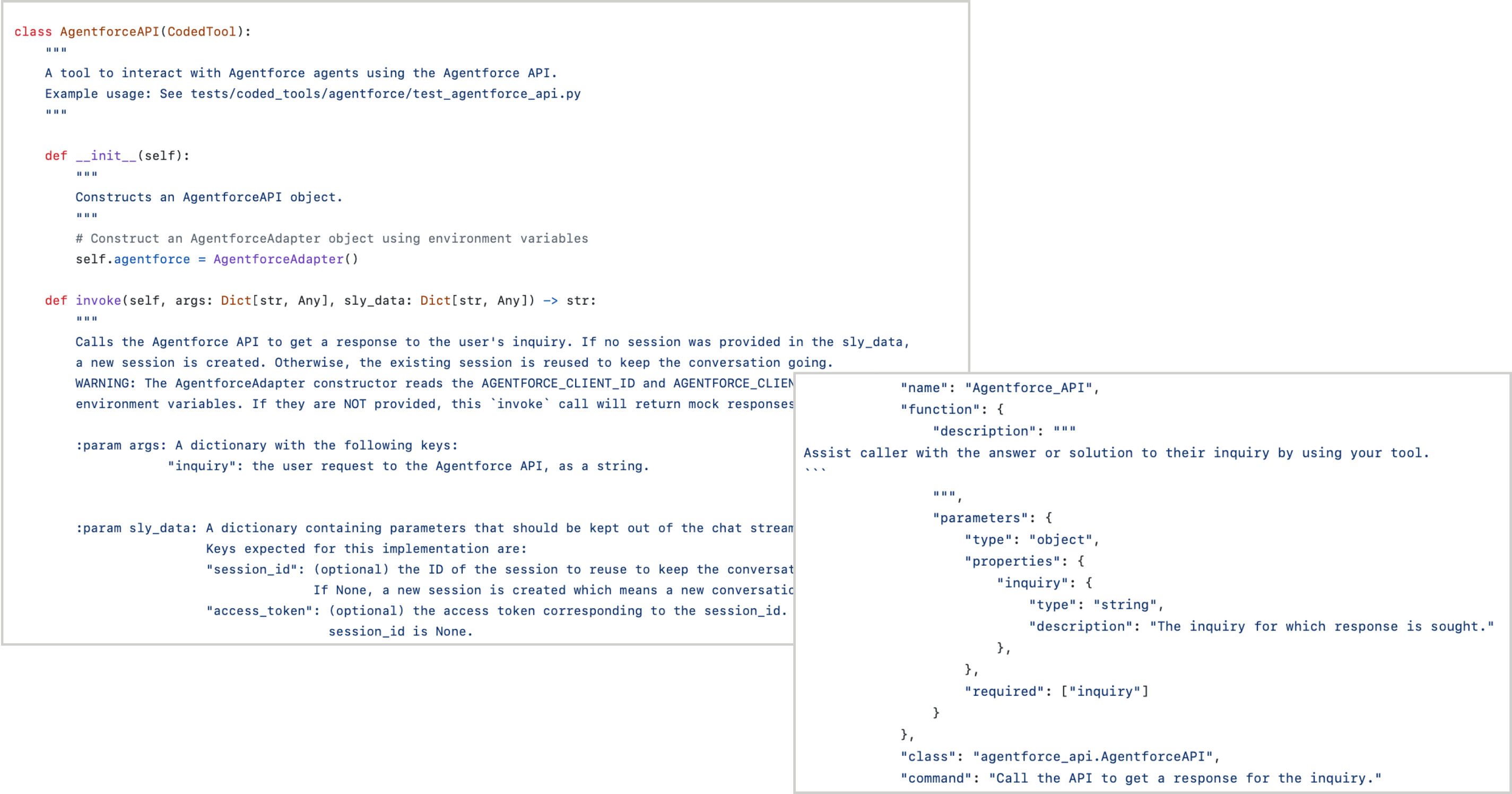
Connect agents to Python-coded tools, LangChain, and MCP, while enabling interoperability with platforms like Agentforce, Agentspace, CrewAI, and ServiceNow.
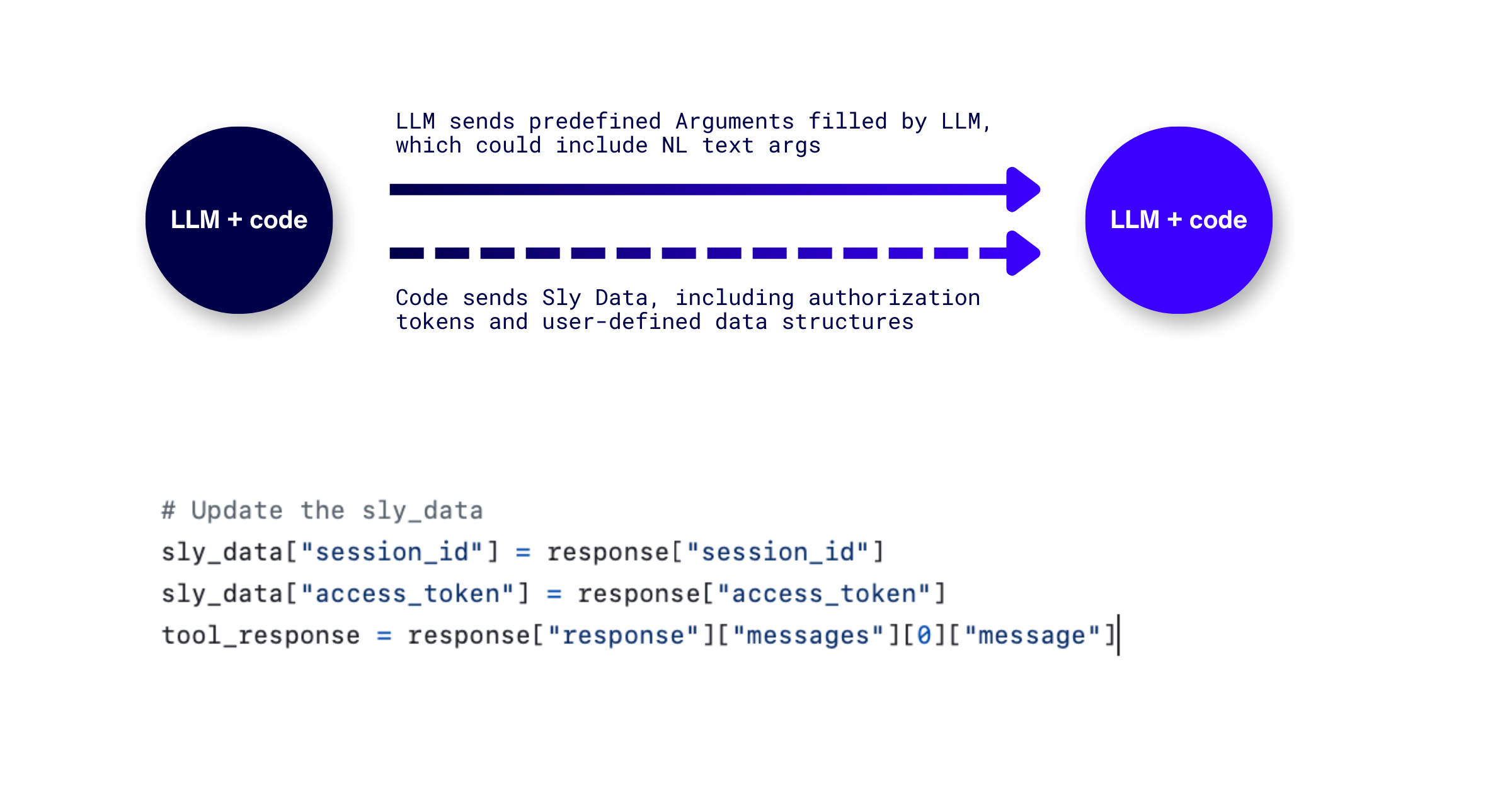
Keep sensitive information out of LLM prompts by passing it through private channels. sly_data enables secure, controlled data handling across agents and tools.
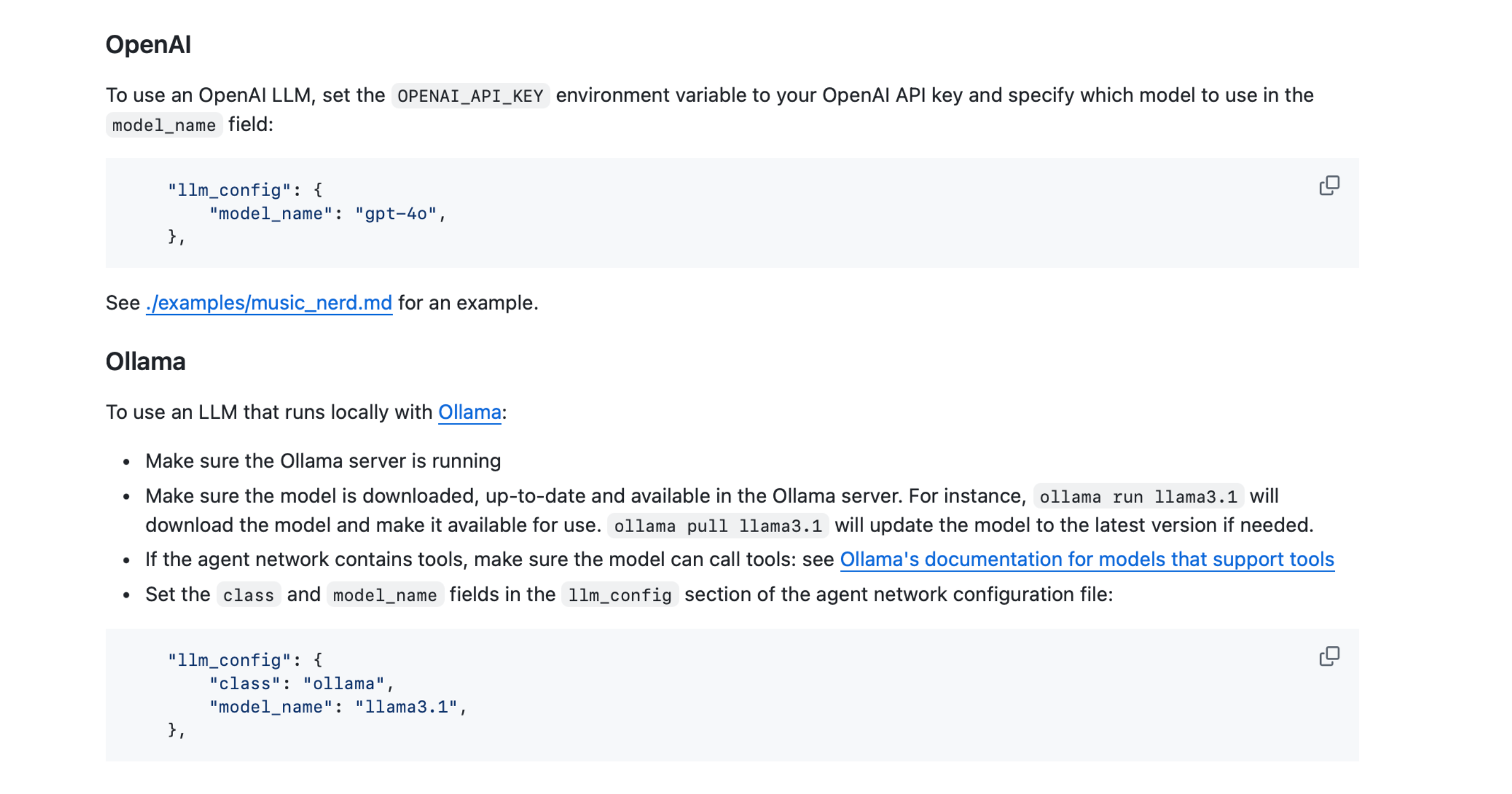
Configure different LLMs for each agent using providers like OpenAI, Claude, Ollama, or Azure. Set model parameters and fallbacks in config to optimize cost, latency, or context window.
Coordinate agent behavior through the Adaptive Agent-Oriented Software Architecture (AAOSA) protocol, enabling agents to route queries intelligently without a central controller. This allows networks to self-organize, scale, and adapt in real time.
A network to create multi-agent systems. Enter an organization or use case, and it generates an agent network HOCON file, saves it to your registries, and provides usage examples.
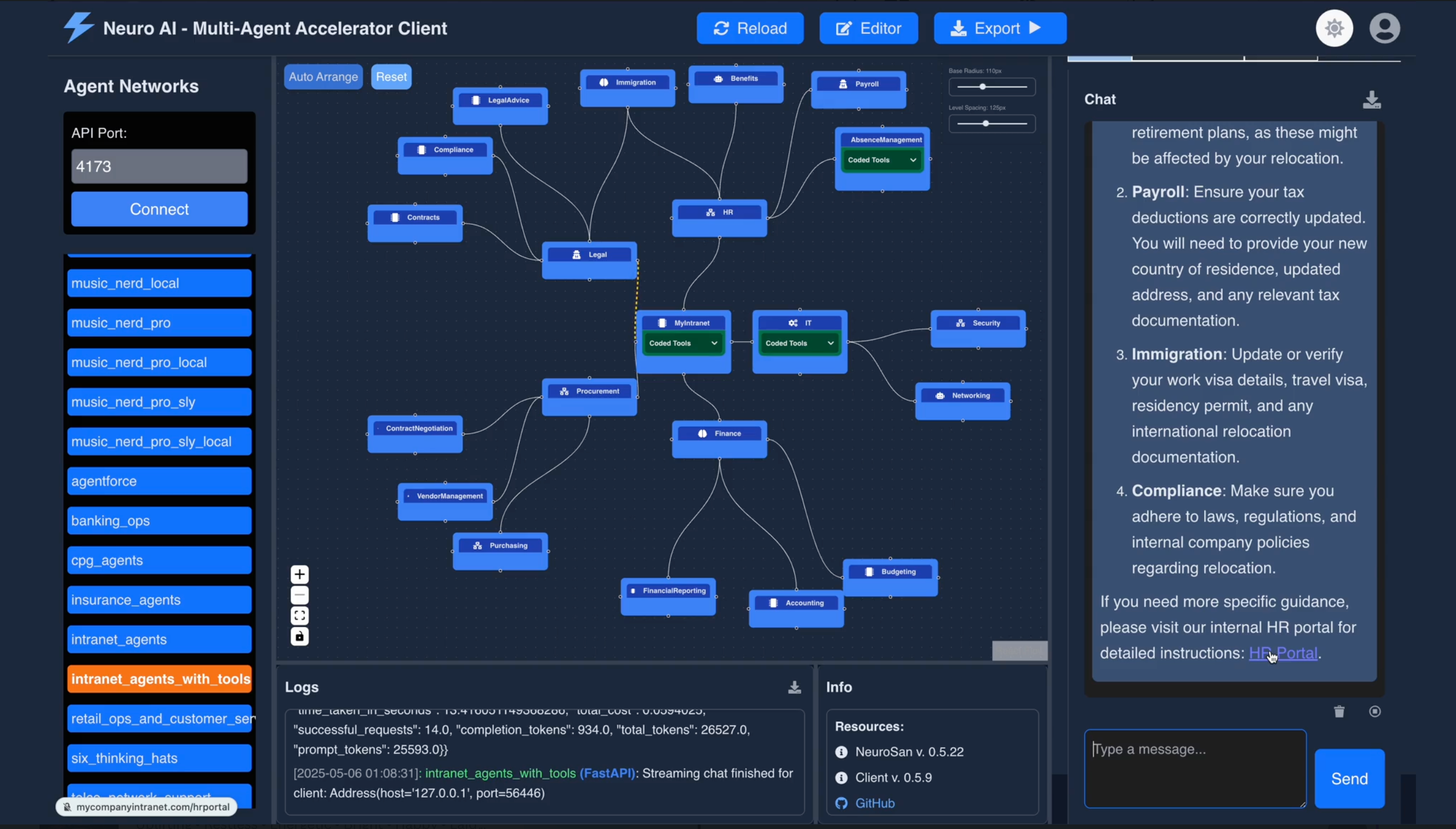
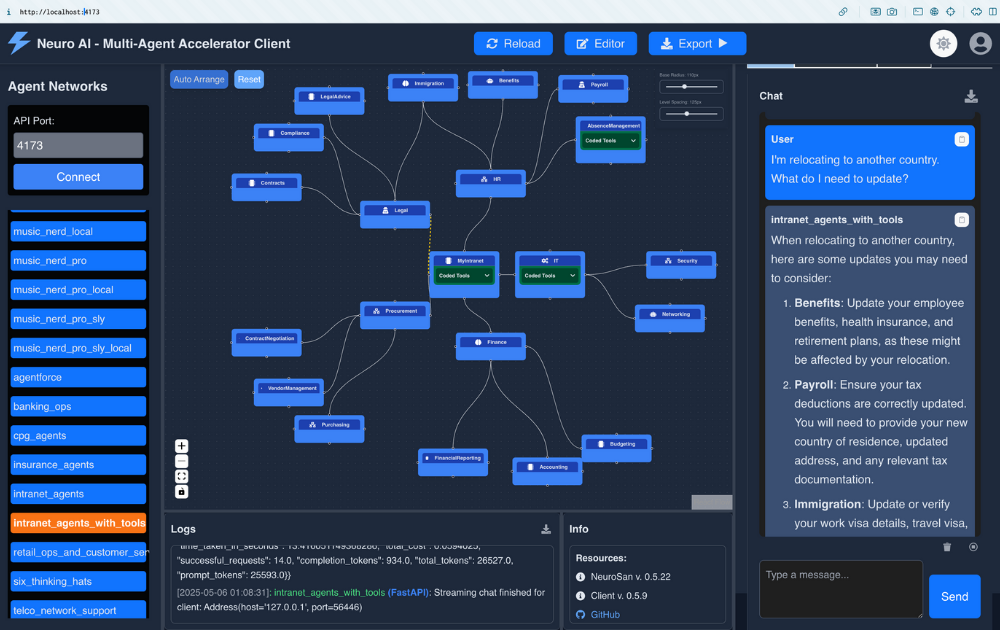
A multi-agent system that mimics the intranet of a major corporation, allowing you to interact and get information from various departments such as IT, Finance, Legal, and HR.
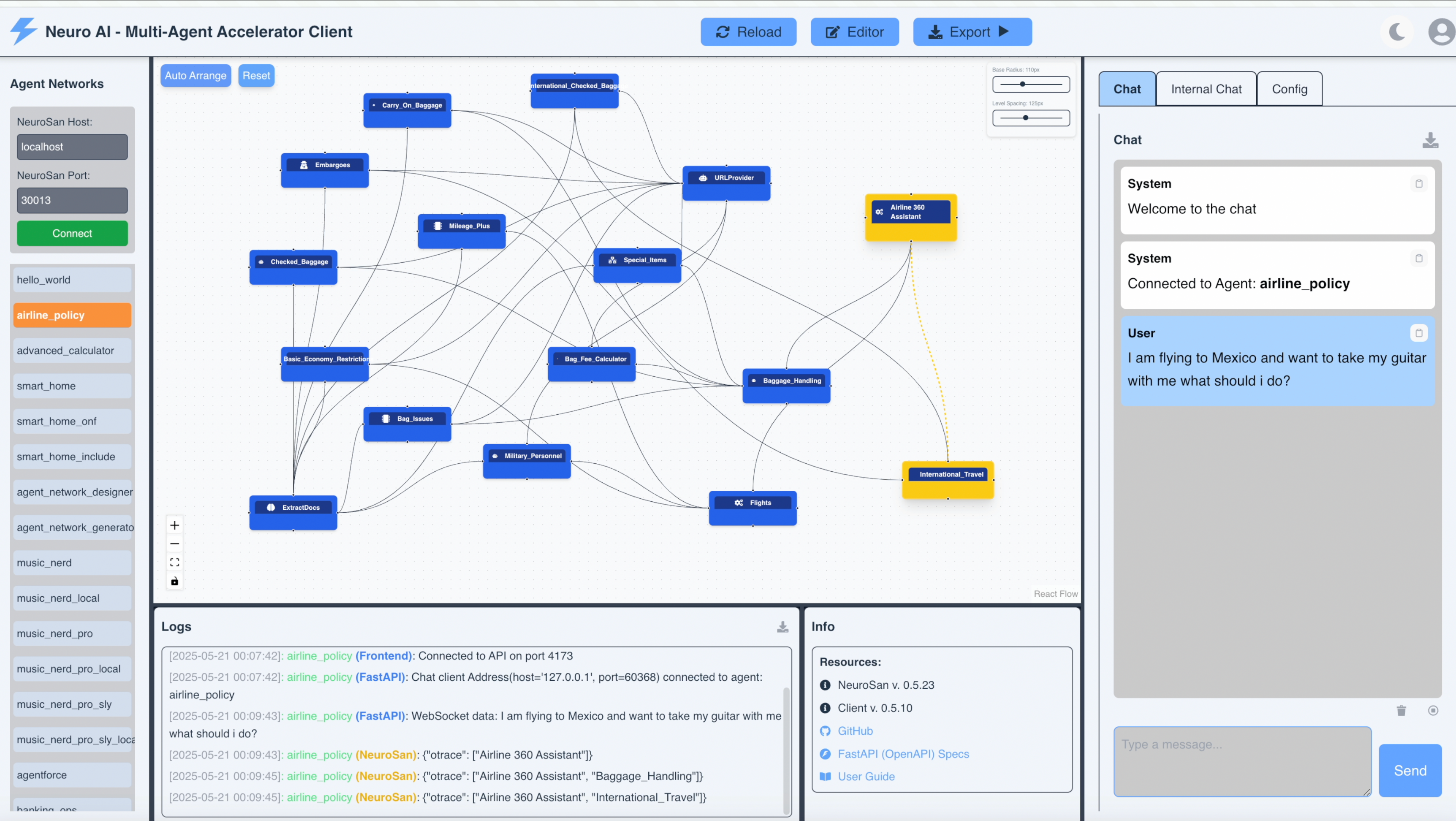
A multi-agent system that routes customer inquiries to domain-specific agents for airline policies like baggage, flights, and international travel—mimicking a structured helpdesk.
A simple agent network with a single agent, used as a "Hello world!" example. It can also be used to test for follow-up questions and deterministic answers.
# Clone the official Neuro-San demo repository
git clone https://github.com/leaf-ai/neuro-san-demos
cd neuro-san-demos

# Set up Python environment
python -m venv venv
source venv/bin/activate

# Install dependencies
pip install -r requirements.txt

# Set your OpenAI API key
export OPENAI_API_KEY="your_key_here"

# Start the demo with web client
python -m run
Multi-agent orchestration allows specialized LLM agents to collaborate on complex tasks by dynamically delegating subtasks through structured communication protocols. Unlike single-agent systems, which operate in isolation and cannot delegate or exchange information, multi-agent systems can coordinate across roles—enabling modular design, greater adaptability, and scalable problem-solving across domains.
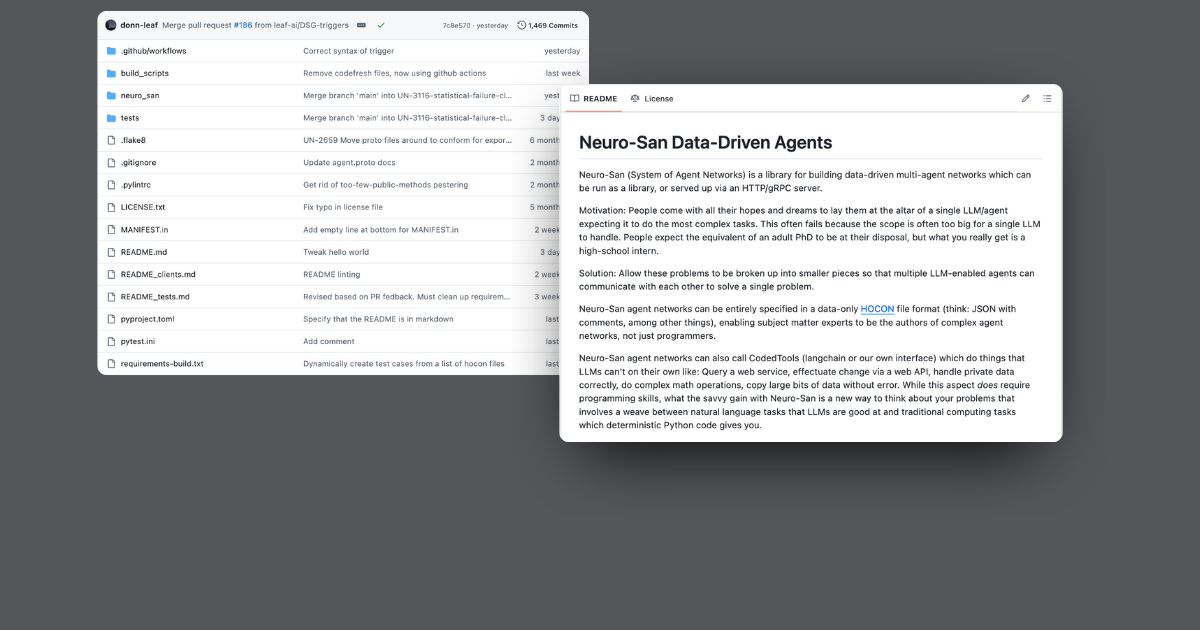
neuro-san is the open-source, data-driven library that powers the Cognizant Neuro® AI Multi-Agent Accelerator. This library is designed to simplify and accelerate the development of collaborative multi-agent systems, enabling domain experts, researchers and developers to immediately start prototyping and building agent networks across any industry vertical.
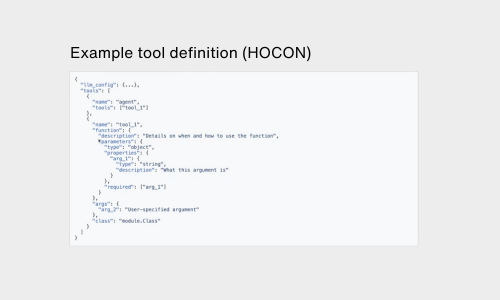
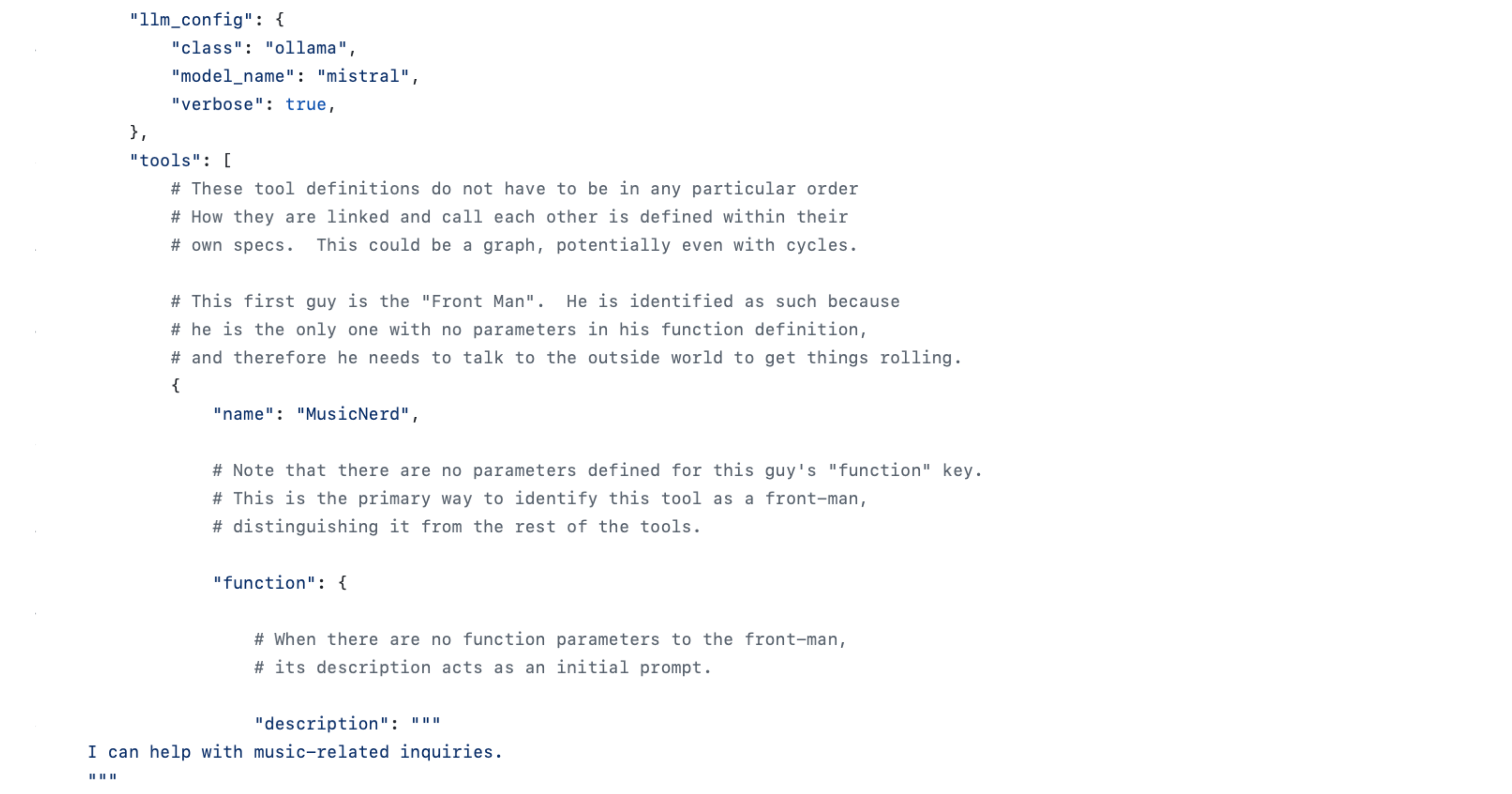
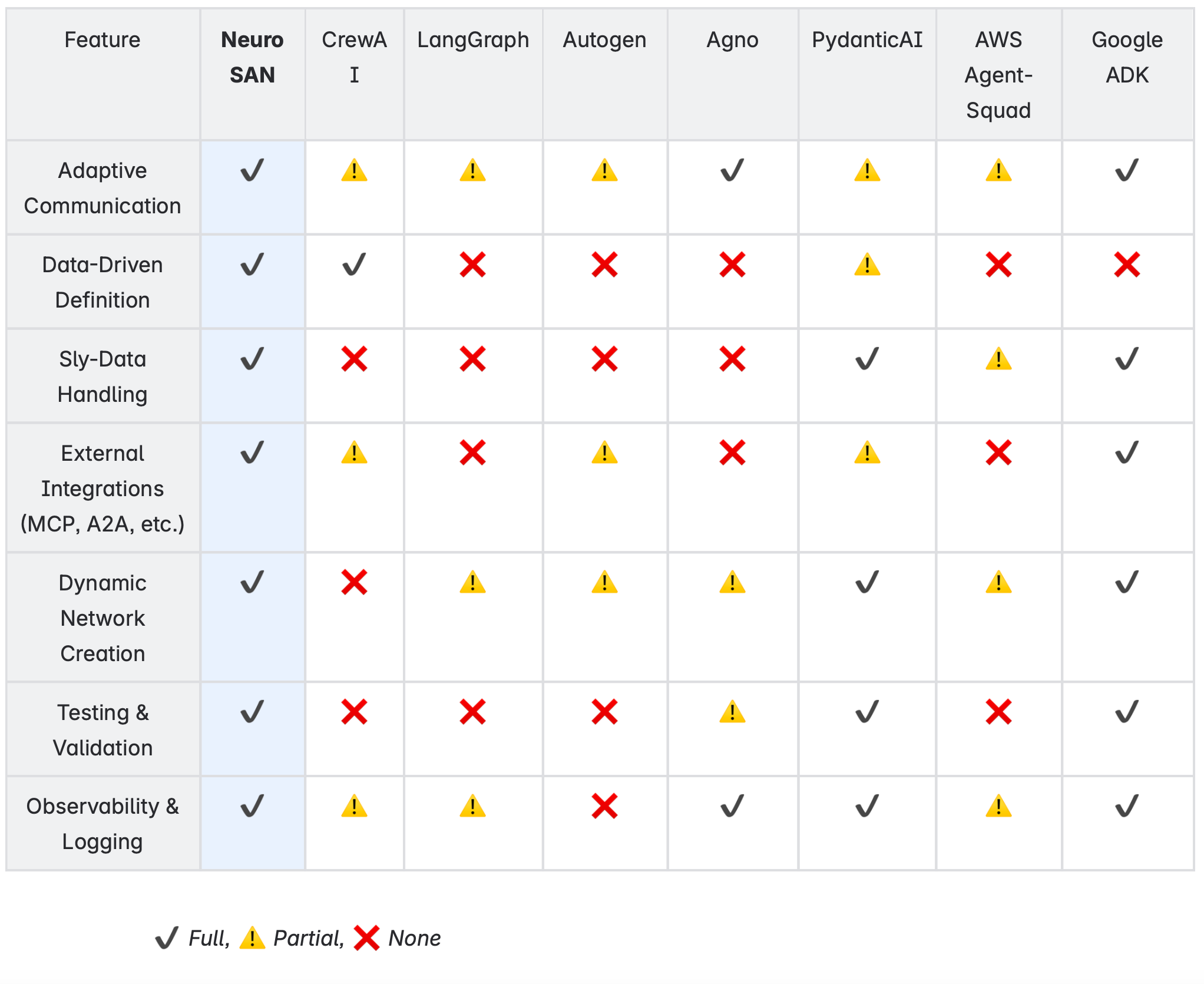
neuro-san is differentiated by its data-driven design: networks are defined in HOCON config files, not hardcoded in Python—making them easier to design, version, and adapt. It supports adaptive, decentralized collaboration via the AAOSA protocol, and secures shared state through sly_data, keeping sensitive data out of prompts.
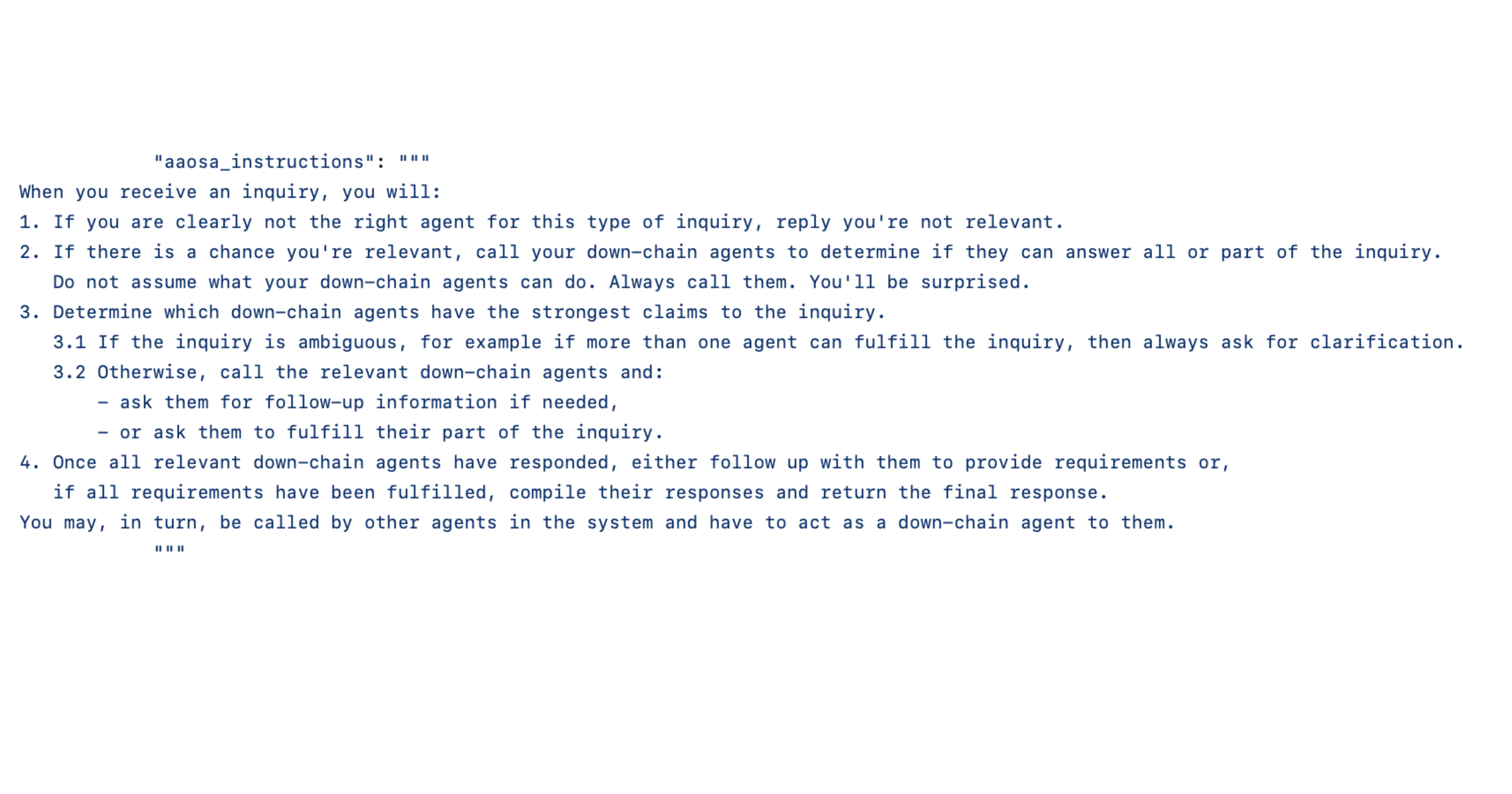
AAOSA (Adaptive Agent-Oriented Software Architecture) is the protocol neuro-san agents follow to determine how to route and delegate tasks across a network. Instead of relying on a central controller, each agent decides whether it should handle a task or pass it to a more specialized peer—enabling decentralized, flexible, and context-aware orchestration that scales across domains and use cases.
If you’re looking to deploy multi-agent networks at scale, please reach out to Cognizant for more information on a commercial license for the Neuro AI Multi-Agent Accelerator, as well as more details on its Multi Agent Services Suite. Complete this form.
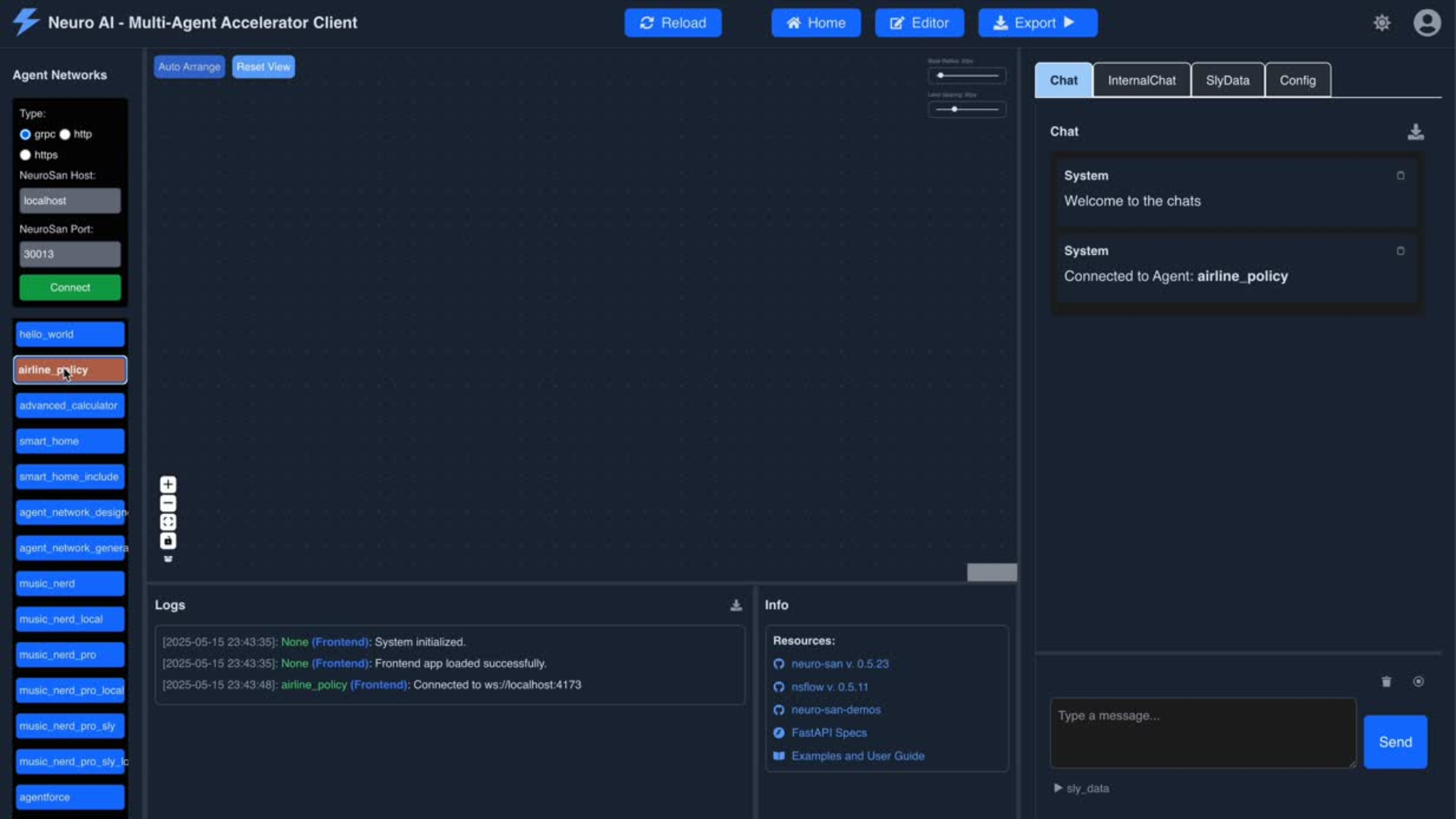
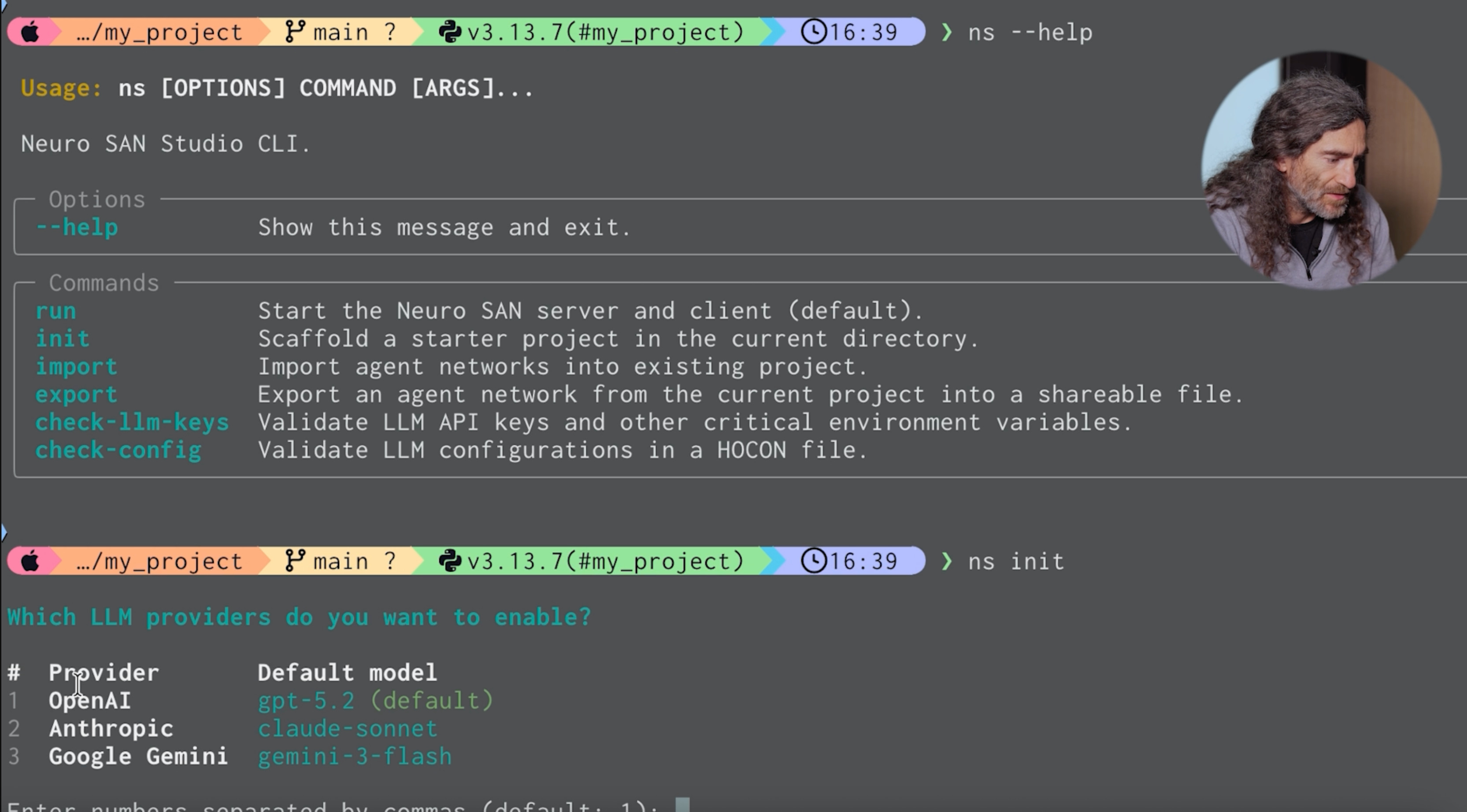
Developers can use NSFlow, a FastAPI-based developer UI, to interact with, debug, and visualize agent networks in real time. A command-line interface (CLI) is also available for direct terminal-based interaction, along with logs and testing infrastructure for debugging and validating agent behavior. All tools are open-source under a research license and optimized for prototyping and evaluation.
Interested in a commercial license for scaling agentic networks using our Neuro AI Multi-Agent Accelerator? Complete this form.