
AI has changed the economics of mainframe modernization—but it’s not plug-and-play
<p><br>
<span class="small">April 27, 2026</span></p>
<h2 class="h6"><span class="h6">AI can speed mainframe modernization, but only when paired with customized, deep engineering judgment, governance and a plan that withstands real-world challenges.</span></h2>
<p>Across enterprise boardrooms, organizations are asking how to address legacy infrastructure and how fast AI can accelerate the shift. Mainframe modernization has evolved from a purely IT concern into a core strategic priority, with AI positioned as the long‑awaited catalyst. The urgency is real—but the path forward is far from simple.</p>
<p>According to our latest <a rel="noopener noreferrer" href="https://www.cognizant.com/us/en/insights/insights-blog/legacy-modernization-mandate-ai-timeline" target="_blank">research</a>, integrating AI into the business has become a top-three driver for businesses to modernize their legacy systems.</p>
<ul>
<li><b>85% </b>of senior execs say their legacy blocks their ability to unlock value from AI</li>
<li><b>$2.4 trillion </b>is <a rel="noopener noreferrer" href="https://www.aei.org/technology-and-innovation/inside-techs-2-trillion-technical-debt/" target="_blank">the<b> </b>annual cost of technical debt</a> in the US alone<b></b></li>
<li><b>93% </b>believe AI itself can help overhaul legacy infrastructure</li>
</ul>
<h3><span class="h4">The promise is real, and so is the complexity</span></h3>
<p>AI is genuinely transforming what's possible in mainframe modernization. Deploying specialized agents in parallel across code analysis, dependency mapping, code transformation, test generation and data migration reshapes the economics of the modernization effort, historically characterized by massive cost and extended timelines.</p>
<p>Partnering with Anthropic, we’ve built a modernization accelerator, Cognizant® Application Modernizer, powered by Claude agents across the full lifecycle. The productivity gains are real. The cycle-time compression is real.</p>
<p>But what makes that possible isn’t AI alone—it’s AI operating within guardrails that produce trusted, auditable and predictable modernization outcomes, along with fast learning and continuous improvement. That structure is enabled by teams that have done this before at scale using non-AI accelerators.</p>
<h3><span class="h4">How modernization can pay for itself</span></h3>
<p>One of the most important shifts in how we think about this: Modernization doesn't have to be funded as a cost; it can fund itself. Mainframe as a service (MFaaS) converts fixed infrastructure costs into a consumption-based model, creating structural savings through million-instructions-per-second (MIPS) optimization and ISV rationalization.</p>
<p>That financial headroom is what enables businesses to proceed with modernization without having to choose between operational stability and strategic transformation.</p>
<h3><span class="h4">Why plug-and-play isn't a modernization strategy</span></h3>
<p>When stakeholders ask about mainframe modernization, they're often imagining a scan-and-transform pipeline: Apply AI to the legacy estate, wait for the modern codebase to emerge. It's an appealing mental model, but it’s also incomplete. What it misses is both domain awareness and engineering depth.</p>
<p>Mainframe applications have accumulated decades of business logic, undocumented dependencies and domain specific behavior that often exists only in code—or in the institutional knowledge of engineers who have already retired.</p>
<p>AI can surface this complexity faster than any human team. But surfacing it and resolving it are two different things. Our AI-native modernization accelerator, Cognizant® Application Modernizer, pairs Claude-powered agents with human-in-the-loop governance, securely deployed on Amazon Bedrock AgentCore. It includes a unified modernization dashboard, disciplined context-window management and chunking, deterministic artifacts, technical and business debt elimination, end-to-end traceability from legacy artifacts to modern implementations, built-in auditability, quality controls and risk gates.</p>
<h3><span class="h4">A six-phase approach</span></h3>
<p>Our AI-native modernization accelerator, Cognizant® Application Modernizer, works across a six‑phase, agent‑orchestrated lifecycle—from estate discovery and wave planning to architecture selection, automated code generation, quality engineering, data migration, dual run and cutover readiness. Our agent architecture prioritizes predictability and control, with AI enhancing insight while deterministic systems guarantee outcomes. This ensures business parity at every step.</p>
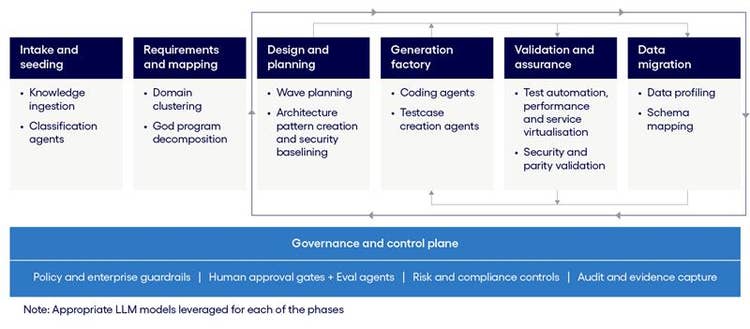
<h5><span style="font-weight: normal;"><span class="h6"><span class="text-bold-italic">1.</span> Intake and seeding</span></span></h5>
<p>Before making big decisions, teams need a shared, accurate inventory of what’s running on the mainframe, what each application does, how critical it is and how it connects to everything else.</p>
<p>Applications are ingested and analyzed by Claude-powered classification agents to surface dependencies, hidden complexity and candidate modernization waves, along with pathway options (e.g., refactor or reimagine). Outputs include an initial knowledge base and early standards setup (target stack, logging/exception frameworks). Humans validate specifications, confirm dependencies and finalize wave assignments as a core guardrail.</p>
<h5><span style="font-weight: normal;"><span class="h6"><span class="text-bold-italic">2.</span> Requirements and mapping</span></span></h5>
<p>Not every application has the same business value or technical debt, so this step separates quick wins from higher-risk systems. Agents cluster programs by domain/capability (e.g., accounts, payments, customer) and decompose “god programs” (very large monoliths with many dependencies) to expose complexity. Domain experts validate what can be removed, review groupings and confirm (or adjust) decompositions as a key accuracy and business-fit guardrail.</p>
<p>Steps 3–6 run in an iterative wave: Design the slice, generate the solution, then validate and harden it before moving to the next wave.</p>
<h5><span style="font-weight: normal;"><span class="h6"><span class="text-bold-italic">3.</span> Design and planning</span></span></h5>
<p>Wave planning breaks a large modernization effort into an ordered set of iterative slices and defines how each wave will be executed. Where the target stack is already known, an initial wave plan can be created during intake. This step also defines the target architecture and reusable patterns/standards needed to implement each slice consistently.</p>
<h5><span style="font-weight: normal;"><span class="h6"><span class="text-bold-italic">4.</span> Generation factory</span></span></h5>
<p>This is where parallelism drives the biggest cycle-time gains. Coding agents generate modernized code (supporting refactor or reimagine) aligned to the agreed target architecture/tech stack and generate test cases and documentation from the legacy code.</p>
<h5><span style="font-weight: normal;"><span class="h6"><span class="text-bold-italic">5.</span> Validation and assurance</span></span></h5>
<p>Automation validates the modern solution at scale, including service virtualization for dependent systems and business parity analysis,<b> </b>such as side-by-side legacy vs. modern outcomes via dashboards.</p>
<p>Dual run is a critical tenet of any modernization program and should be applied across all the critical applications. This reduces cutover risk by operating legacy and modern platforms in parallel, with parity metrics and clear go/no-go gates.</p>
<p>The legacy platform remains the system of record initially; once parity is sustained, processing moves to the modern platform while the legacy environment is retained as a monitored fallback for a defined period.</p>
<h5><span style="font-weight: normal;"><span class="h6"><span class="text-bold-italic">6.</span> Data migration</span></span></h5>
<p>This phase moves data safely from legacy to modern systems without disrupting the business. In an AI-native approach, agents analyze databases, copybooks and files to map schemas, automate transformations and classify sensitive data with human validation. The result is less manual effort and faster cutover readiness.</p>
<h3><span class="h4">A wide array of outcomes</span></h3>
<p>The result isn't a one-time cost takeout event. It's a compounding engine: The platform stays stable and optimized while modernization progresses. Meanwhile, the agents learn from each application, making subsequent waves faster, cheaper and lower risk.</p>
<ul>
<li>Zero disruption during migration</li>
<li>Self‑funded modernization</li>
<li>Improved customer experiences</li>
<li>Enablement of new revenue streams</li>
</ul>
<h3><span class="h5"><span class="h4">Modernize before being disrupted</span></span></h3>
<p>AI has fundamentally changed the feasibility of mainframe modernization. Organizations that begin now can build a durable structural advantage.</p>
<p>Success will depend less on model selection and more on engineering depth, domain expertise and agentic architecture to make outcomes deterministic. The enterprises that succeed will be those that modernize quickly without breaking what already works. That requires more than an AI subscription; it requires a partner with proven experience.</p>
<p>Our research found that 93% of leaders say their companies have retired 25% or less of the tech debt blocking AI adoption. If you're in that group, you're not behind—but modernize now or be disrupted next.</p>
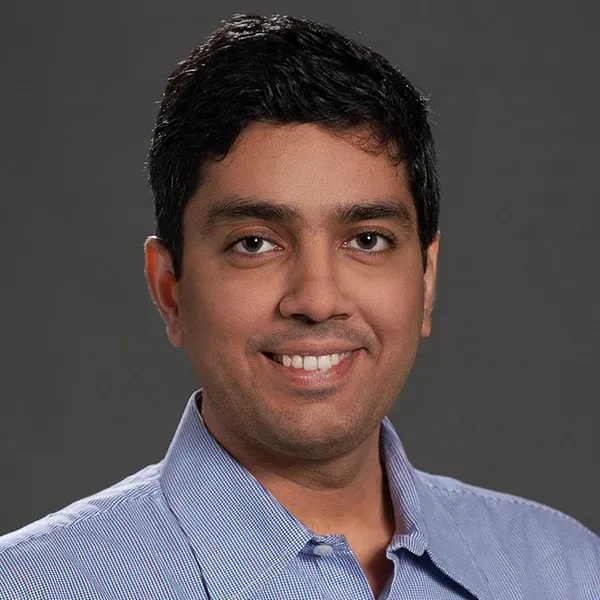
In his 27-year career in the IT industry, Nishant has partnered with global clients across diverse industries, with specialization in financial services and healthcare. He has held leadership roles in shaping large enterprise transformation deals and driving technology delivery for complex systems integration engagements.
His expertise spans AI-first legacy modernization, agentic AI systems, cloud transformation, modern engineering practices (DevSecOps, SRE) and data solutions.
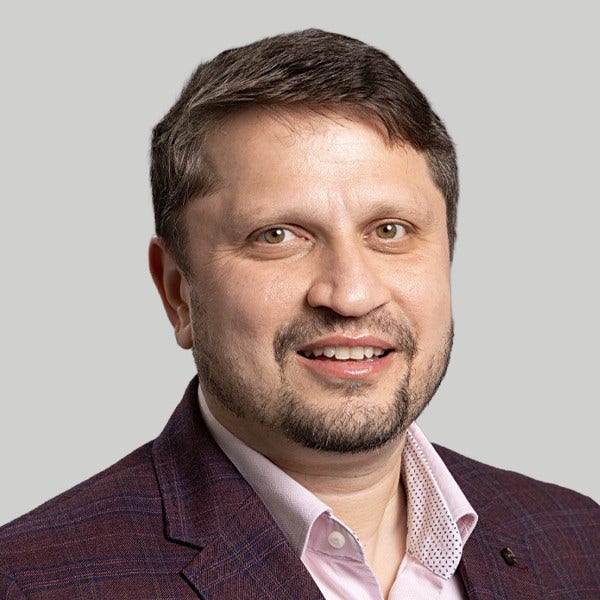
As a member of the Executive Leadership Team at Cognizant, Akshat specializes in helping Fortune 500 leaders transform their legacy business processes and systems to create a competitive advantage through AI-powered engineering and modern target operating models.
He spearheads AI initiatives for the practice, including serving as Cognizant's GTM Lead for Anthropic/Claude. He is a leading advocate on the deployment of agentic AI frameworks, such as pioneering the use of autonomous agent frameworks to solve the legacy technical debt challenges that have historically stunted enterprise growth.