
The strategic role of GCCs in life sciences
<p><br> <span class="small">April 17, 2026</span></p>
The strategic role of GCCs in life sciences
<p><b>We look at 3 critical horizontal capabilities that are powering vertical transformation.</b></p>
<p>Life sciences organizations face mounting pressure to transform across research, regulation, connected health and clinical development. Yet too often, each function responds independently, experimenting within a silo rather than building the fundamental horizontal capabilities that unite the business: trusted data, scalable AI, interoperable systems and embedded compliance.</p> <p>In this sector, progress isn’t constrained by execution capacity, but rather by lack of connection and coordination across business units and the work that they do.</p> <p>Global capability centers (GCCs) offer a path forward. By centralizing and industrializing shared capabilities, GCCs challenge the limitations of traditional enterprise structures and create the foundation for sustained, scalable transformation.</p> <p>Here we’ll explore how life sciences organizations can strategically design GCCs to establish the foundational data, intelligence and execution capabilities needed to overcome the capacity and connection challenges standing in the way of enterprise-wide transformation.</p>
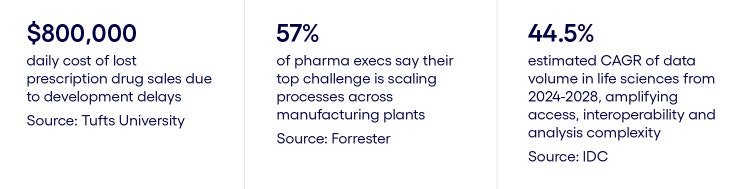
<h4>GCCs: Meeting the core challenges of modern life sciences organizations</h4>
#
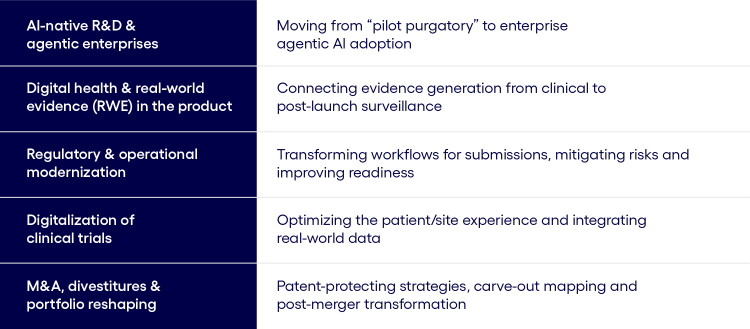
<h4><br> 5 key trends shaping the future of life sciences<b></b></h4>
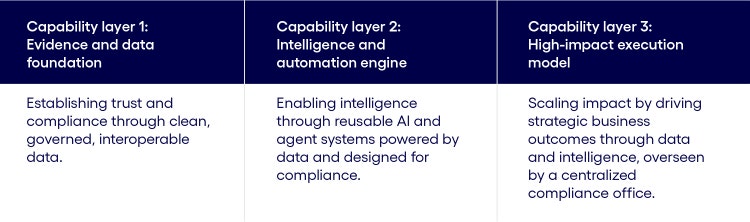
<h4><br> 3 essential GCC-enabled horizontal capabilities and how they address key life sciences trends</h4> <p>For life sciences organizations, transformation cannot succeed as a collection of disconnected initiatives. It requires an integrated capability model that links data, intelligence and execution into a single operating backbone. A modern GCC can deliver this through three cascading horizontal layers that work together as one coordinated system.</p>
#
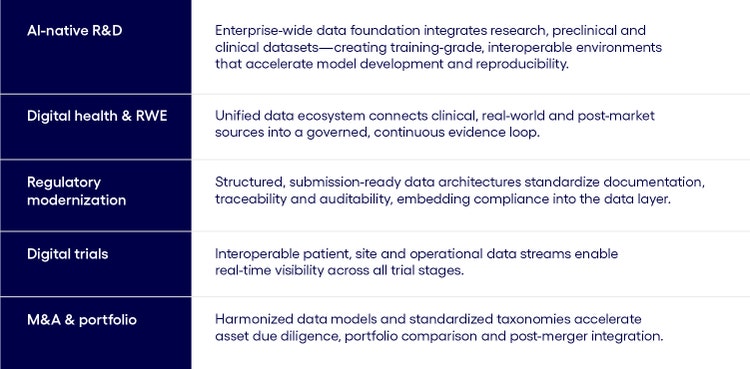
<h4><br> Layer 1: Evidence and data foundation</h4> <p>AI tools, regulatory modernization, digital trials and precision medicine all have one thing in common: they depend on trusted, cross-functional data flows. Unfortunately, in many life sciences organizations, traditional distributed models often reinforce data silos, slowing or preventing integration across clinical, medical and commercial domains.</p> <p>With the right strategy and operating model, the GCC can help overcome these challenges by centralizing and standardizing the infrastructure and architecture needed to ensure core data capabilities, such as governance, access, interoperability and compliance. By establishing a single enterprise data backbone, the GCC can help power all business priorities, from AI-enabled clinical trials to personalized patient outreach. </p> <p><b>How layer 1 powers transformation across the five key life sciences trends:</b></p>
#
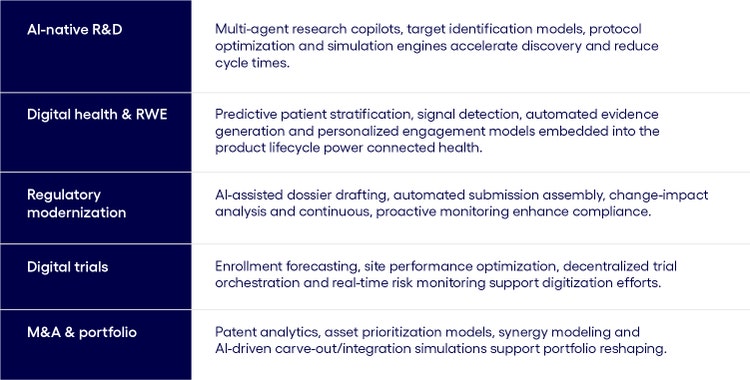
<h4><br> Layer 2: Intelligence and automation engine</h4> <p>Recent research from IDC found that nearly <a rel="noopener noreferrer" href="https://www.cio.com/article/3850763/88-of-ai-pilots-fail-to-reach-production-but-thats-not-all-on-it.html#:\~:text=Recent%20research%20from%20IDC%2C%20undertaken,graduated%20to%20production%2C%20IDC%20found" target="_blank"><b>9 out of 10 enterprise AI proof-of-concept projects (88%)</b></a><b> </b>never reach production. In large life sciences organizations, where dozens of pilots may launch each year, this points not only to a high failure rate, but to a pattern of repeated experimentation without a clear path to value creation.</p> <p>Scaling AI enterprise-wide requires organizations to centralize and standardize core capabilities, such as engineering, governance, compliance, validation and reusable components, so they can be applied consistently across functions and business units. This is often achieved through an AI Center of Excellence (CoE)<b> </b>that establishes those core capabilities and also provides shared services such as machine learning operations, agent orchestration and model lifecycle management.</p> <p>Establishing this capability within a GCC helps avoid the fragmentation common in traditional operating models. As neutral, enterprise-wide platforms, GCCs are well positioned to centralize talent and capabilities, enabling consistent deployment, reuse and scalable adoption of AI across the organization.</p> <p>GCCs can also play a critical role in implementing AI risk classification and ensuring models comply with emerging regulations such as the European Union’s AI Act. Unlike traditional models, GCCs centralize governance and technical oversight, enabling organizations to apply consistent risk frameworks and compliance controls across functions and geographies. This makes compliance efforts more efficient and more effective, enabling regulatory teams to apply updates across all active projects quickly rather than identifying and addressing them individually when issues arise.</p> <p><b>How layer 2 powers transformation across the five key life sciences trends:</b></p>
#
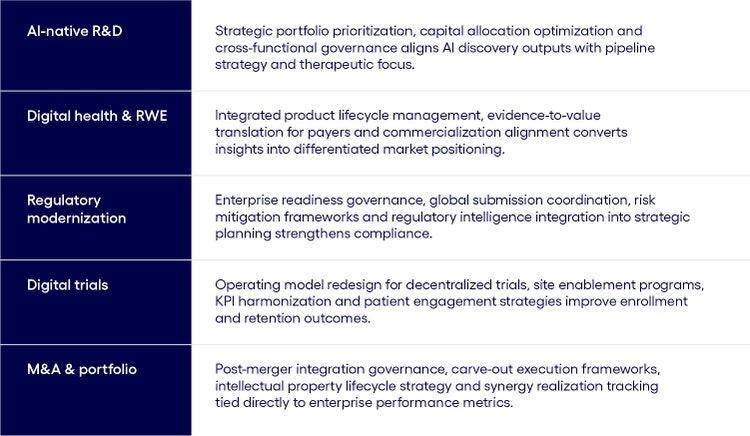
<h4><br> Layer 3: High-impact execution model</h4> <p>In traditional, function-led models, the value of data and AI investments is often constrained because insights remain trapped within individual functions. Data sharing tends to be manual and relies on teams’ knowing what assets exist across the organization and understanding how they might apply to their own work.</p> <p>For example, insights generated during clinical trials—such as patient adherence patterns, biomarker responses or site performance signals—could significantly inform regulatory strategy, post-market surveillance or future trial design. Yet in many organizations these insights remain locked within the clinical function, disconnected from regulatory, safety and commercial teams that could act on them. Similarly, real-world evidence collected after launch often fails to flow back into R&D portfolios to inform next-generation therapies or label expansions.</p> <p>A strategically designed GCC can bridge these gaps by centralizing data and analytical capabilities, enabling insights from clinical trials, real-world evidence, and operational signals to drive intelligent decision-making across the enterprise.</p> <p><b>How layer 3 powers transformation across the five key life sciences trends:</b></p>
#
<h4><br> Best practices: 4 key considerations for life sciences GCCs</h4> <ol> <li><b>Design for value creation, not cost removal.</b> To get the GCC strategy right, companies need to start with the value they want to create—for the business, providers and ultimately patients—not just the cost they want to remove.<br> <br> This requires moving past the traditional cost arbitrage approach and instead establishing critical horizontal capabilities that drive business performance: interoperable data foundations, scalable AI engines and coordinated execution models that can be reused across R&D, regulatory, clinical and commercial domains.<br> <br> </li> <li><b>Organize capabilities around the product lifecycle, not business functions. </b>Many GCCs mirror the structure of the broader organization, aligning teams to functional silos such as R&D, clinical development, regulatory or commercial operations. While logical internally, this structure can fragment the flow of knowledge and slow the translation of insights across the product lifecycle.<br> <br> A more effective model organizes capabilities around lifecycle stages—from discovery and development to regulatory submission, launch and post-market monitoring. In this approach, the GCC supports each stage with specialized capabilities such as AI-driven discovery modeling, clinical analytics, regulatory submission intelligence and real-world evidence generation. By aligning teams and platforms around the end-to-end lifecycle of therapies and devices, organizations can accelerate innovation, improve continuity of data and insights and reduce friction between development stages.<br> <br> </li> <li><b>Organize capabilities to support a patient-centric experience. </b>Similar to point two, when GCCs are structured by product line or business unit, they reinforce silos that fragment the patient experience.<br> <br> A cardiac device, for example, may generate rich clinical data for a cardiology team, but that same patient may also be managing diabetes, hypertension or other comorbidities—often using additional products or services from the same company. Because that data is not shared across functions, each team operates with a partial view of the patient. Insights that could inform earlier interventions, personalized education or coordinated support remain siloed, potentially impacting overall health outcomes for the patient.<br> <br> A more effective model would connect these dots across product and service lines, creating a coordinated, population-centric approach to patient services. By centralizing data, standardizing platforms and aligning execution, a GCC can turn siloed service models into a coordinated ecosystem that strengthens the patient experience and improves outcomes.<br> <br> </li> <li><b>Design to withstand volatility. </b>While the traditional GCC model is meant to provide efficiency through centralization, that concentration of resources can also pose a risk. GCC models anchored in a single geography or structure are increasingly exposed to geopolitical, regulatory or climate-related disruption, making flexibility and replication critical design principles.<br> <br> A federated model—designed with interoperable platforms, standardized processes and distributed talent pools—allows organizations to shift workloads quickly across cities or regions in the event of significant disruption. In this context, location strategy becomes not just a cost factor, but a resilience and continuity decision, ensuring that critical capabilities can scale, flex and redeploy in response to risk or disruption.</li> </ol> <h4>Why GCCs, why now</h4> <p>The life sciences industry is entering an era in which data, evidence and intelligence must flow seamlessly across the product lifecycle. Achieving this requires capabilities that extend beyond individual functions or business units.</p> <p>When designed strategically, GCCs provide the structural foundation for these capabilities, bringing together data platforms, AI engineering and operational execution into a single, scalable enterprise model.<br> <br> <span class="text-regular-italic">To learn more about how your organization can leverage GCCs to establish the critical horizontal capabilities that are powering life sciences transformation, <a href="https://www.cognizant.com/us/en/industries/life-sciences-technology-solutions" target="_blank">visit the life sciences section of our website</a> and contact our authors to learn more.</span></p>

<p>Bryan Hill is the Chief Digital Officer and Vice President of Strategy & Innovation at Cognizant’s Life Sciences Practice. He leads digital capabilities and technology innovation to accelerate scientific breakthroughs and redefine health through technology.</p>

<p>Gopiram Ramachandran is a senior director within Cognizant’s Global Capabilty Centers (GCC) service line. He leads solutions, strategy and operations for Cognizant’s GCC customers in healthcare and life sciences, industries in which he has more than 25 years of experience managing business solutions.</p>