
Mythos exposed cybersecurity flaws. Here's how to respond
<p><br> <span class="small">April 16, 2026</span></p>
Mythos exposed cybersecurity flaws. Here's how to respond
<p><b>The potent AI forces the cybersecurity community to face unpleasant truths about patching and the vulnerability backlog.</b></p>
<p>Anthropic’s <a rel="noopener noreferrer" href="https://4d1c06dd.isolation.zscaler.com/profile/2d9c143c-3b4b-4686-ad0c-f0301025cdcd/zia-session/?controls\_id=8406db7b-6141-4472-a368-7fe807c725c4\&region=cle\&tenant=8be389a82b37\&user=28e99b7a820d24d16553c4ba5c8a3e98442db757ae766a6ab34a751d5142a81f\&original\_url=https%3A%2F%2Fwww.anthropic.com%2Fglasswing\&key=sh-1\&hmac=5aceb298d5e9c8b1cd56f2e9d7bc835e1d135ab44f365797abdc451354aa1669" target="_blank">Claude Mythos Preview</a> release marks a turning point the cybersecurity industry has long sensed but never fully confronted. As you have almost surely read, in controlled testing, Mythos immediately uncovered thousands of high‑severity vulnerabilities across major operating systems and browsers. These discoveries represent a qualitative leap: machine‑speed reasoning across millions of lines of code, surfacing subtle logic errors that even elite human researchers miss.</p> <p>Anthropic’s widely discussed decision to not broadly release Mythos is consequential and, I believe, praiseworthy. The same capability that finds a flaw can exploit it, and placing such a system in the wild would widen the attacker–defender asymmetry into something unmanageable. Anthropic chose responsibility over reach, a values‑driven constraint on a commercially valuable asset. With competitive pressures often pushing AI companies to ship first and reflect later, that choice matters.</p> <h4>The structural weaknesses Mythos exposes</h4> <p>Mythos has forced the cybersecurity community to face a couple of unpleasant truths. First, the vulnerability landscape was unmanageable even before AI. We’ve been living with a permanent, structural backlog of latent vulnerabilities embedded across critical infrastructure. Human researchers can only examine a fraction of global code. Static analysis tools catch known patterns but miss novel ones. Bug bounty programs operate at human speed—with human fatigue. The result is a reservoir of vulnerabilities that attackers have long exploited faster than defenders can drain it.</p> <p>Mythos, and AI in general, widens this gap enough to make it impossible to ignore. Discovery is now abundant; remediation is not. That imbalance is where the danger lies. We are entering an era in which defenders will know far more about their weaknesses than they can possibly fix. The shift from detection scarcity to detection abundance is destabilizing, and the industry isn’t prepared for it.</p> <p>The second exposed weakness is the patching ecosystem. The responsible disclosure model—a 90‑day window designed for a slower era—is already strained. Even today, the overwhelming majority of successful breaches exploit known vulnerabilities for which patches are available. Imagine that cycle confronted with hundreds of new vulnerabilities discovered in a single sprint.</p> <p>Vendors must verify, develop, test and distribute fixes across multiple platforms. Many enterprise systems still resist automated patching because the risk of breakage is seen as greater than the risk of exploitation. That logic collapses in a Mythos‑accelerated world.</p> <h4>The Glasswing blueprint</h4> <p>This is why Project Glasswing—Anthropic’s creation of a tightly governed consortium of about 50 organizations with supervised access to Mythos, specifically to identify and remediate vulnerabilities—matters. It’s a genuine attempt to operationalize responsible deployment of frontier AI—not through marketing language, but through enforceable governance.</p> <p>Glasswing isn’t perfect, but it is principled. It demonstrates that powerful AI can be deployed safely when access is controlled, monitored and tied to defensive outcomes. The challenge now is to ensure Glasswing becomes the norm rather than an exception. Voluntary restraint by one actor cannot offset reckless deployment by another. The industry needs binding governance frameworks for AI systems with demonstrable offensive capability. Glasswing shows how this might work.</p> <h5>Three steps leaders must take now</h5> <p>What should cybersecurity leaders and practitioners do now, knowing that additional Mythos-like scenarios are a certainty? Here are proactive steps:</p> <ol> <li><b>Treat the discovery–remediation gap as the central problem in cybersecurity.</b> Detection abundance without remediation capability is not progress; it’s exposure. The industry must build AI‑enabled remediation pipelines that operate at machine speed: autonomous testing, automated patch generation, continuous deployment. This is not a research project. It is an emergency.<br> <br> </li> <li><b>Extend the Glasswing model into a binding governance framework. </b>Frontier AI systems capable of offensive action cannot rely on voluntary restraint. Regulators, standards bodies and industry consortiums must work together to make controlled deployment the baseline. Glasswing is a proof of concept that should, as previously noted, become a blueprint.<br> <br> </li> <li><b>Lead the structural pivot the industry can no longer avoid.</b> Much of the legacy security stack was built for a world in which vulnerability discovery was slow and expensive. That world is gone. Organizations must stop asking how to bolt AI onto existing architectures and instead ask what security would look like if they were building from scratch for a world of machine‑speed threats.</li> </ol> <h4>The coming pivot</h4> <p>This is the existential question Mythos forces on the industry: can the legacy stack absorb this shift, or will it be overwhelmed by it? Some organizations will lead the transition, while others will be dragged through it. A few will not survive it. The problem is moving faster than the market.</p> <p>By choosing responsibility over reach, Anthropic has built a breakwater of sorts. The question is, will the cybersecurity community embrace it? Or wait for the tsunami?</p>
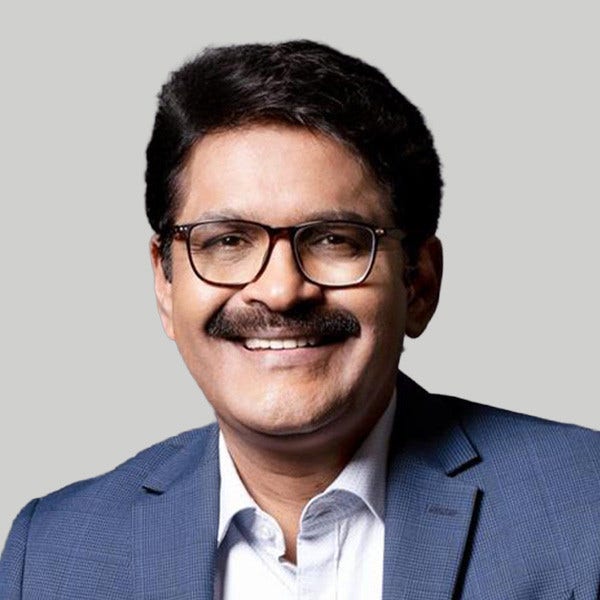
<p>Vishal leads Cognizant’s global cybersecurity strategy, strengthens threat protection capabilities and advances digital trust across client enterprises. Under his leadership, Cognizant is scaling its cybersecurity offerings to meet the evolving needs of global organizations, with a focus on resilience, regulatory alignment and secure digital transformation.</p>